Painswick in the Cotswolds: Rococo Garden, Yew Churchyard and Village Doors

Updated: 2 days ago
A white Gothic alcove stands at the edge of a hedged garden, with beech woods turning copper behind it. That was Painswick Rococo Garden on a Friday morning in October. The air was so fresh, and the sun was shining gloriously. The garden was almost empty, which felt like winning the lottery.
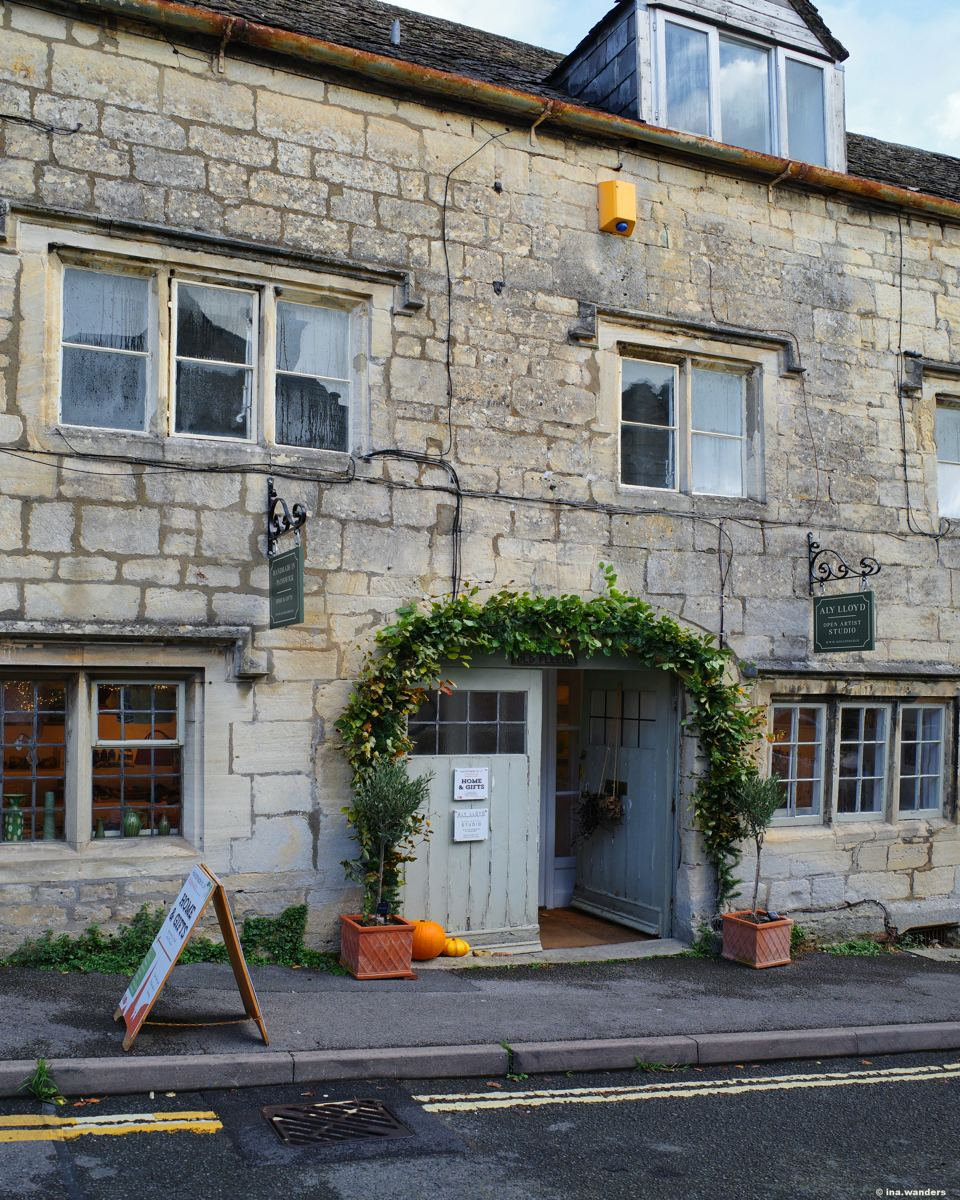
The village itself sits half a mile up the road. Painswick has stone cottages the colour of a digestive biscuit, a churchyard full of clipped yew trees, and front doors that were dressed for Halloween a week early.
This is the morning I spent in Painswick in the Cotswolds: the garden first, followed by the church, and then the pretty doors (how could I resist the chance of snapping some doortraits?).
Why Visit Painswick in the Cotswolds?
Painswick was built on wool. Clothiers grew rich here between the fifteenth and eighteenth centuries, and they put that money into stone: the houses that still line Bisley Street and New Street.
Centuries on, the stone has gone pale and soft, and lichen has moved in. Steps climb between the walls, and almost every doorstep has something on it. A pumpkin, a wreath, a pot of geraniums. You can't not fall in love with all the tiny details.
I think that's why the nickname Queen of the Cotswolds stuck: the pale stone, the hilltop. Three things that sit close together are reason enough to visit: a garden, a churchyard and a run of front doors.
Btw, if you are comparing villages, my guide to the prettiest villages in the Cotswolds groups them by the kind of day they suit. Building a weekend? You might want to check Winchcombe and Minchinhampton for inspiration.
Painswick Rococo Garden
Painswick Rococo Garden was laid out in the 1740s for the owner of Painswick House. A painting by Thomas Robins, dated 1748, recorded how it looked.
Over time, the garden became overgrown woodland. A restoration that began in 1984 brought it back. The garden describes itself as "the only complete surviving rococo garden in the UK".
Rococo gardens were playful. Instead of the straight avenues of a formal garden, they have winding paths, small buildings placed for surprise, and views framed between trees. Painswick keeps that spirit.
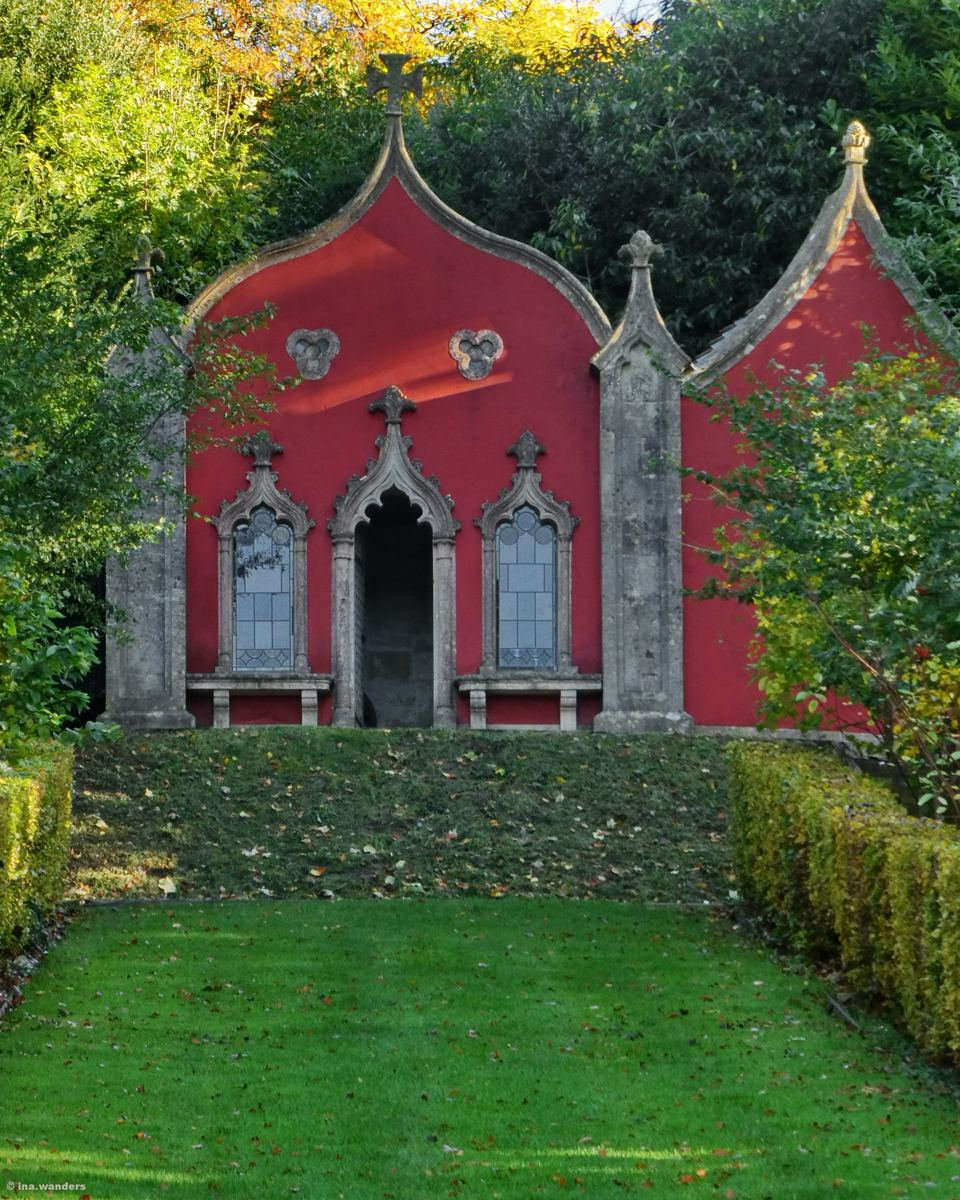
Each building has a name: there is a Red House, an Eagle House with wide views, a Gothic Alcove, a Doric Seat, and an octagonal Pigeon House reached by narrow stone steps.
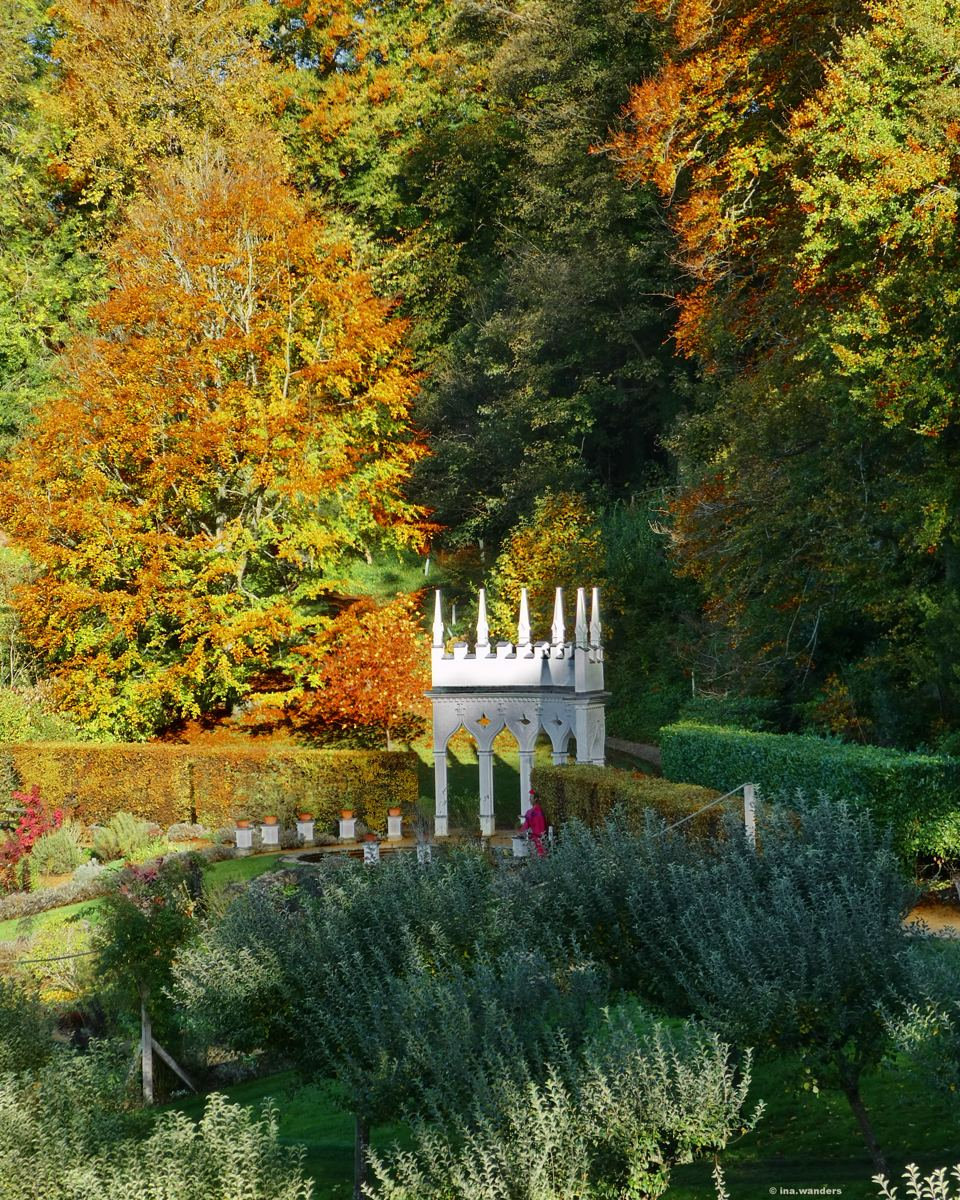
I photographed two of them. The white one with the pinnacles, among the beeches, is the Gothic Alcove. The red building with the curved gables is the Red House, seen across a lawn between clipped hedges.
What Can You See at the Rococo Garden in October?
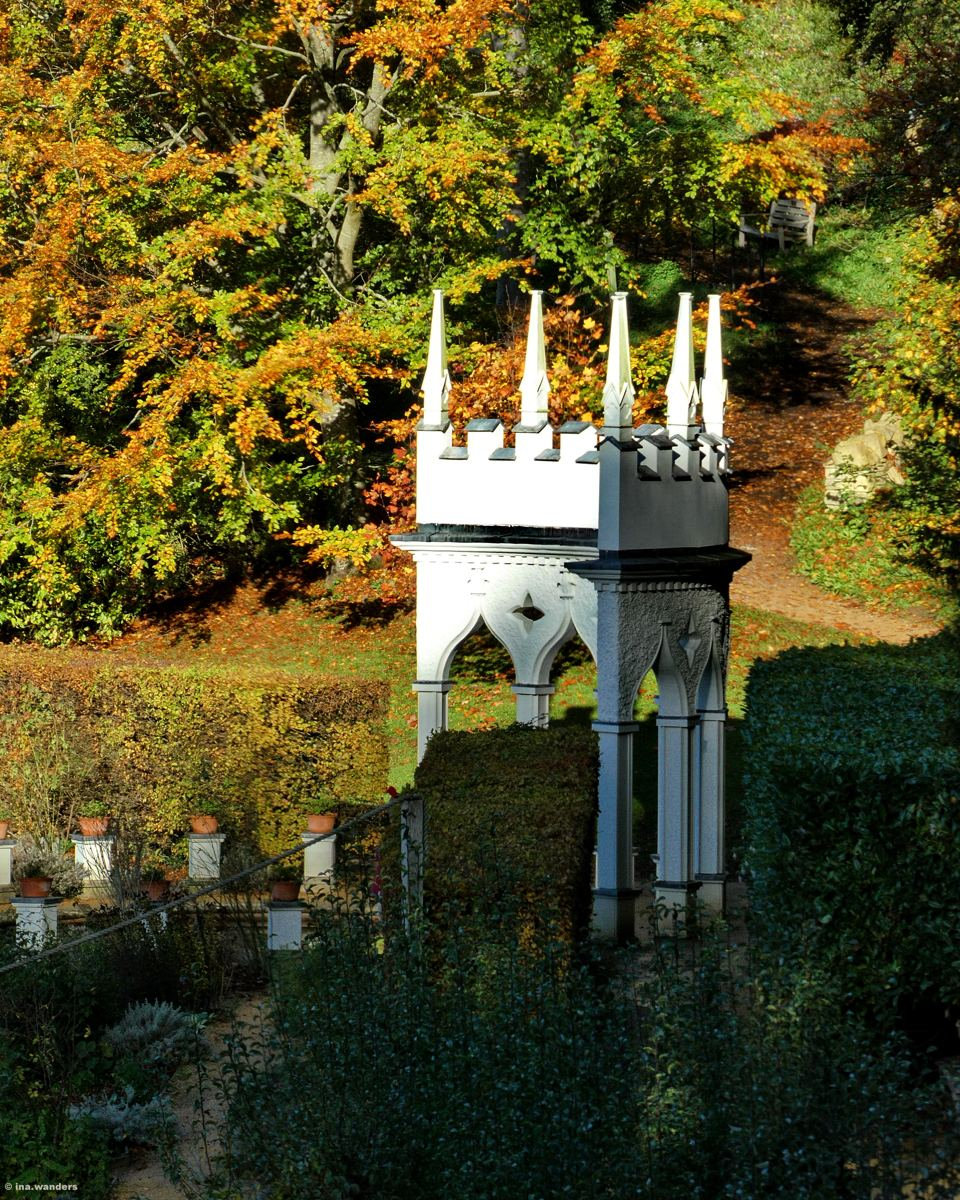
Colour, mostly. The beeches behind the Gothic Alcove had gone copper and gold, and the hedges kept the garden in green rooms around them.
Up close, the alcove is a stack of pointed arches under a row of tall pinnacles. Yellow leaves had blown against the hedge at its foot.
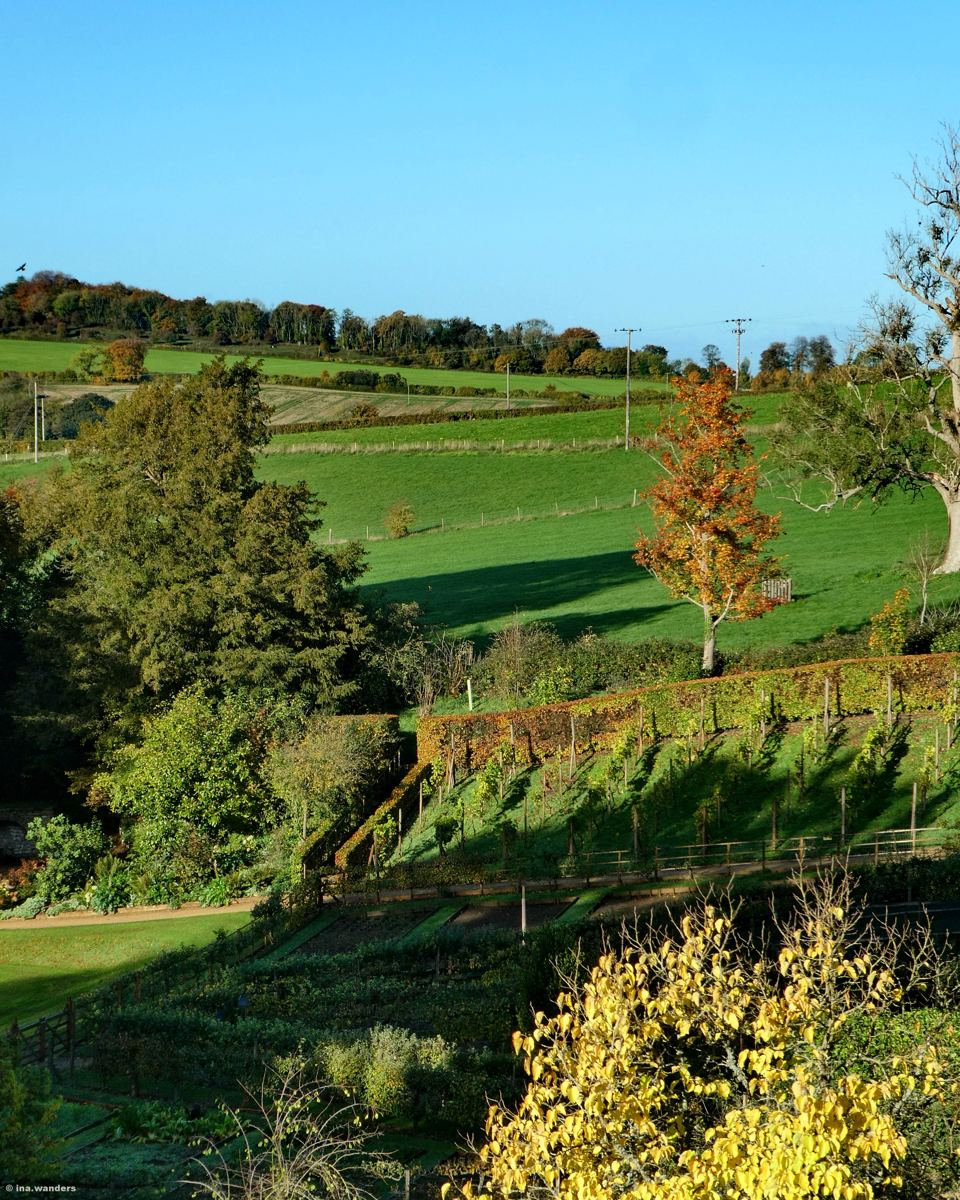
Lower down, the garden drops in terraces towards open fields. A single small tree in the middle of the view had turned orange.
The smallest frame I took is a pond. White Gothic arches sat reflected in the water, with fallen leaves floating on top of the reflection.

Further along, a gap in the trees opens onto fields and a distant house. It is the kind of view a rococo garden is built to frame.

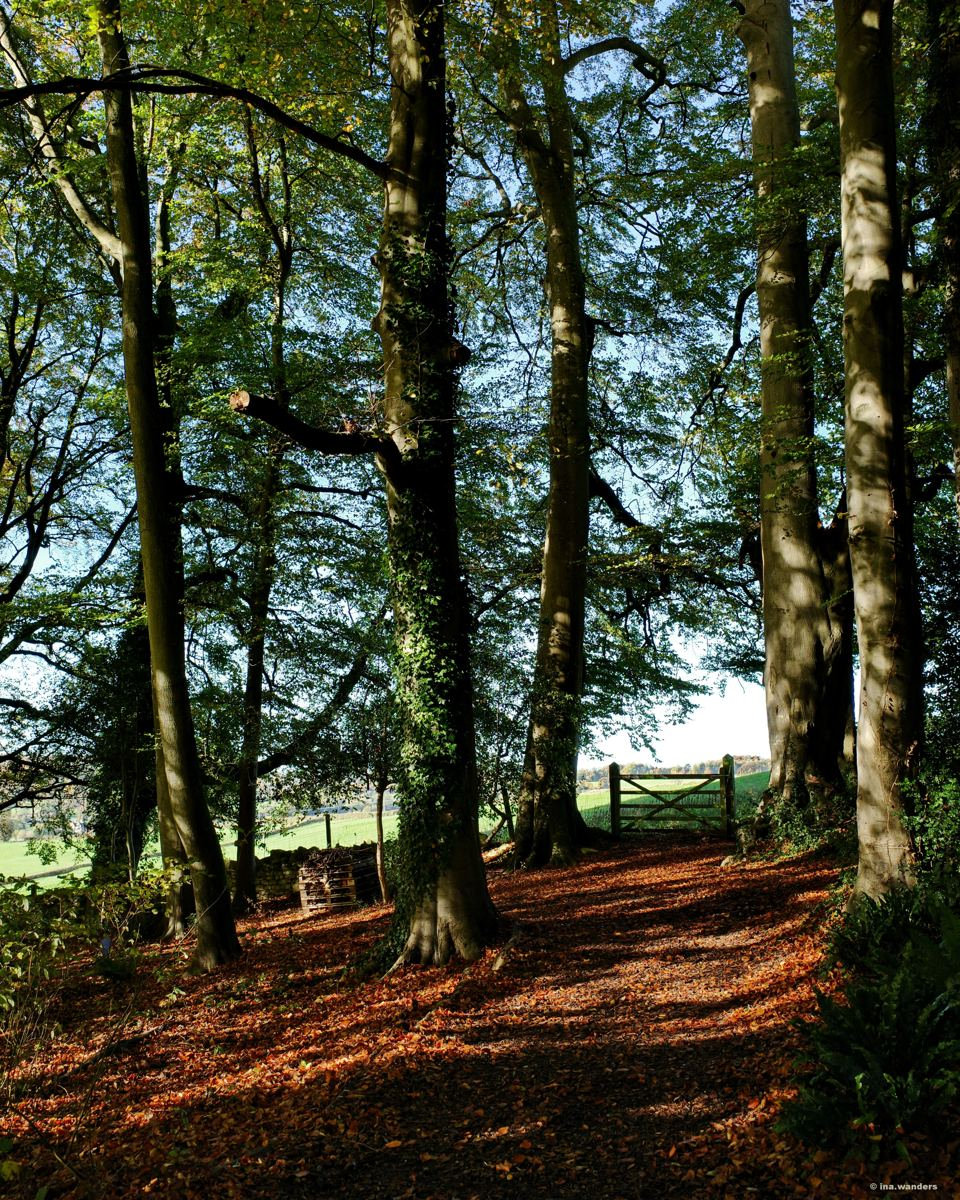
A path covered in fallen copper leaves runs between tall beech trunks towards a wooden gate.
I could have stayed under those beeches all morning.
That was the garden in beech-leaf season. It has other months too: snowdrops carpet it from late January through February, roughly five million of them according to Gardens to Visit. Tickets must be booked in advance in snowdrop season.
Daffodils follow in March and April, more than 100,000 of them, and the recreated Exedra Garden peaks in July.
If autumn colour gets to you too, my guide to the Cotswolds in autumn covers more villages.
Why Does St Mary's Churchyard Have 99 Yew Trees?
From the garden it is half a mile up the road to the village. The church came first.
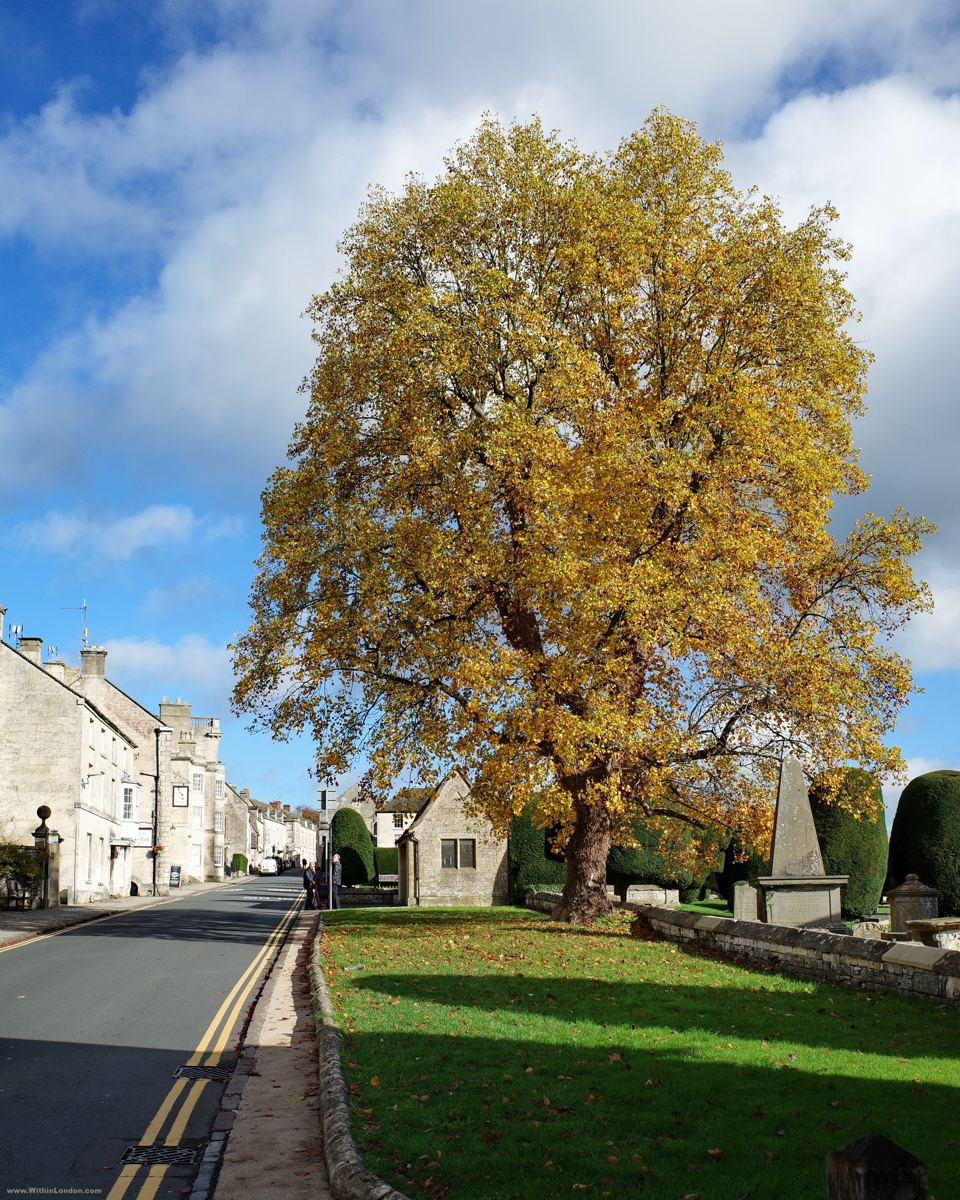
St Mary's Church stands in the middle of the village, and its churchyard is why many people stop in Painswick. Clipped yews stand around the graves, each cut into a rounded shape. The spire is about 174 feet high.
Local legend says there are exactly 99. If anyone plants a hundredth, the Devil pulls it out before it can take root.
The yews were planted in the early eighteenth century, according to the National Trails page for the churchyard. In 2000, the parish planted a hundredth anyway, on the north side of the church near the bus stop. It is doing well.
The trees are clipped every September. The trimmings come to more than two tons a year, and the same page says they are harvested for paclitaxel, an anticancer drug.
September also brings the Clypping. It is held on 19 September, or the first Sunday afterwards, which made it Sunday 20 September in 2026. Clypping is an old word for embracing.
People form a ring round the church, hold hands and sing a hymn, embracing the building. It became an annual event in the Victorian era. The Painswick Feast follows, with Puppy Dog Pie, which contains no dog. I visited in October, a month too late for it.
Who Built the Lychgate at St Mary's Church?
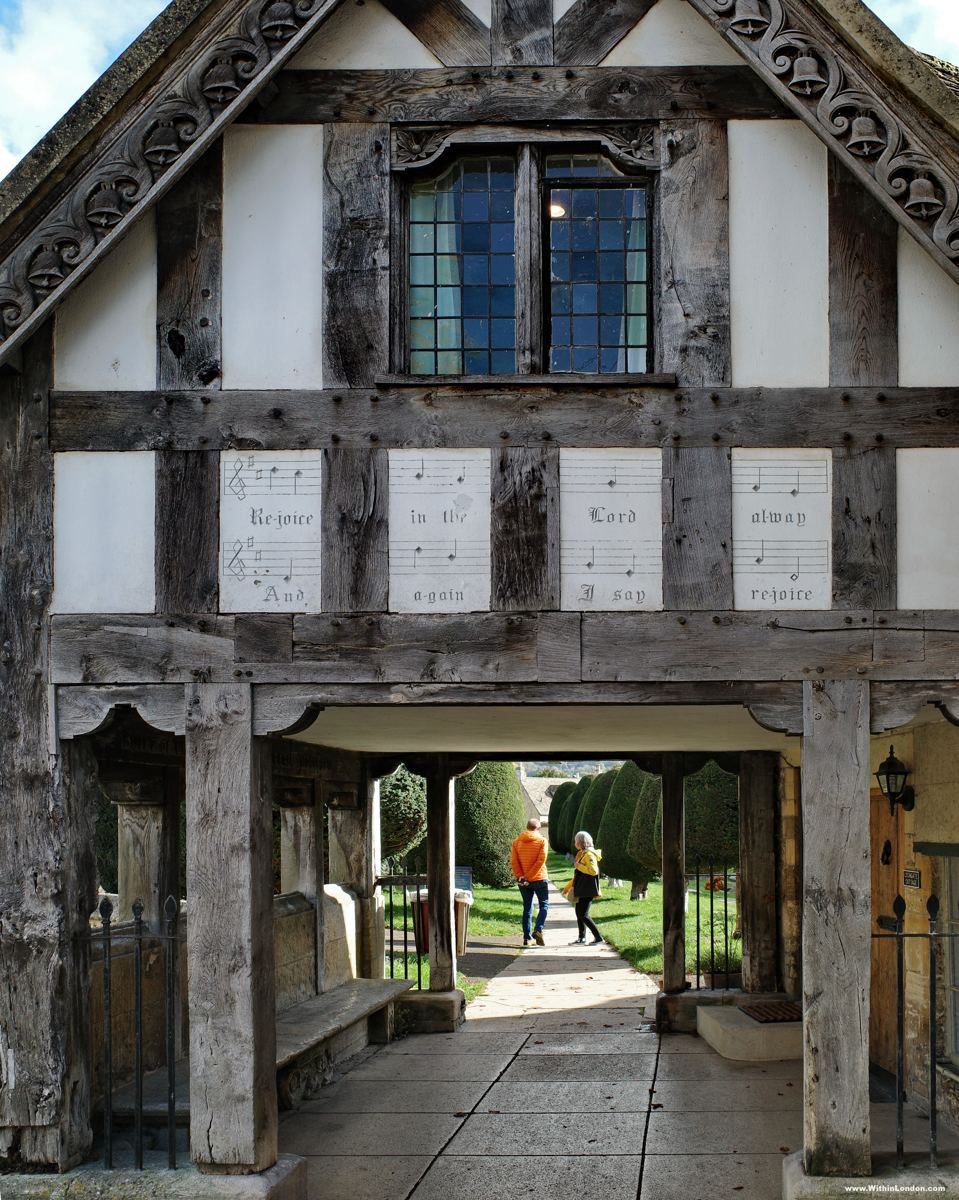
The timber-framed lychgate at the churchyard entrance dates from 1901 to 1902. Mrs Frances Sarah Williams paid for it, and an inscription inside says it was built of the old belfry timber.
It is Grade II listed. There is a room above the open passage, and the plaster panels across the front carry the words Rejoice in the Lord beside lines of music.
A lychgate is where a coffin waits at the edge of the churchyard for the priest. From under this one you look straight through to the yews. When I photographed it, two visitors were walking in.
The Doors of Painswick in Autumn
The village streets are lined with Cotswold stone, and the doors are where the colour is. These are the doors and doorsteps I photographed along the streets.
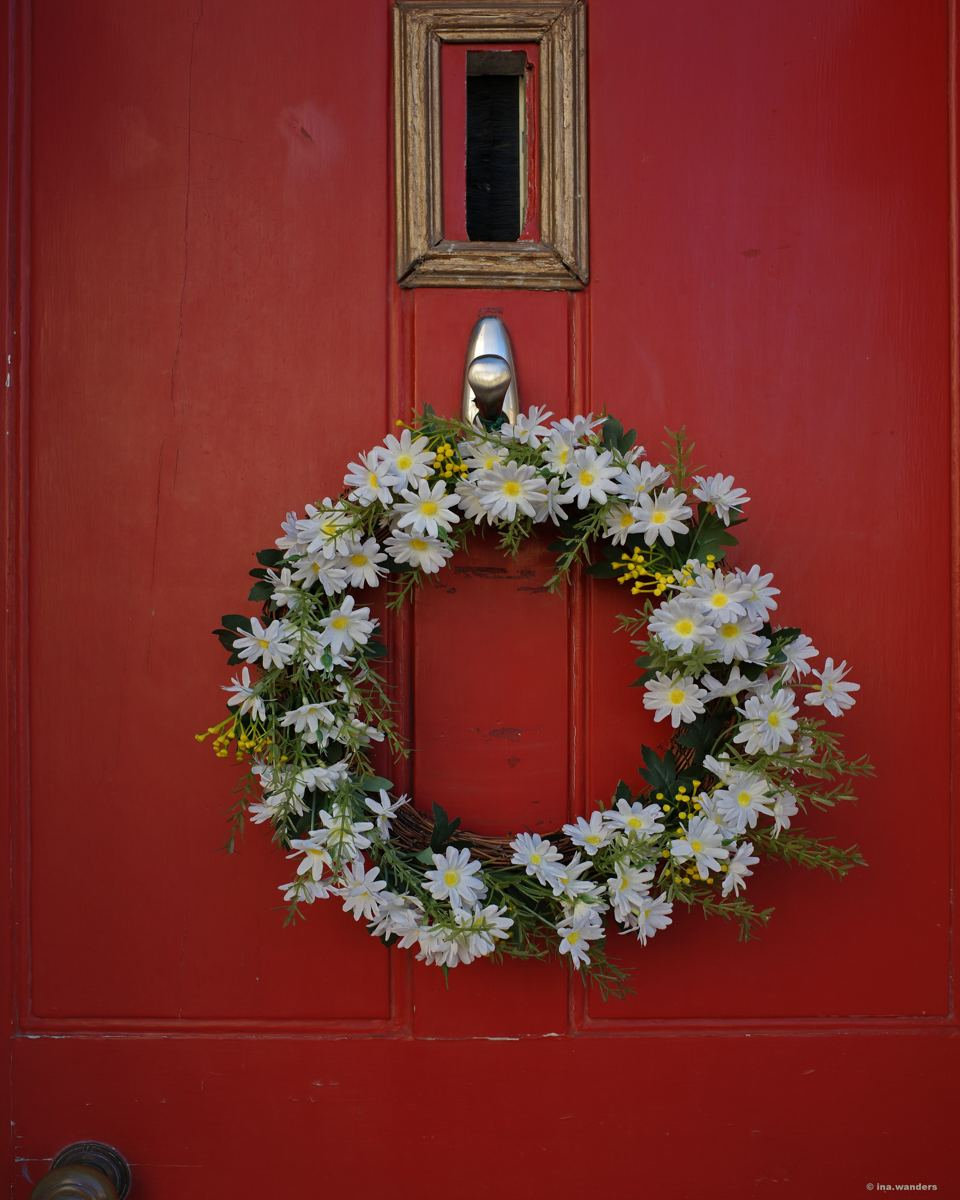
A red door with a wreath of white daisies and a small window cut into it.
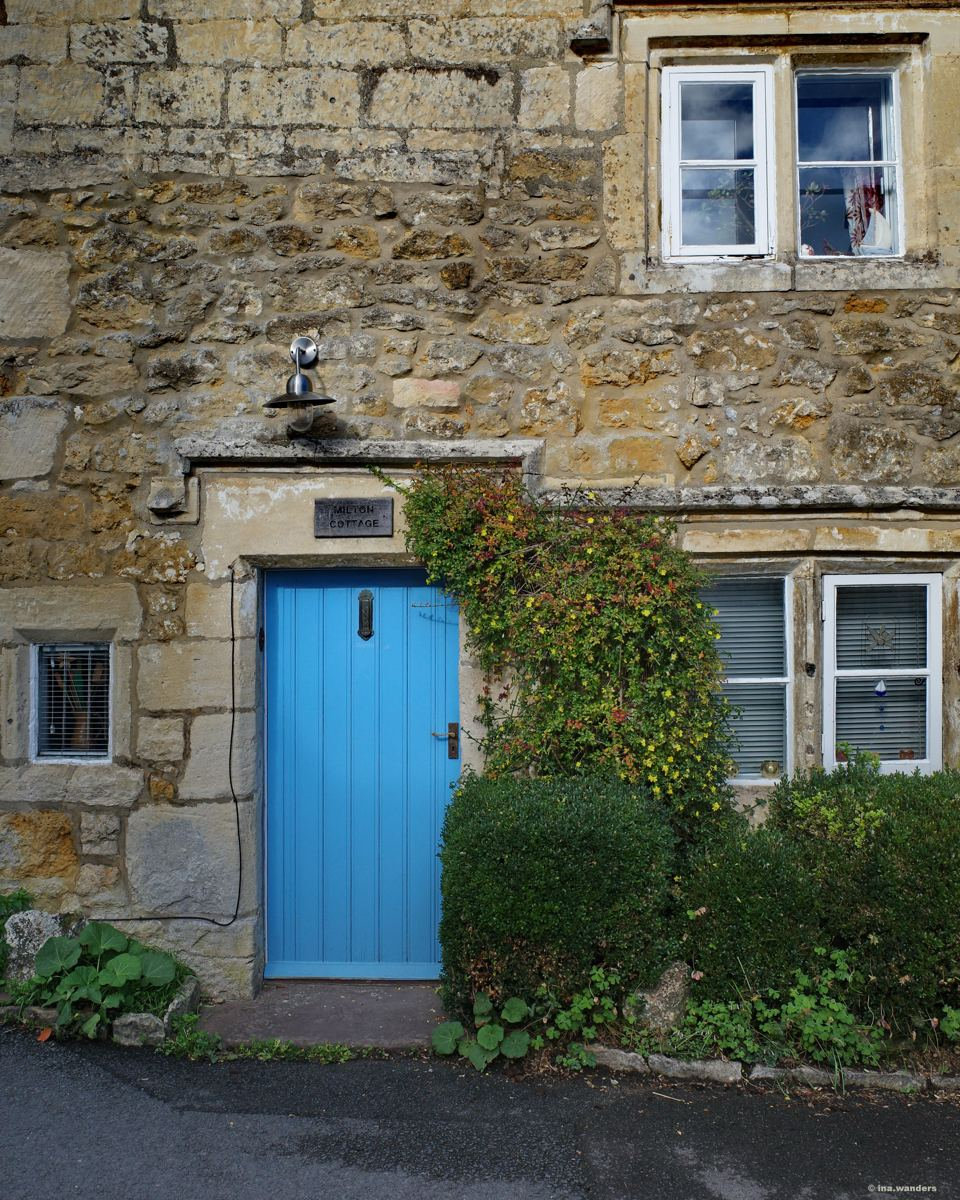
A bright blue door in a stone cottage whose wall was patched with yellow lichen. A green creeper climbed the wall beside it.
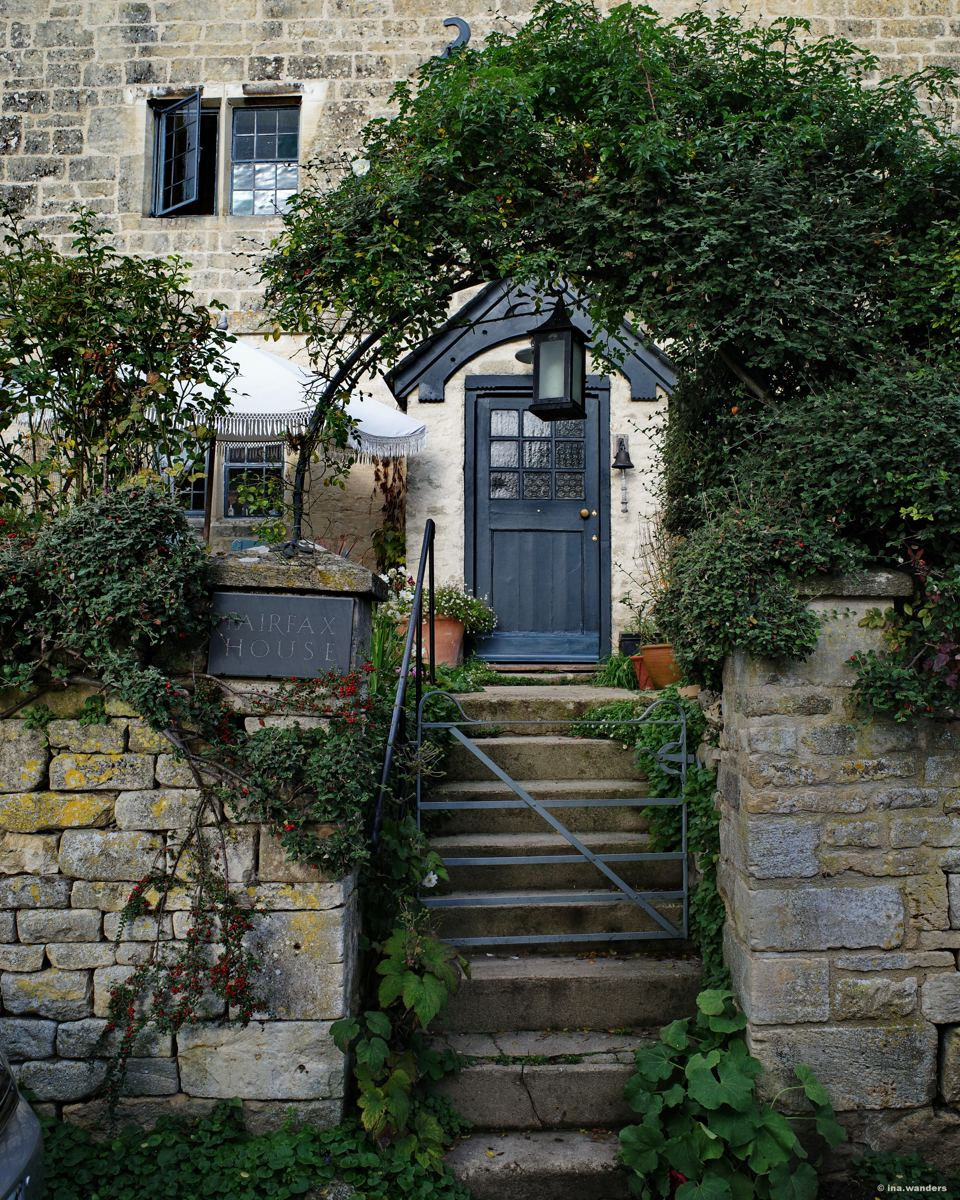
Steep stone steps led up to a dark blue door under a leafy arch. A small lantern hung above the door.
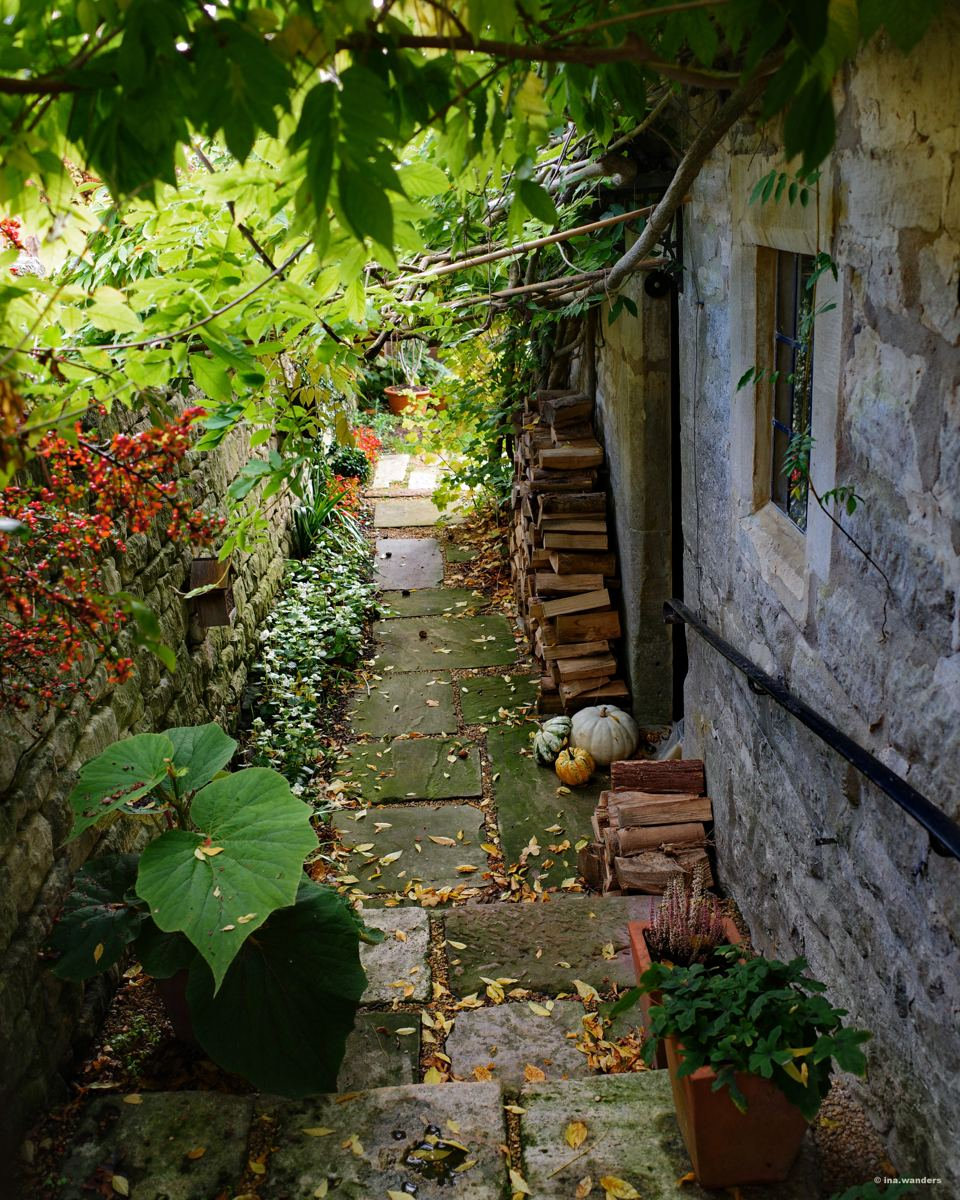
Down a side passage, logs were stacked against a stone wall between clay pots, with a large green leaf spilling across the flagstones.
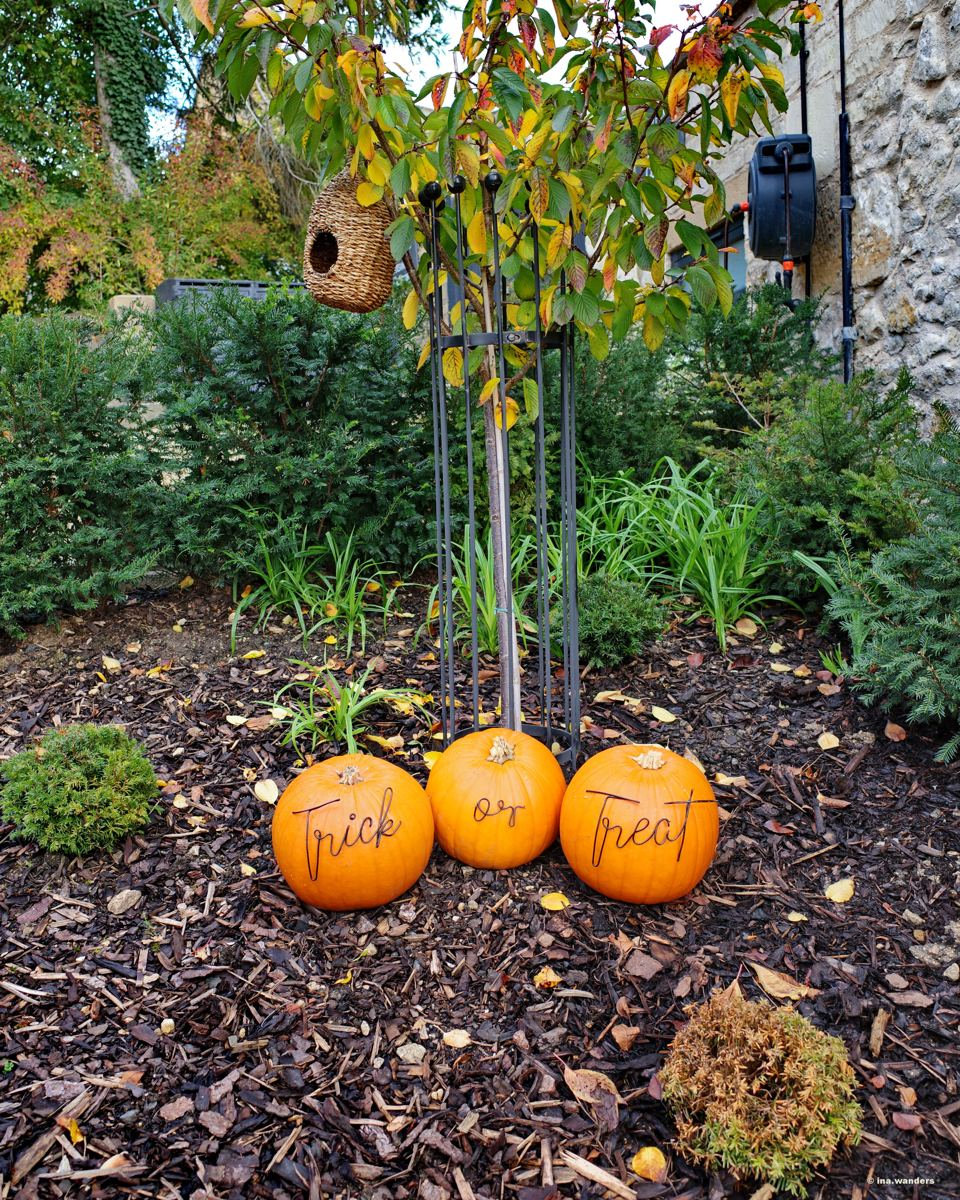
Halloween was already in the gardens. Three pumpkins with the words Trick or Treat lettered on them sat under a young tree with a woven bird box hanging from it.
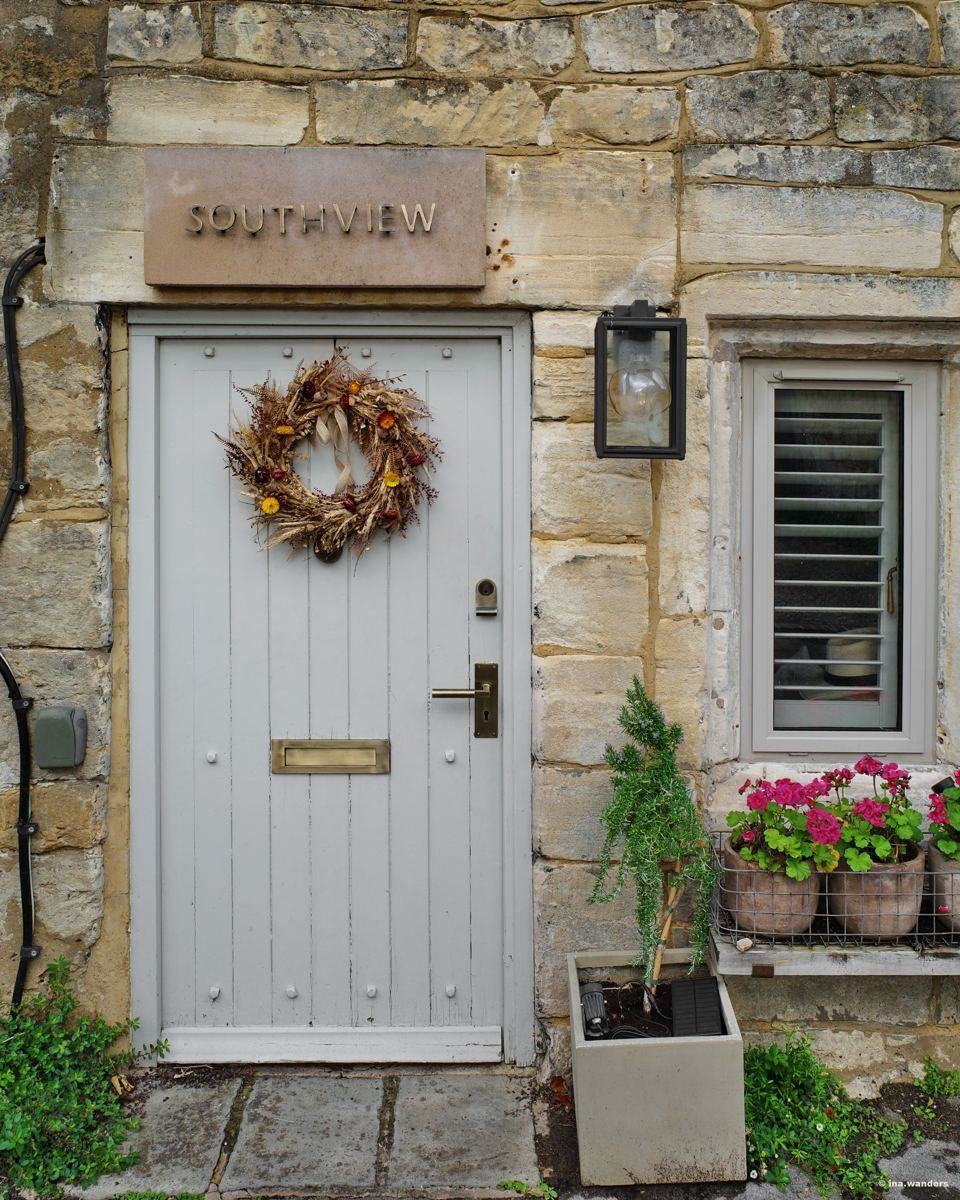
A pale grey door under a stone board that reads Southview, with a wreath of dried leaves and a window box of pink geraniums.
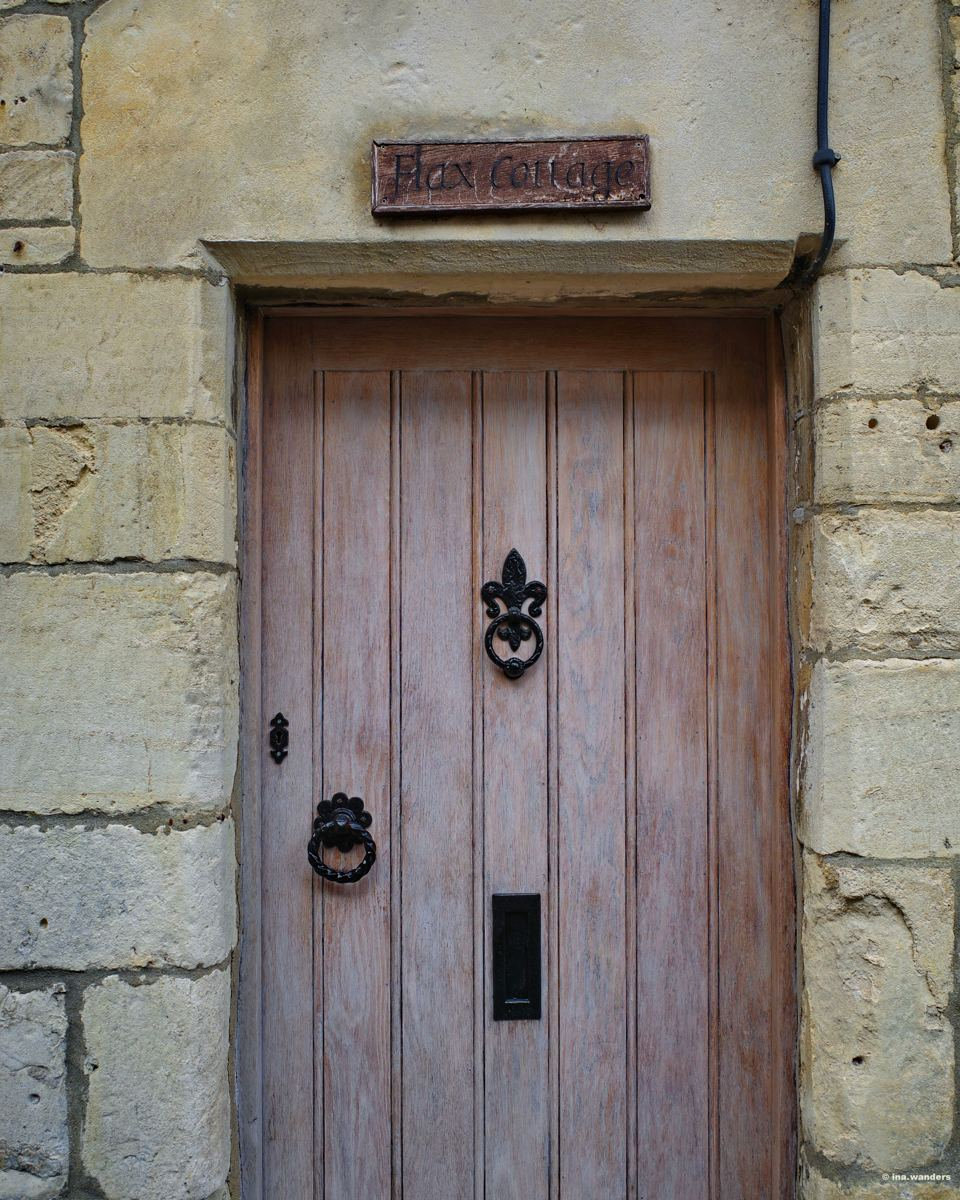
A weathered oak door with an iron fleur-de-lis and a ring handle sat under a small carved name board.
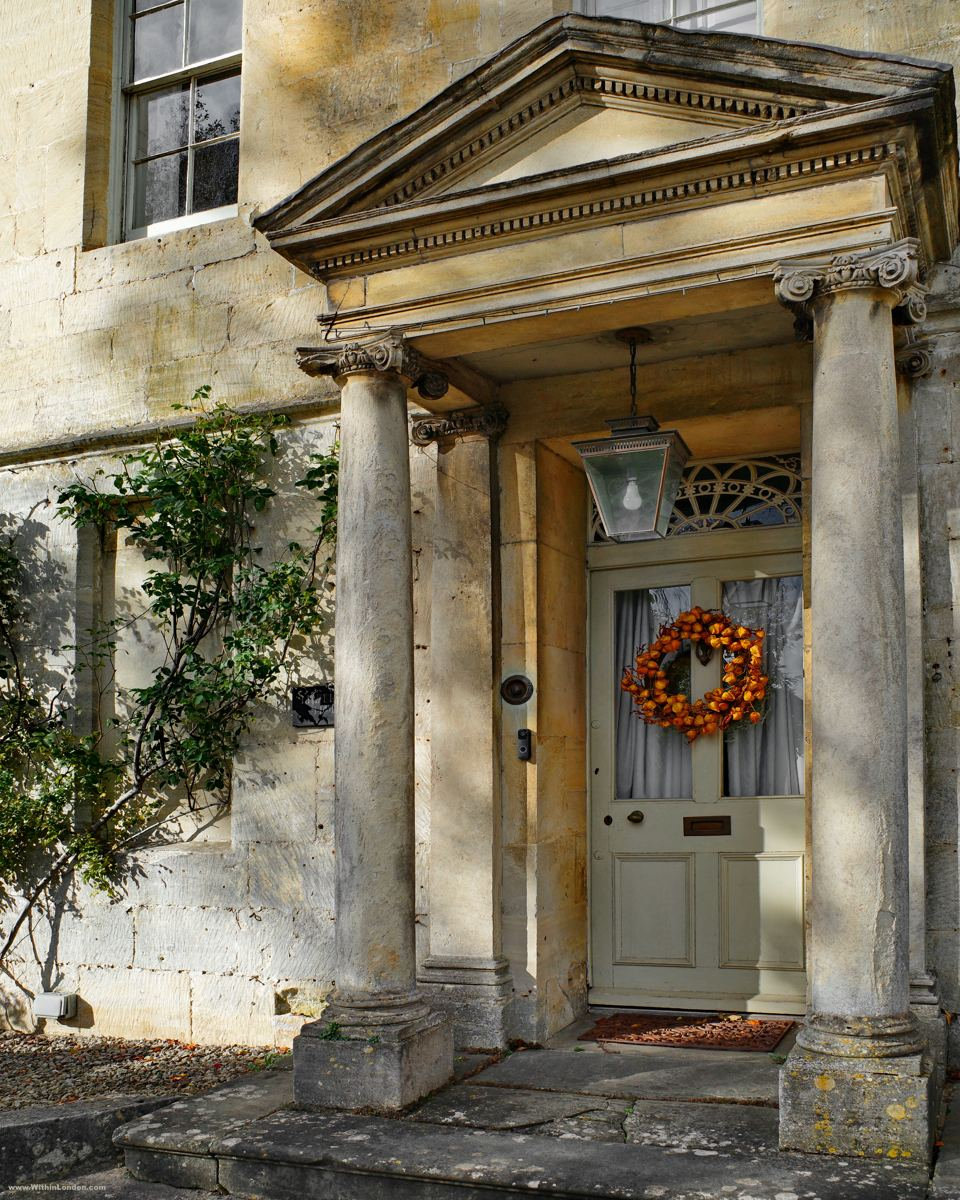
The grandest doorway I photographed had a pediment on two stone columns, a lantern hanging in the porch, and a wreath of orange leaves on the door.
Red berries spilled over a lichen-covered wall beside a carved wooden name board.

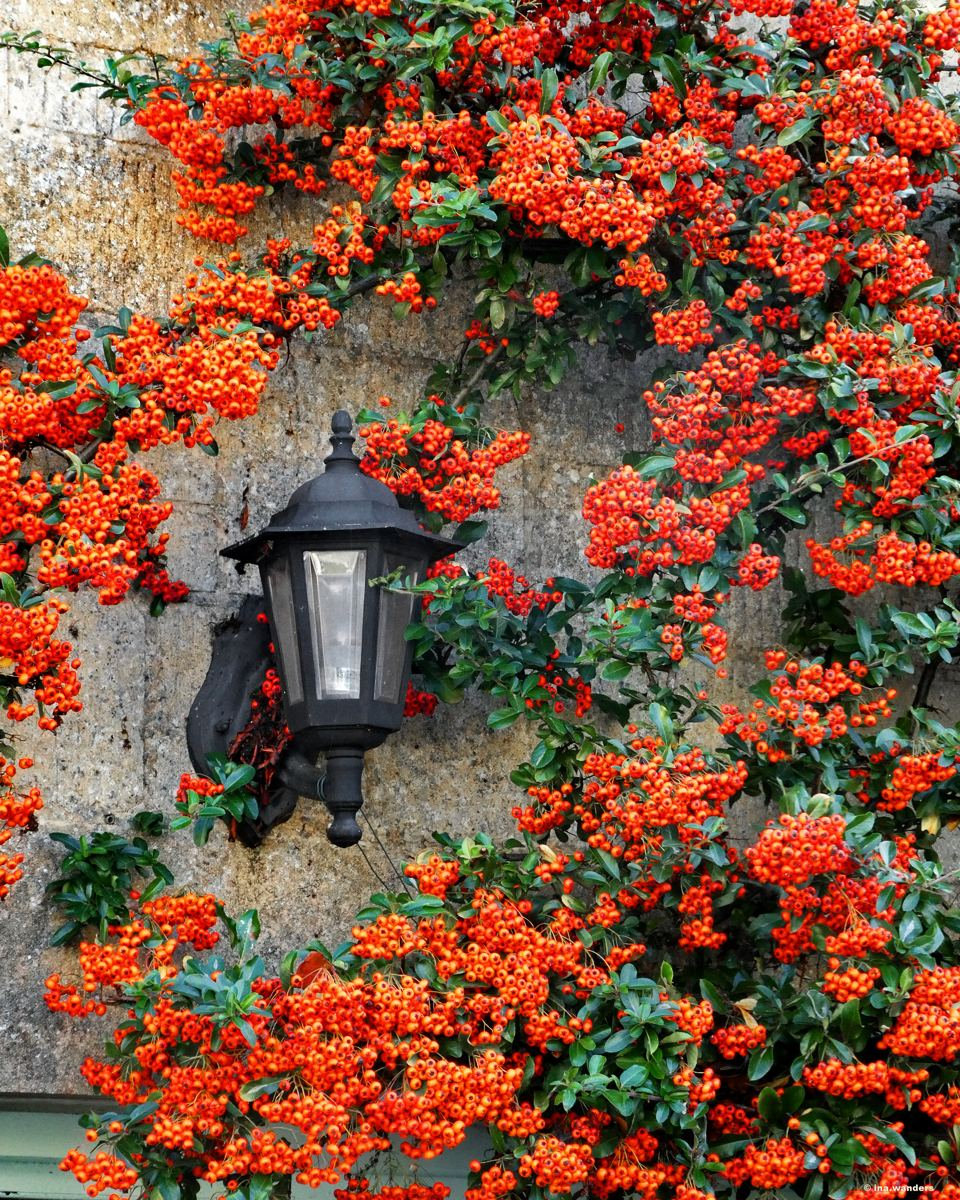
Last, orange pyracantha berries wrapped around a black lantern on a stone wall.
Visiting Painswick: Practical Notes
📍 Where: Painswick Rococo Garden, Painswick, Gloucestershire GL6 6TH, half a mile outside the village on the B4073. St Mary's Church is in the village centre.
⏰ Opening: In September 2026, the garden was open Wednesday to Sunday, 10 am to 5 pm, with last admission at 4 pm. Hours change by season and high winds can close it, so check the garden's website first.
📅 Open days: Snowdrop season runs from late January through February and must be booked in advance. The ticket site also lists winter evening lights.
🎫 Admission: Adults pay £9.60 to £10.60 depending on Gift Aid, and children aged 4 to 16 pay £4.40 to £4.90 (September 2026). Tickets are booked online, and Historic Houses members enter free. Walking the village and the churchyard costs nothing.
🚇 Getting there: Stroud station, on the line from London Paddington, is about three miles from the village. Buses run between Stroud, Painswick and Cheltenham, with fewer on Sundays. The garden's own site lists routes 66 on weekdays and 166 on Sundays.
🚗 Parking: Free at the Rococo Garden, with booking in snowdrop season. Parking in the village is limited.
☕ Food: The garden's Coffee Wagon serves coffee, cakes and light lunches, and afternoon tea can be booked.
⏳ How long: About two hours at the garden, plus an hour or two for the church and the village streets.
📷 Best time: Late October for beech and yew colour, February for snowdrops, July for the Exedra Garden.
🗺️ Nearby: Painswick Beacon, about 280 metres high and crowned by the Iron Age hillfort of Kimsbury, looks over the Severn Vale. The Cotswold Way passes through the village.
♿ Access: The garden is steep and uneven, so wheelchairs and scooters find it hard. There are 45 benches and handrails on the steepest sections, carers enter free, and dogs on leads are welcome.
_______________________
Did you enjoy this article? If you'd like to contribute to the running costs of WithinLondon, click the button below:
All photos were taken by Ina/WithinLondon, unless stated otherwise.


Comments