The Prettiest Villages in the Cotswolds, and the Market Towns Worth a Day

Updated: Oct 6

A steep stone gable, a drystone wall, and not a straight line anywhere. That is the Cotswolds I keep driving back to. Over several springs and autumns I have collected villages and market towns across the hills, from Bibury in the east of Gloucestershire to Castle Combe over the border in Wiltshire.
This page gathers them all in one place. Each one has a photo, a little history, and a link to my full post where I have written one. The places are grouped by the kind of day they suit, not ranked, because the right one depends on what you want from it.
Which Are the Prettiest Villages in the Cotswolds for a First Visit?
If it is your first trip, start with the three villages that appear on every postcard. They are the prettiest villages in the Cotswolds by reputation, and they earn it. They are also the busiest, so the trick is timing rather than avoiding them.
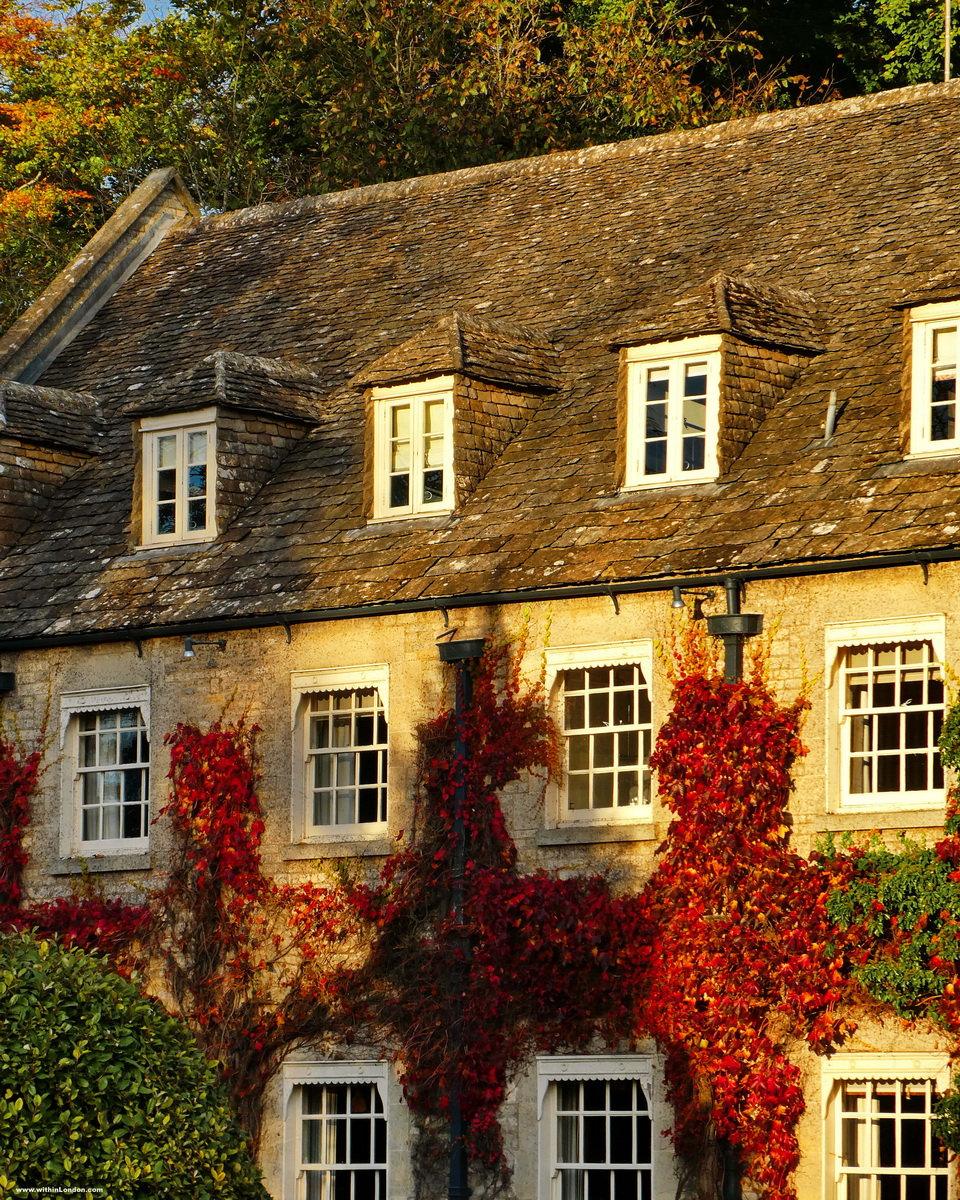
Bibury sits on the River Coln between Cirencester and Burford. I was there as the sun went down. William Morris is said to have called it the most beautiful village in England. I can't find the line in his own writing, so treat it as village lore. St Mary's Church has late Saxon fabric and a churchyard full of carved table tombs.

Arlington Row is the reason most people come. The building went up around 1380 as a monastic wool store. In the late 17th century it was converted into a row of cottages for weavers. The wool was washed and dried beside it on Rack Isle, a boggy water meadow that is a wildlife habitat today.
The row is Grade I listed and owned by the National Trust. It has appeared inside the cover of British passports. The cottages are tenanted homes, so you look from the lane in front and keep voices down.

Lower Slaughter is a village of low stone cottages along the River Eye, which is more stream than river. Little stone footbridges cross it every few yards. The name is thought to come from an Old English word for wet ground. I photographed it in autumn for my guide to the Cotswolds in autumn, when the creeper around the cottage doors had gone scarlet.
At the western end stands the Old Mill, a 19th-century red-brick corn mill with a waterwheel and a chimney for steam power. The mill shop and museum closed in April 2024 when the building changed hands for renovation. When I went there was only a kiosk. Don't plan lunch around it without checking first.

Castle Combe is in Wiltshire, at the southern tip of the Cotswolds. It is often called the prettiest village in England. I spent a spring morning in Castle Combe and arrived early, before the day-trippers. Ducks were in the shallows of the By Brook and wisteria was just budding on the cottage fronts.
Its wealth came from cloth. In the 14th and 15th centuries local weavers made broadcloth that sold well beyond England. The market cross dates from the 15th century, and St Andrew's Church keeps a faceless clock thought to be one of the oldest working in the country. Film crews love it too, from Doctor Dolittle in 1967 to War Horse in 2011.
Which Cotswold Market Towns Are Worth a Whole Day?
The villages fill an hour. The market towns fill a day, because they have shops, pubs, churches and a museum or two. These three sit on or near the old roads out of Oxford and London.
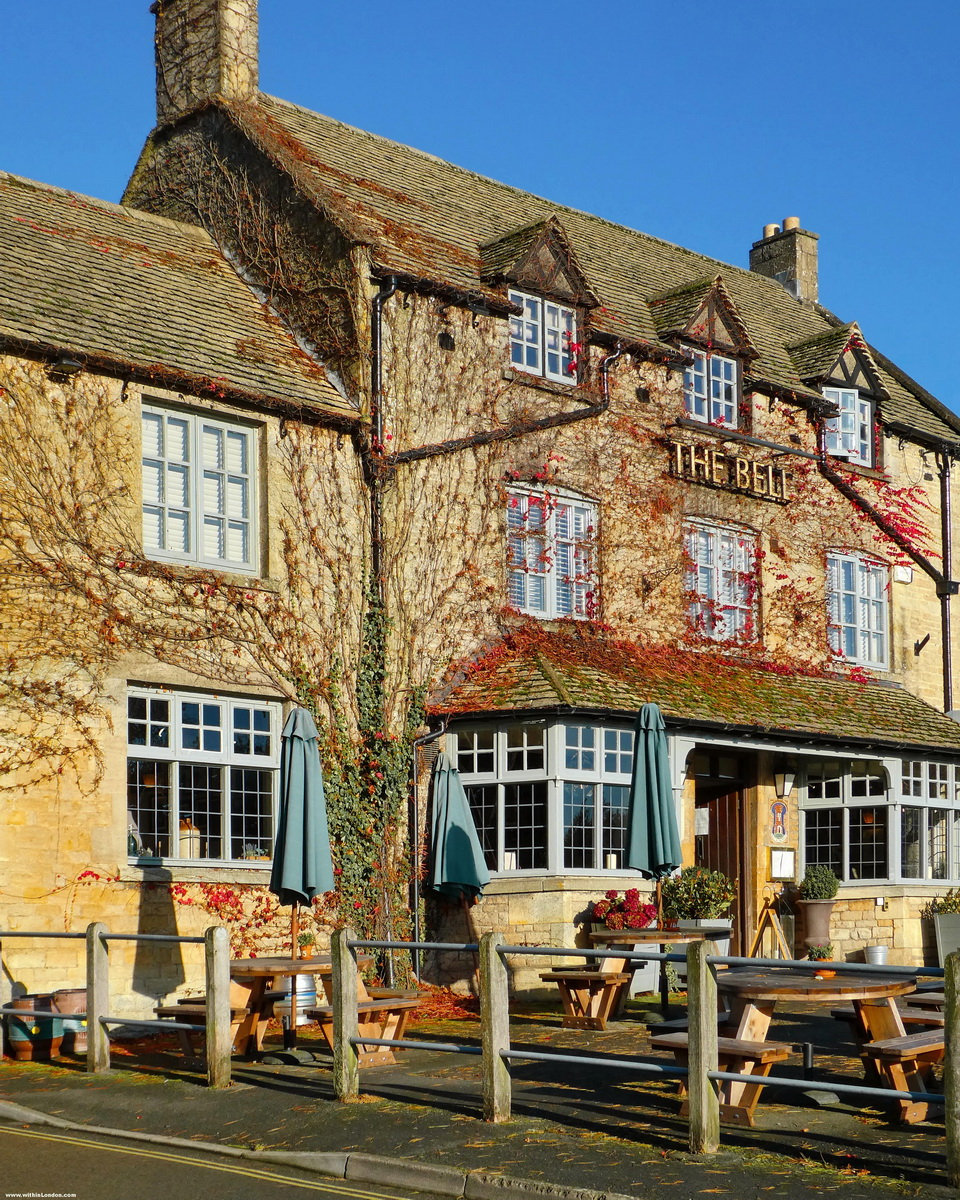
Stow-on-the-Wold sits at just over 800 feet, the highest of the Cotswold market towns. Its huge square was built for sheep. Daniel Defoe reported around 20,000 changing hands at a single fair. Narrow alleys called tures funnelled the flocks in. I was there in late October, on a weekday morning. The low sun was on the stone and the Bell's ivy had gone red.
On 21 March 1646 the last pitched battle of the First Civil War was fought just outside the town. Around a thousand Royalist prisoners were then held in St Edward's Church. Its north door is framed by two ancient yew trees. A local story links it to Tolkien's doors of Moria, but nobody has ever proved it.

Burford calls itself the gateway to the Cotswolds, and its High Street proves it. The street is one long slope of stone houses running down to a three-arched bridge over the River Windrush. I went on a Saturday in April, a clear blue day with the blossom just out. Lunch was a pulled pork bun from W J Castle, the butcher, eaten on the pavement.
The Church of St John the Baptist was built between about 1175 and 1500 on wool money. In May 1649 Cromwell locked around 340 mutinous soldiers, the Levellers, inside it. Three were shot against the churchyard wall on 17 May. One prisoner scratched his name and the date into the font. The Tolsey, a 16th-century market hall halfway down the hill, is a free local history museum.

Witney is eight miles east along the A40, and I did both towns in the same day. It is bigger and less pretty than Burford, and better for it. It is a working town with a big green, a supermarket and people who live there. The River Windrush runs through it, with a stream beside a cottage in spring.
Witney was a blanket town for centuries. The river water was believed to be the secret of its blankets. The Blanket Hall on the High Street was built in 1721 for weighing and measuring them. The last big maker, Early's, closed in 2002. The Buttercross in the market place dates from around 1600, and St Mary's spire rises to 154 feet.
Which Cotswold Towns Are Quieter Than Bibury and Bourton?
These two are small market towns rather than villages. Both were rich once, and both are much calmer than the honeypots. They are the ones I send people to when they tell me they hate crowds.

Northleach is the one everybody drives past on the A40. I think it has kept something the busier villages have lost. The Wheatsheaf Inn, a 17th-century coaching inn near the Fosse Way, was the star of my autumn photo walk. Its creeper had turned so red that the whole building read as one block of crimson.
In the 15th century Northleach wool was among the finest in England and its merchants were very rich. They paid for the Church of St Peter and St Paul, one of the great Cotswold wool churches. The wool merchant John Fortey raised the nave roof and added the tall clerestory windows. Brasses of merchants and their wives still lie in the floor. The church is usually open daily.
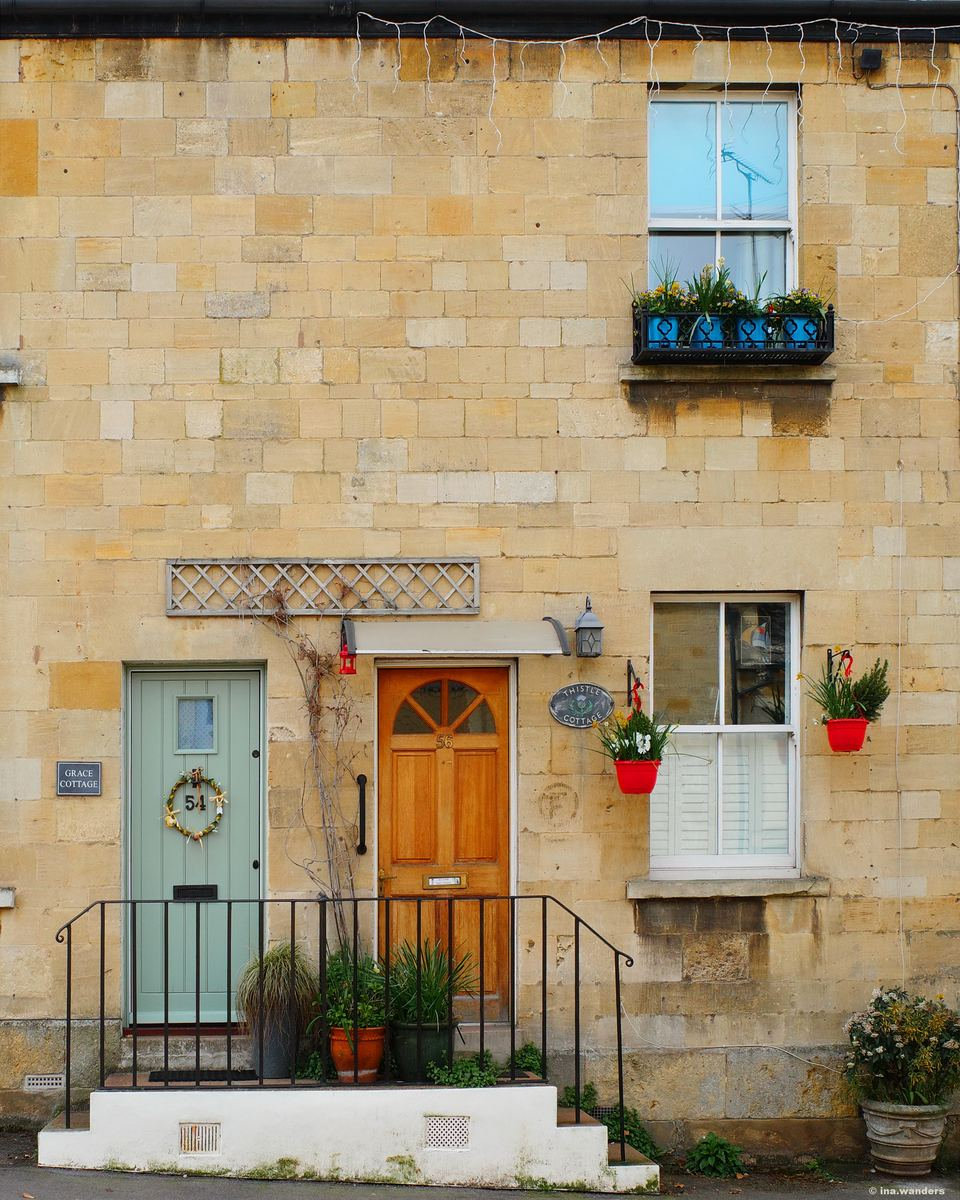
Winchcombe sits below the hills near Cheltenham, on the Cotswold Way footpath. I went over Easter weekend. There was cherry blossom by the old police station and Easter wreaths on the doors. I kept stopping to read the house names, like Mouse Hole Cottage. It is a proper working high street rather than a heritage set.
By the eighth century Winchcombe was an important centre for the Anglo-Saxon kings of Mercia. Its abbey was surrendered to the Crown in 1539 and almost nothing of it survives. St Peter's Church has more than 40 carved grotesques around the outside. Sudeley Castle is on the edge of town. Katherine Parr, Henry VIII's last queen, died there in 1548 and is buried in its chapel.
Which Villages Are Quietest in the South Cotswolds?
The south Cotswolds, around Stroud and Tetbury, get a fraction of the coaches. I explored them in late May from a base at Westonbirt, which I wrote up as a Cotswolds weekend around Tetbury and Minchinhampton. The stone is greyer here and the country opens up into commons.

Tetbury is a wool town turned antiques town. I went on a flat grey Saturday and spent most of it drifting between shopfronts. The Market House in the centre was finished in 1655 and is Grade I listed. It stands on three rows of stone columns. Its cupola, added in 1887 for Queen Victoria's Golden Jubilee, carries a weathervane with dolphins.
The Chipping Steps run down from the old market. Chipping comes from an Old English word for market. Highgrove, the King's country home since 1980, is just outside town. Its garden opens for guided tours in the warmer months, booked in advance through the Highgrove website.

Minchinhampton is the quietest small town on this list, and it was the real surprise of my spring trips. I spent a Saturday afternoon there and stopped at Henry's Bakehouse on the square for a coffee and pastry. A postbox painted with cows made me smile. Nothing in Minchinhampton feels put on for visitors.
Above the town is Minchinhampton Common, open grassland owned by the National Trust since 1913. Cattle and horses graze it freely in the warmer months, so drivers slow down for them. The common also holds a Neolithic burial mound, Whitfield's Tump, and the Bulwarks. That long bank and ditch is Late Iron Age, according to Historic England.

Box is a hamlet on the edge of Minchinhampton Common, and it is small enough to see in twenty minutes. The whole of it fits in one view: a red phone box and a post box side by side in front of a stone cottage. The stone here is the darker, rougher kind of the Stroud valleys.
There is not much to do in Box, which is the point. Park along Common Road, next to the common, and then walk out onto the grass. On that weekend I stayed at the Hare and Hounds at Westonbirt and ate at the Bear of Rodborough, a coaching inn on the next common along.
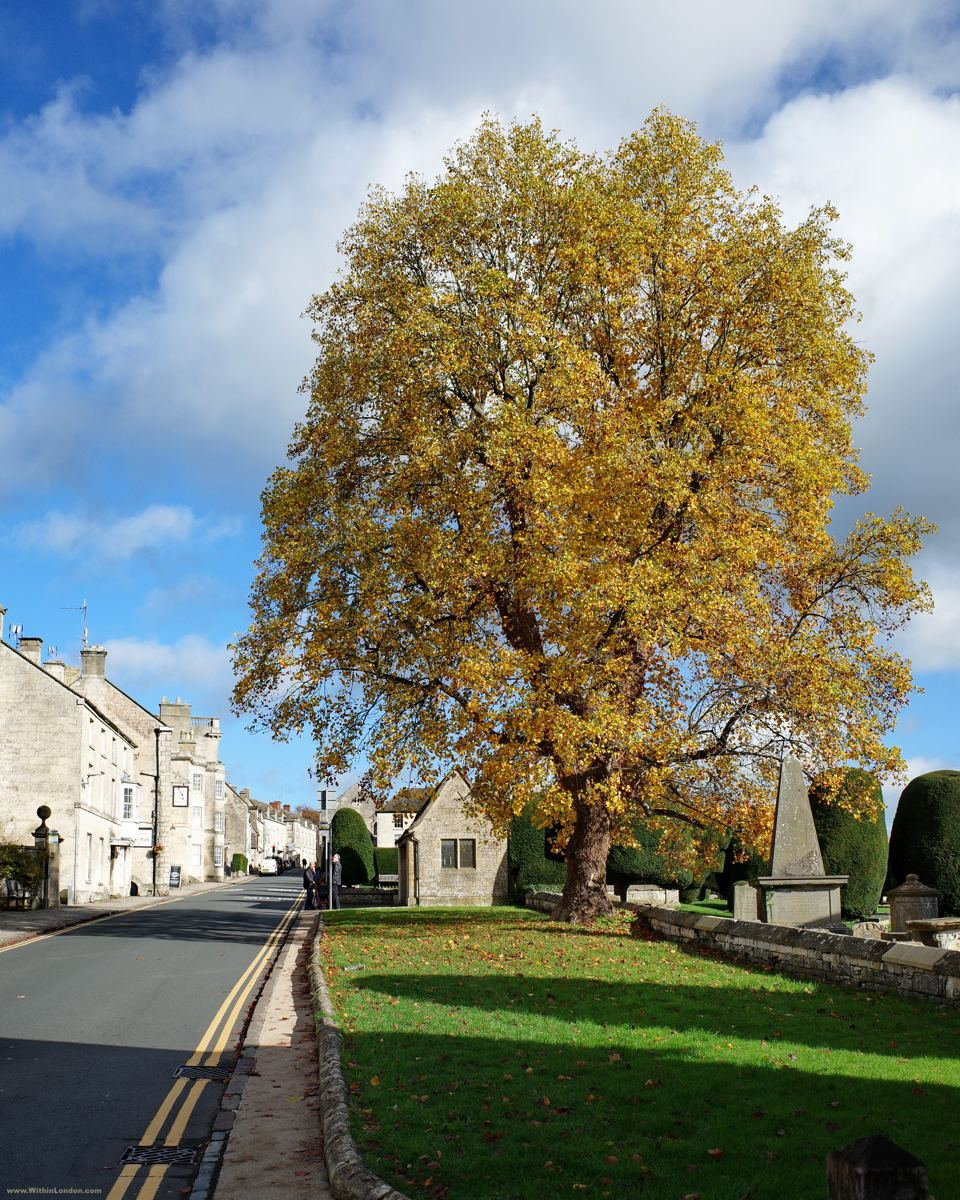
Painswick is the one to add to a south Cotswolds day. It grew rich on wool between the fifteenth and eighteenth centuries, and the stone houses along Bisley Street and New Street are what that money built. The churchyard of St Mary's is planted with clipped yews, and local legend says there are exactly 99.
I went in late October, when the beeches at Painswick Rococo Garden, half a mile outside the village, had turned copper. My full guide covers the garden, the churchyard and the front doors: Painswick in the Cotswolds.
What Is the Best Time of Year to See the Cotswolds?
I have been in spring and in autumn, and each gives a different Cotswolds. Spring is the emptiest and greenest time, before the coach season starts. My Castle Combe morning was in late March and Winchcombe was at Easter. Burford had blossom in early April, and Minchinhampton was in late May.
Autumn is the photographer's season. Late October into early November is when the Virginia creeper on Stow, Lower Slaughter and Northleach turns red. Bring a proper coat whatever the forecast says, because the wolds are high and exposed.
Summer is busiest, but it has lavender. Cotswold Lavender at Snowshill, near Broadway, opens its fields from June to early August. I've written it up in my guide to lavender fields near London. Whatever the month, arrive before ten on a weekday and the famous villages are yours for an hour.
On the escarpment above Broadway, a short drive from the lavender, is Broadway Tower. I've written up its history, the view from the roof and the Cold War bunker beside it.
Why Is Cotswold Stone Different Colours?
All the buildings on this page are made of the same family of rock, a Jurassic limestone called oolite. It formed under a warm, shallow sea and is made of tiny round grains, each built up in layers like a pearl. It is quarried all along the hills, and its colour varies across the region.
Depending on how much iron oxide it holds, the stone runs from creamy white through grey to a golden ochre. You can see the range on this page alone. The Bell in Stow and the cottages in Lower Slaughter are warm and golden. In Box and Minchinhampton the cottages are darker and rougher, and towards Bath the stone pales to cream.
What Is the Cotswolds National Landscape?
The Cotswolds were designated an Area of Outstanding Natural Beauty in 1966. On 22 November 2023 every AONB in England and Wales took the public name National Landscape. So the official name is the Cotswolds National Landscape. The legal protection is the same as before.
At about 790 square miles it is the largest National Landscape in England and Wales. It runs from near Bath and Wiltshire in the south, through Gloucestershire and Oxfordshire, to Warwickshire and Worcestershire in the north. That is why Castle Combe in Wiltshire and Burford in Oxfordshire both count as Cotswolds towns.
How Do You Plan a Cotswolds Trip from London Without a Car?
I drive, and on my spring weekend from London all three places were far easier by car. Castle Combe is about two hours from central London along the M4. Burford is around 75 miles away on the M40 and A40, and that takes an hour and a half outside rush hour.
Without a car it is still possible, but it takes planning. Great Western Railway trains from London Paddington reach Moreton-in-Marsh in about an hour and a half. Kemble station is the one for Cirencester and Tetbury, and Charlbury is on the same line as Moreton.
From Moreton-in-Marsh, the Pulhams 801 bus runs to Stow-on-the-Wold and Bourton-on-the-Water, with fewer buses on Sundays. Bibury has only a thin service from Cirencester and none on Sundays. Castle Combe and Box are the hardest to reach without a car. Check timetables the day before, because a missed last bus means a long taxi ride.
Visiting the Cotswolds: Practical Notes
📍 Where: The Cotswolds National Landscape covers parts of Gloucestershire, Oxfordshire, Wiltshire, Warwickshire, Worcestershire and near Bath. Most places on this page are in Gloucestershire. Burford and Witney are in Oxfordshire, and Castle Combe is in Wiltshire.
⏰ Opening: The villages and streets are open all the time. Churches usually open in daylight hours. Sudeley Castle's 2026 season runs from 14 March to 1 November, 10am to 5pm with last entry at 3pm. Check each official site before you go.
🎫 Admission: Villages, commons and most churches are free, and the Tolsey Museum in Burford is free. Sudeley Castle charged £24 for adults in 2026. Highgrove garden tours must be booked ahead.
🚇 Getting there: Trains from London Paddington to Moreton-in-Marsh, Kingham, Charlbury or Kemble, then local buses such as the Pulhams 801. Services are thin in the evenings and on Sundays.
🚗 Parking: Bibury has free parking opposite the Trout Farm and along the main road, and it fills fast. Castle Combe has a car park at the top of the hill because the village lanes are closed to visitors' cars. In Box, park on Common Road beside the common.
☕ Food: W J Castle in Burford for a bun on the pavement and Henry's Bakehouse in Minchinhampton for coffee. Pubs and tearooms everywhere, though the Lower Slaughter mill café closed in 2024.
⏳ How long: An hour for each village, half a day for Stow or Burford, and a full day to pair two or three places. A weekend covers the north or the south, not both.
📷 Best time: Before 10am on a weekday. Late March to May for blossom and green, late October for red creeper, June to early August for lavender.
♿ Access: Bibury has a level tarmac path in front of Arlington Row. Stow's square and Burford's High Street are paved but Burford is steep. Commons and riverside paths are uneven and muddy after rain.
🗺️ Nearby: Bourton-on-the-Water and Upper Slaughter are a short walk from Lower Slaughter. Westonbirt Arboretum is next to Tetbury, and Cogges Manor Farm is in Witney.
Which Cotswold village or town would you add to my list, and should it be a spring trip or an autumn one?
_______________________
Did you enjoy this article? If you'd like to contribute to the running costs of WithinLondon, click the button below:
All photos were taken by Ina/WithinLondon, unless stated otherwise.


Comments