The Most Beautiful Staircases in London: Hotels, Palaces, Houses and Spirals

A gilded handrail slides down past a dark cast-iron balustrade, and the marble steps below it curve out of sight. The Grand Staircase at St Pancras is where this list starts. Over the years I have photographed a lot of London stairs. Some were in palaces and some in shops. One was in a law library that I could only get into during Open House.
Staircases in London come in every style the city has built. There are Jacobean newel posts carved with lions, Georgian mahogany, Victorian Gothic and a 1930s cinema foyer. There are spirals of wrought iron, stone, steel and glass. Each entry below has a photo and a few checked facts. Where I have written a full post about a place, the link takes you there.
Which Are the Grandest Staircases in London?
These are the ceremonial ones, built to impress whoever climbed them. One is in a railway hotel, one in a palace and two in great houses.
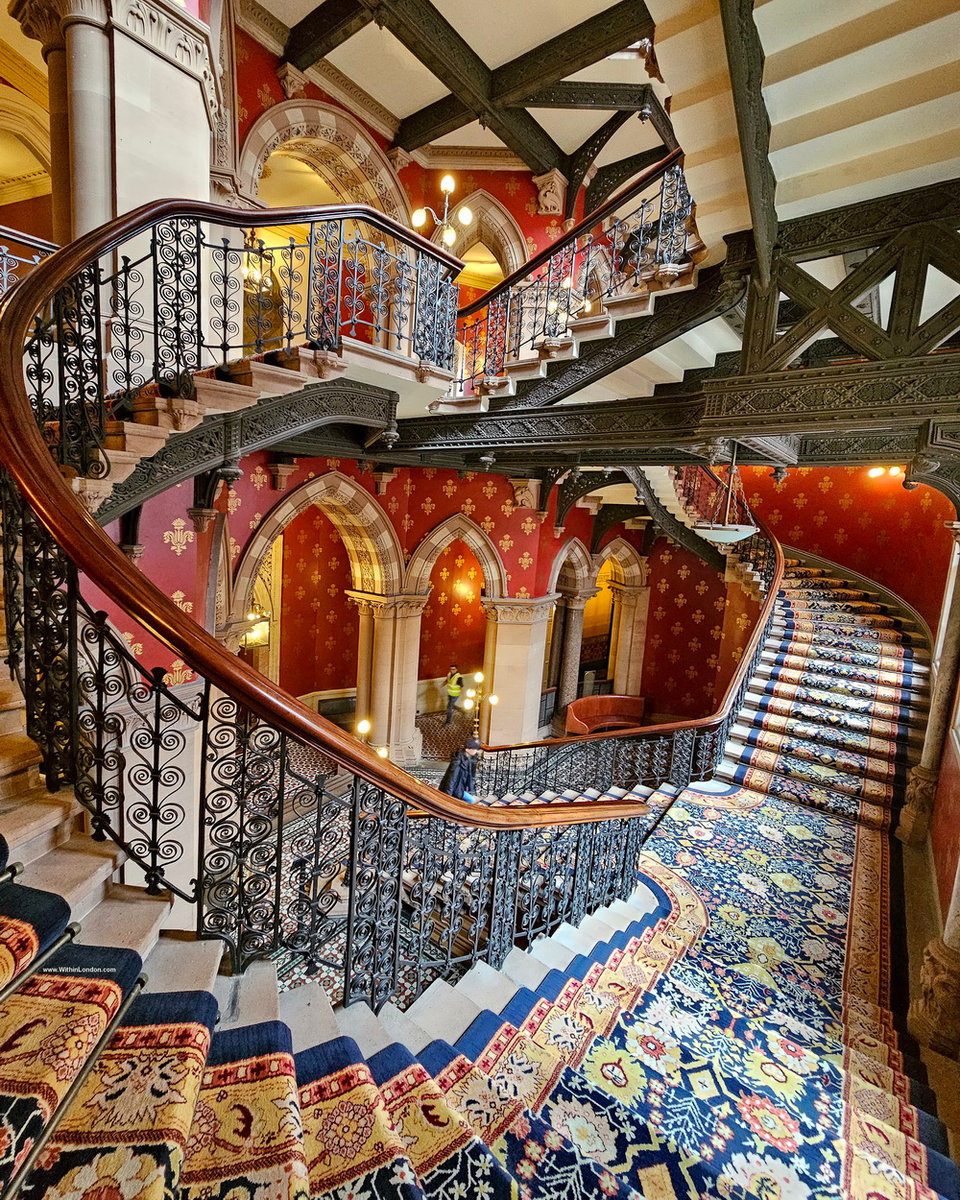
The Grand Staircase at St Pancras was part of Sir George Gilbert Scott's Midland Grand Hotel, whose east wing opened on 5 May 1873. The hotel closed in 1935 and became railway offices, then reopened as a hotel in 2011. On 3 June 2025 it was renamed St. Pancras London, Autograph Collection. The hotel's bars and restaurants welcome non-residents, which is the easiest way in. My full post is about the St Pancras Grand Staircase.
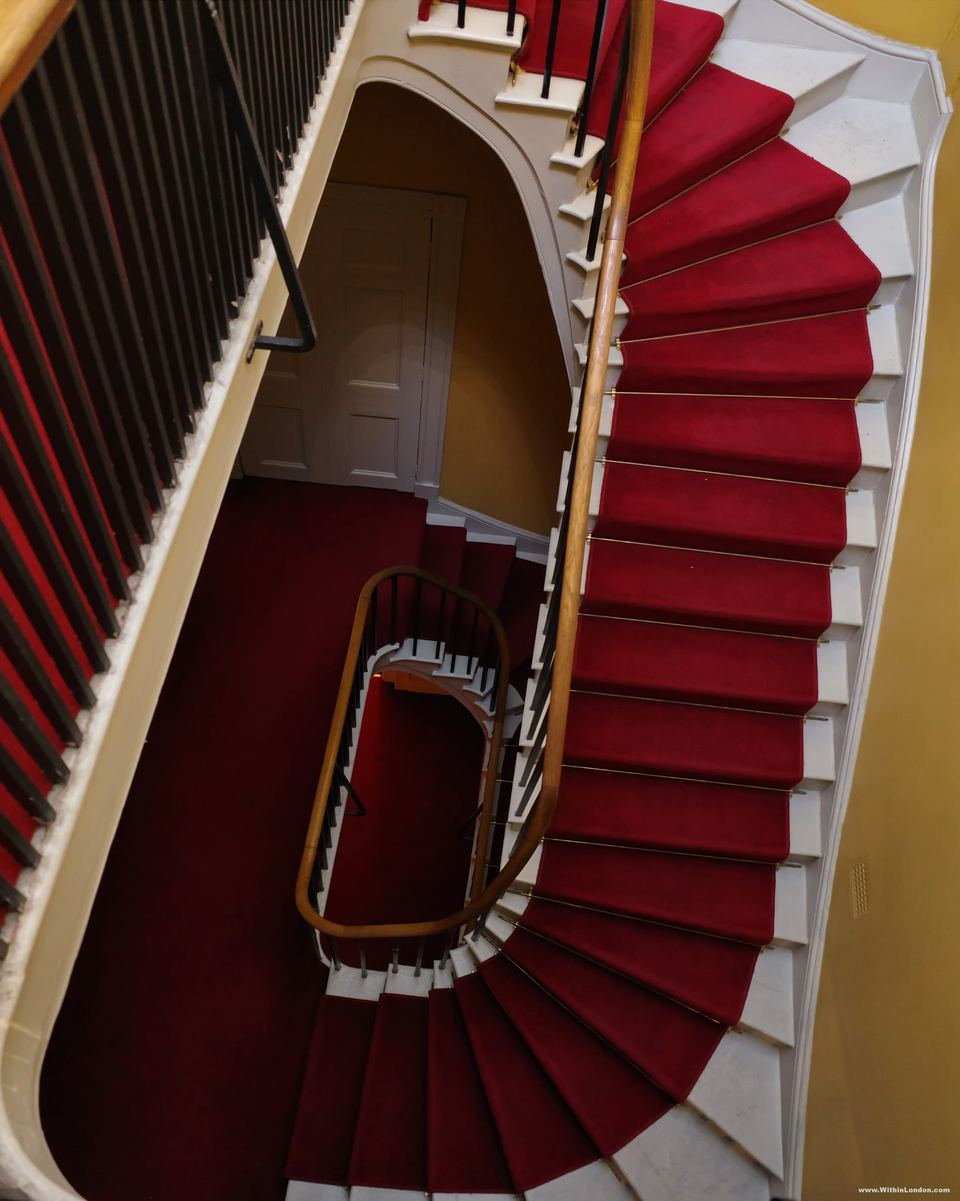
At Kensington Palace, the King's Staircase leads up to the State Apartments. Looking down, its curving flights run over a red carpet and a dark handrail. William Kent painted the walls between 1725 and 1727, replacing plain wooden panelling from Sir Christopher Wren's time. He filled them with members of George I's court. Look for Peter, a boy found living alone in a German forest. Kent put himself on the ceiling too, in a brown turban with a palette.
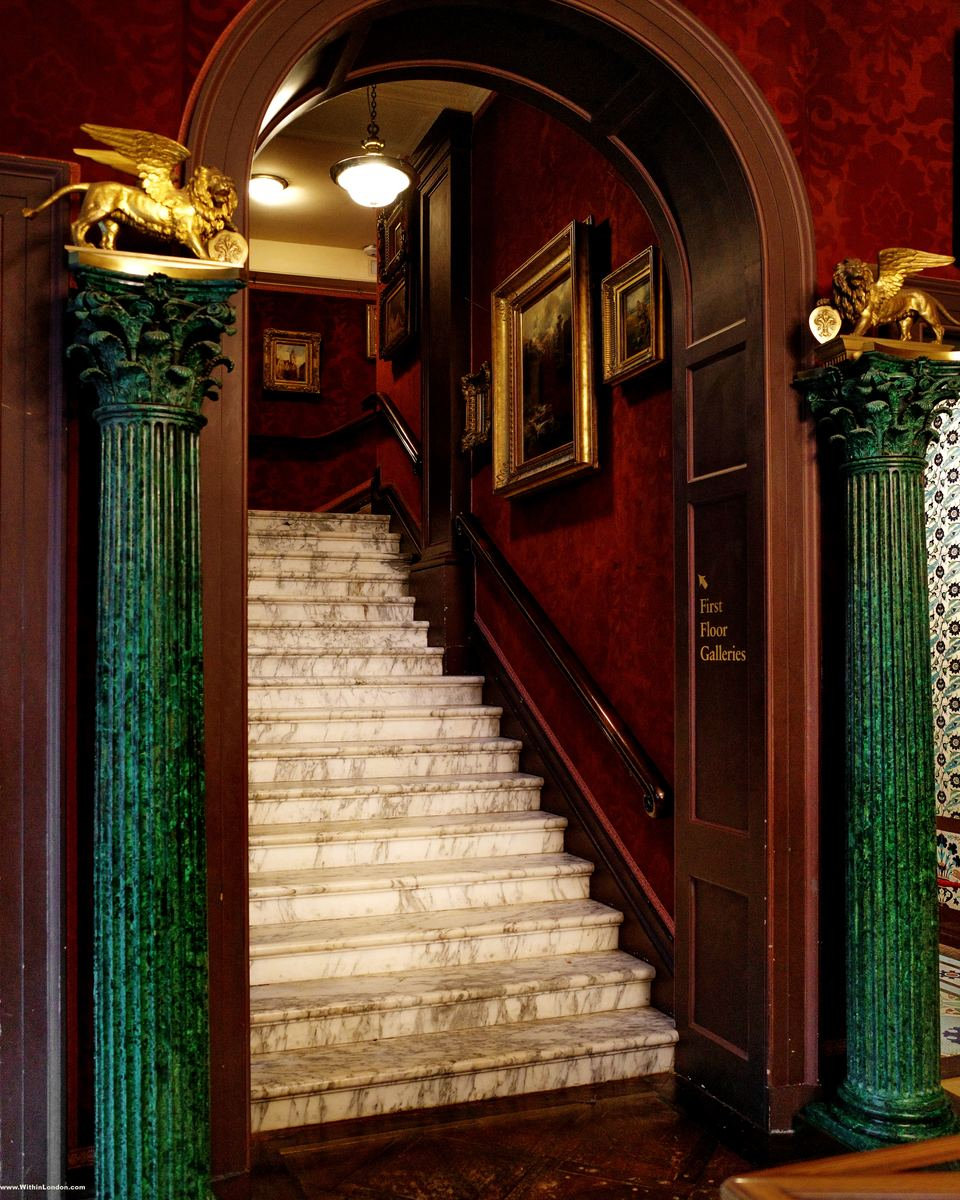
The grand staircase at Hertford House, home of the Wallace Collection, is next. Green marbled columns stand on either side, topped with gilded winged lions. The wrought-iron balustrade is older than the house around it. It was made in 1719 for the Royal Bank in Paris. The museum is free, and my guide to the Wallace Collection covers the rest of the house.
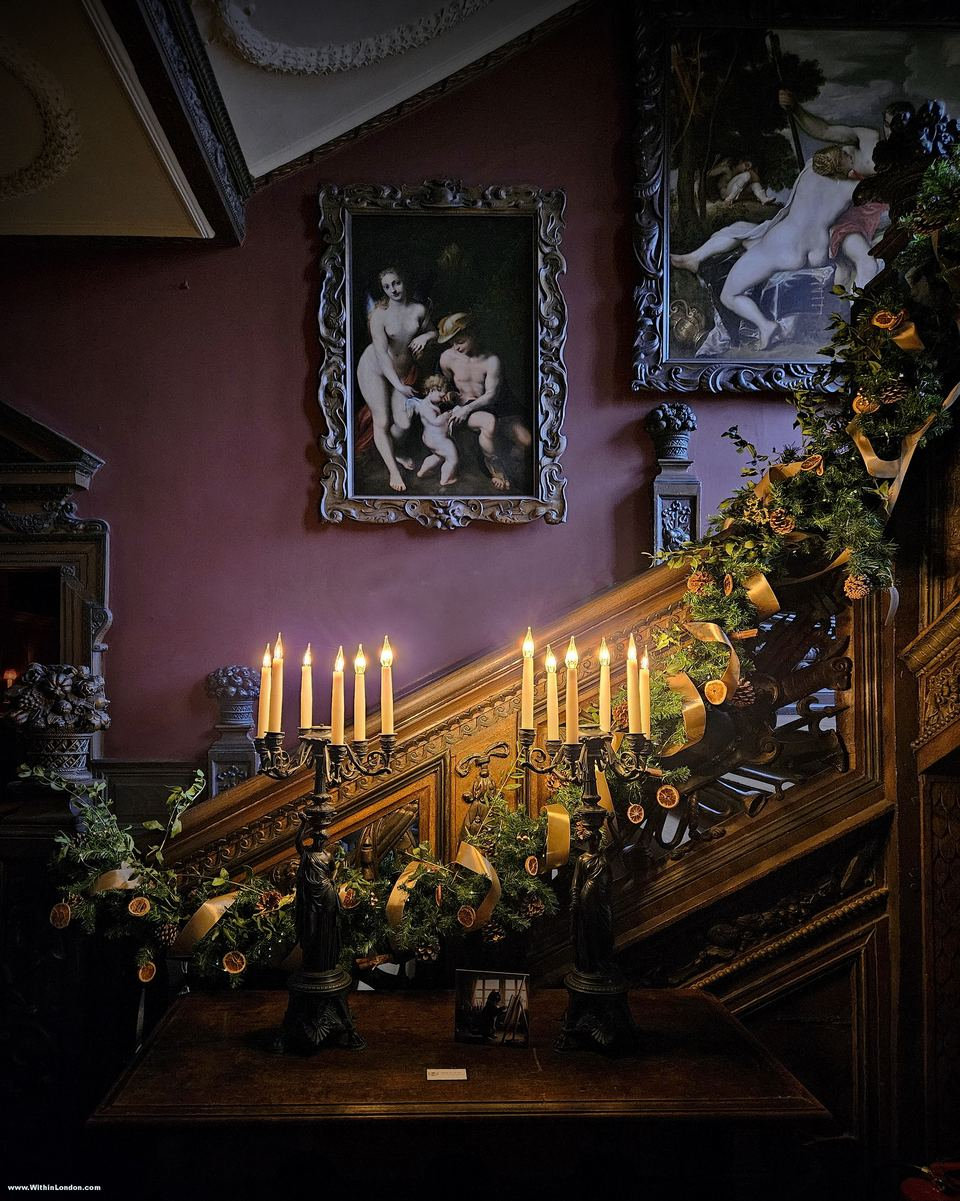
The Great Staircase at Ham House, near Richmond, was built in 1638–39 for William Murray, who was improving the house as he rose at court. Its balustrade panels are carved with trophies of arms: field guns, cannonballs, swords, shields and quivers of arrows. I went at the end of December, when candelabras and green garlands lined the dark wooden stairs. The National Trust runs the house, and Christmas at Ham House has my photos from that day.
Which Historic Houses in London Have the Most Beautiful Staircases?
These are smaller houses, lived in by a painter, a cartoonist, a royal mistress and a Jacobean widow. Their stairs are part of the story of the people who lived there.
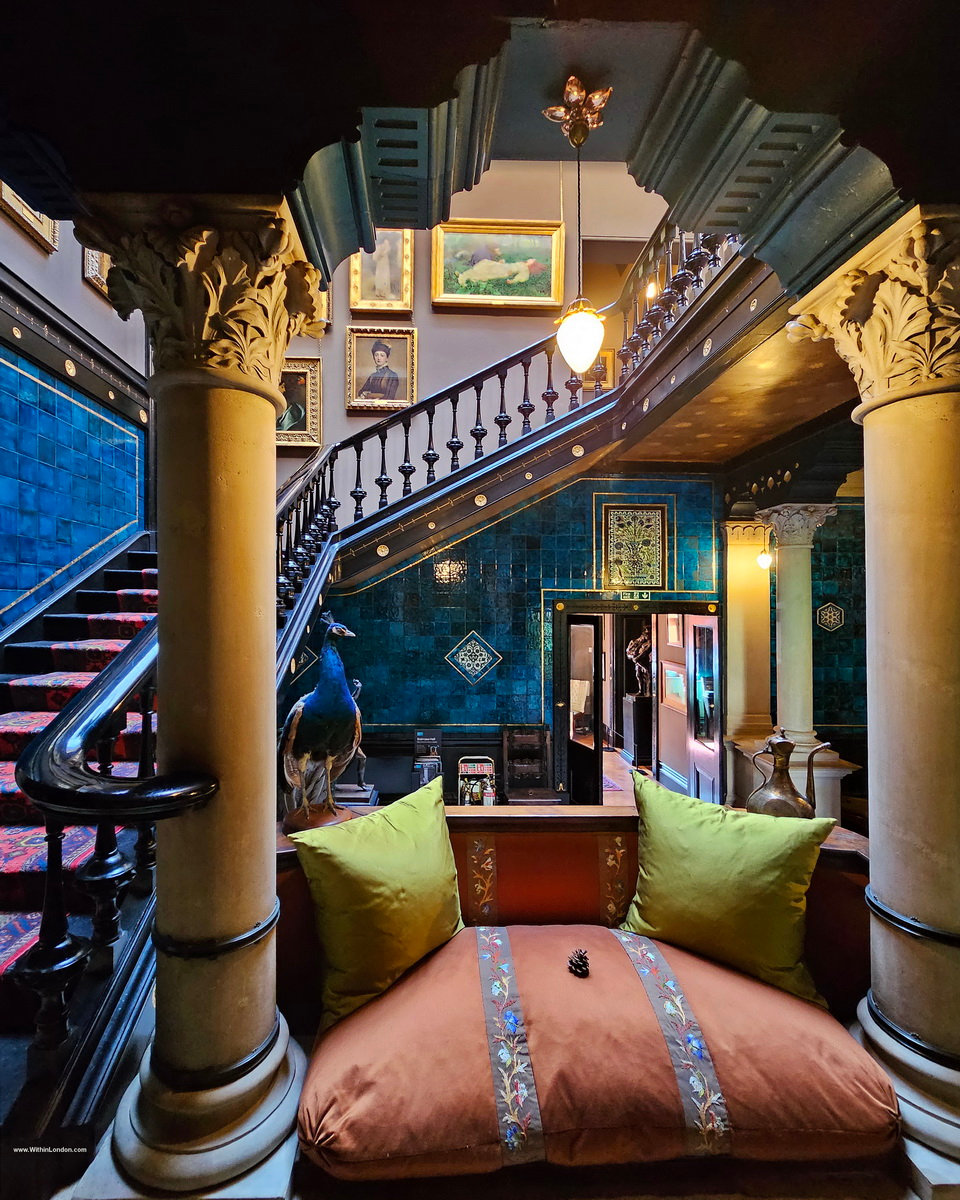
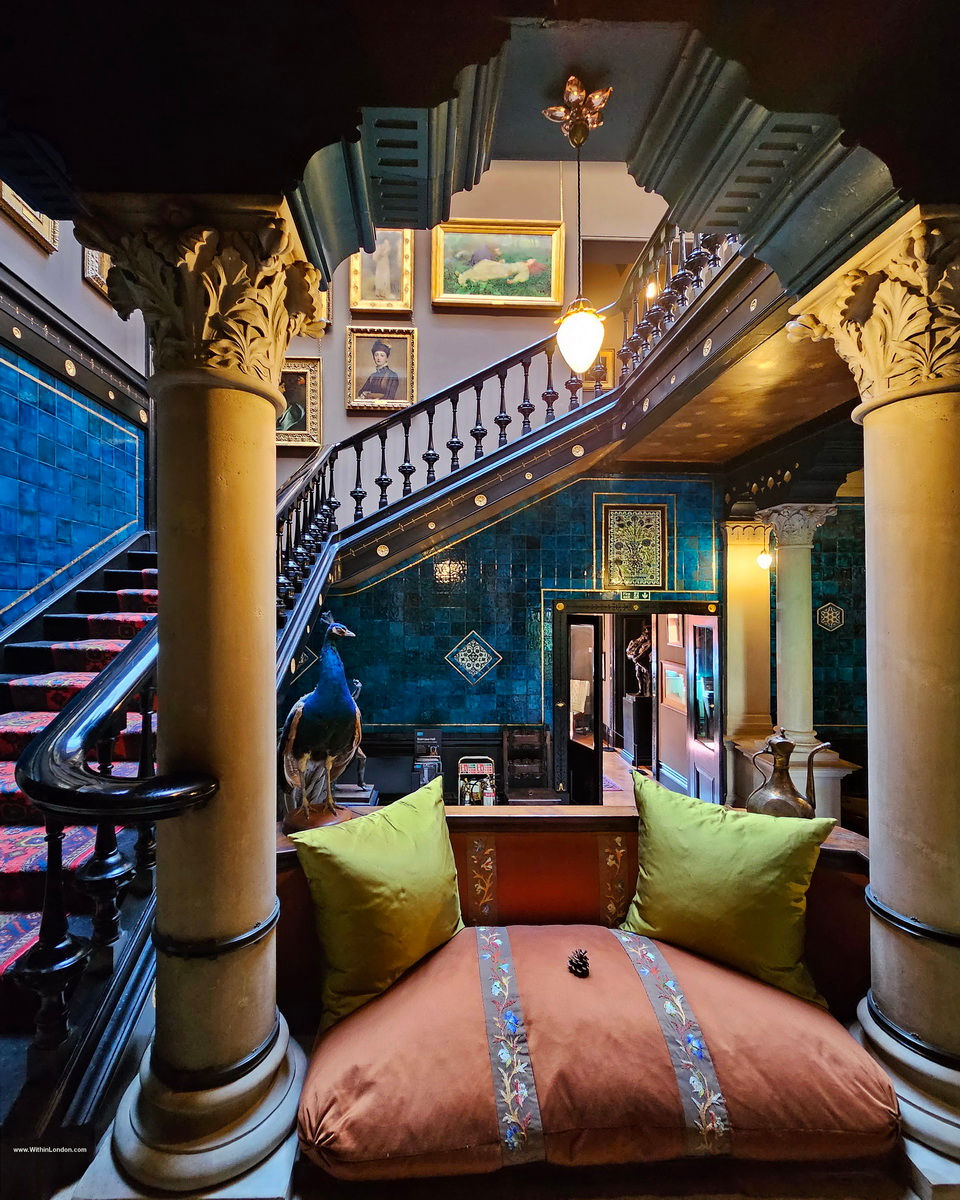
Leighton House in Holland Park was the home and studio of the painter Frederic Leighton. Its staircase hall is lined with peacock-blue tiles, and a stuffed peacock stands at the foot of the dark wooden stairs. The tiles along the main staircase are by William De Morgan. Go on a dull winter day and it feels like a trip somewhere far away. It opens every day except Tuesday. My reasons to visit Leighton House go further.
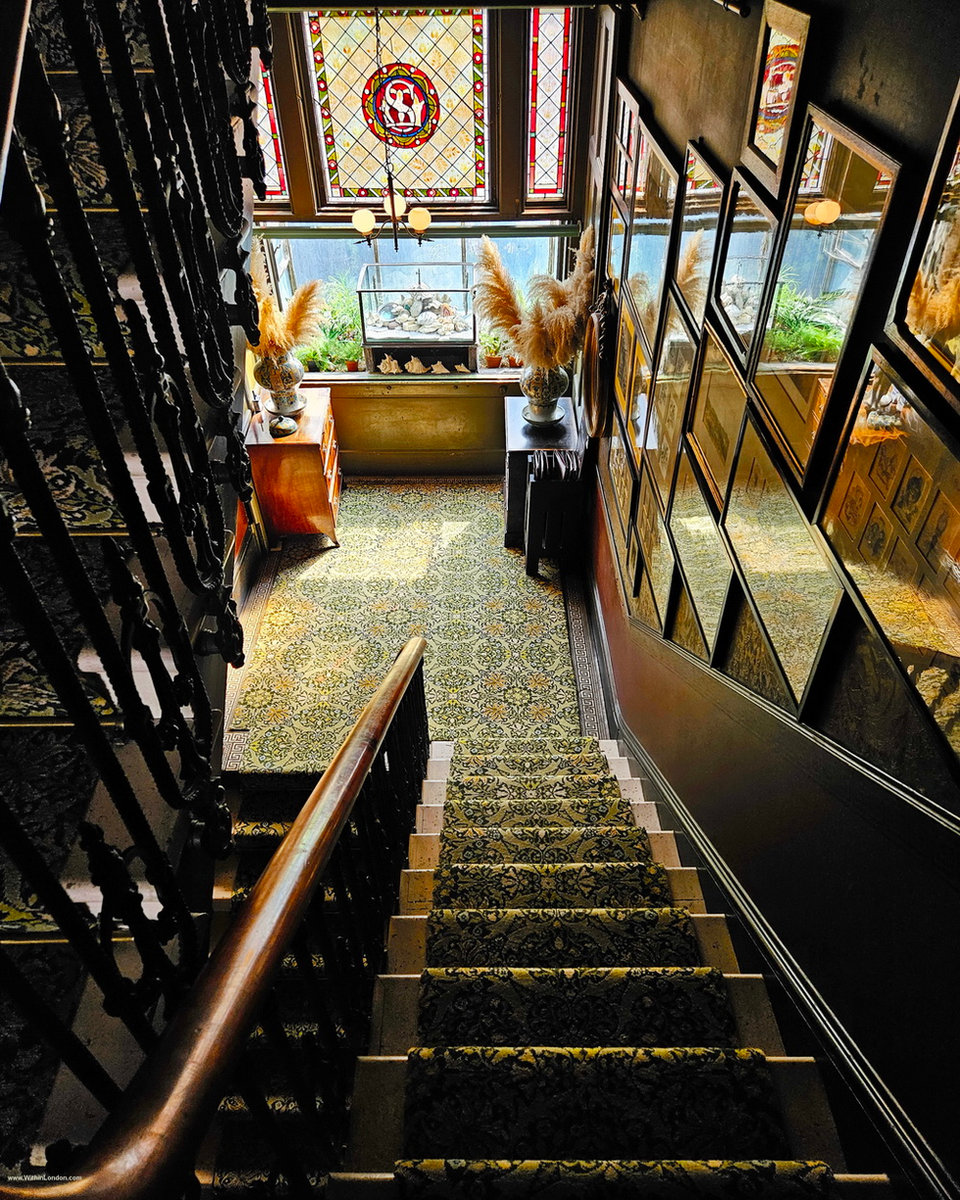
Sambourne House, at 18 Stafford Terrace, is an ordinary terrace house built in 1868. The Punch cartoonist Linley Sambourne moved in in 1875 and covered the walls with framed pictures. Look down the staircase and the frames climb right up to the ceiling. The Victorian Society was founded here in 1958. It opens Wednesday to Sunday, and volunteer tours are included in the ticket. There is more in my Sambourne House post.
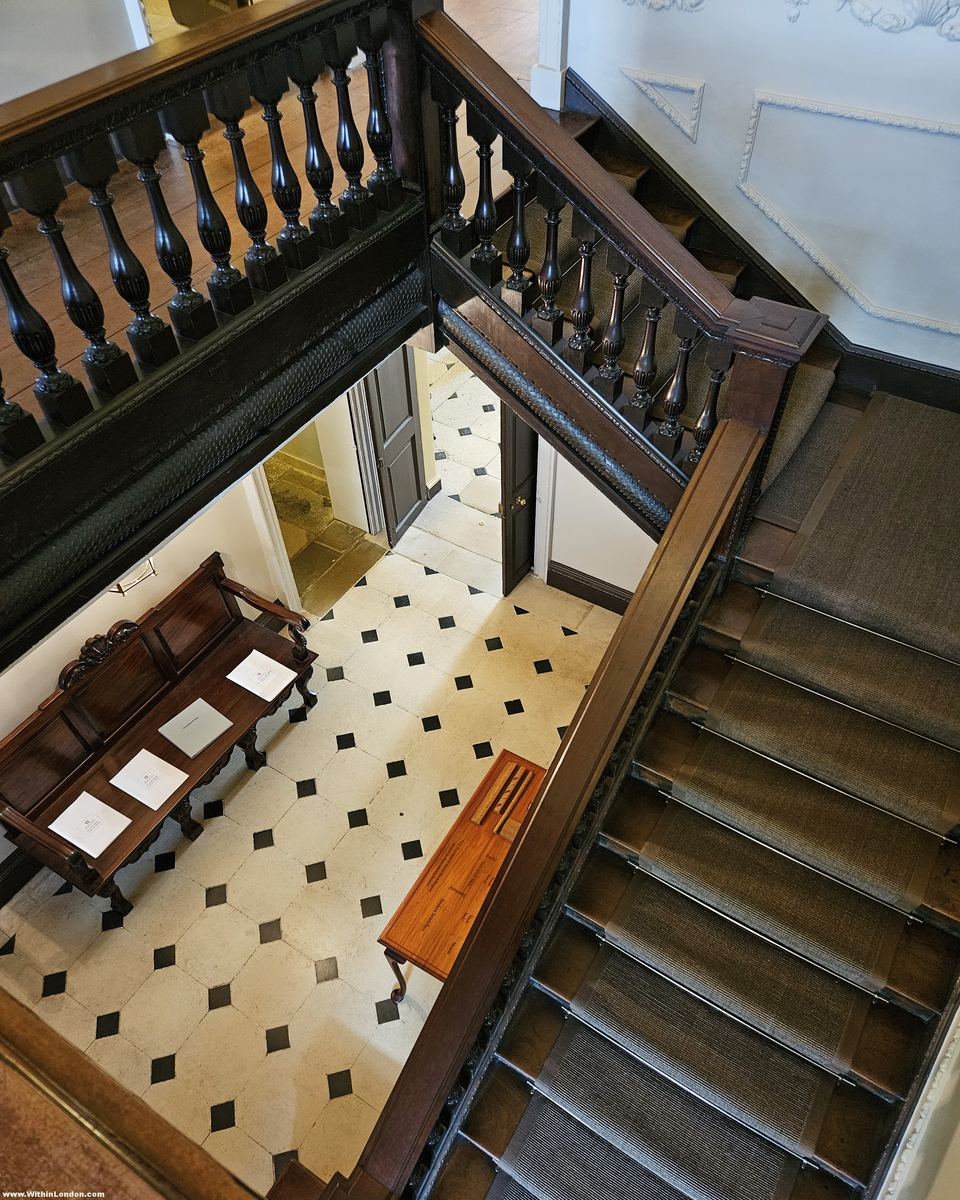
Marble Hill House in Twickenham was built between 1724 and 1729 for Henrietta Howard, mistress of the future George II. Its staircase is mahogany, a costly and fashionable wood at the time. A talk published by the Friends of Marble Hill says the timber came from Honduras, as a gift from George II. Look down the dark balusters to a chequered floor. The house reopened in May 2022 after an £8 million restoration. My Marble Hill House post has the full story.
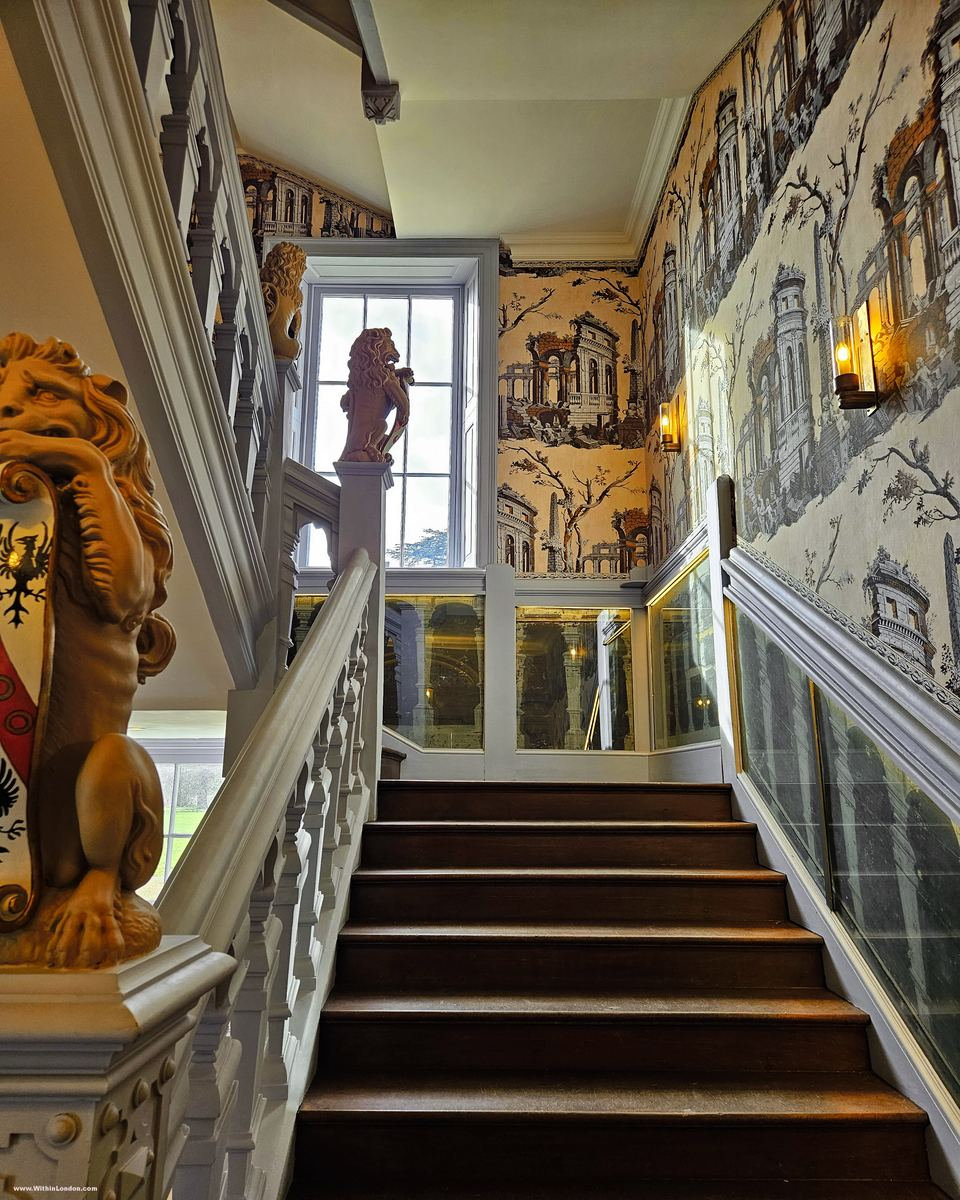
Boston Manor House in Brentford was built in 1623 for Lady Mary Reade. Its Jacobean staircase is mostly original, and carved lions sit on the newel posts holding heraldic shields. The scenic wallpaper is a replica of a 1750s paper, one of the earliest of its kind in Britain. Some of the original survives under glass at the top of the house. I went on a cold, bright February morning. Entry is free, and my Boston Manor House post has more.
Where Can You See Spiral Staircases in London?
Spirals are the stairs people photograph most. Stand at the bottom and look up, or lean over the top and look down. These four span almost four hundred years.
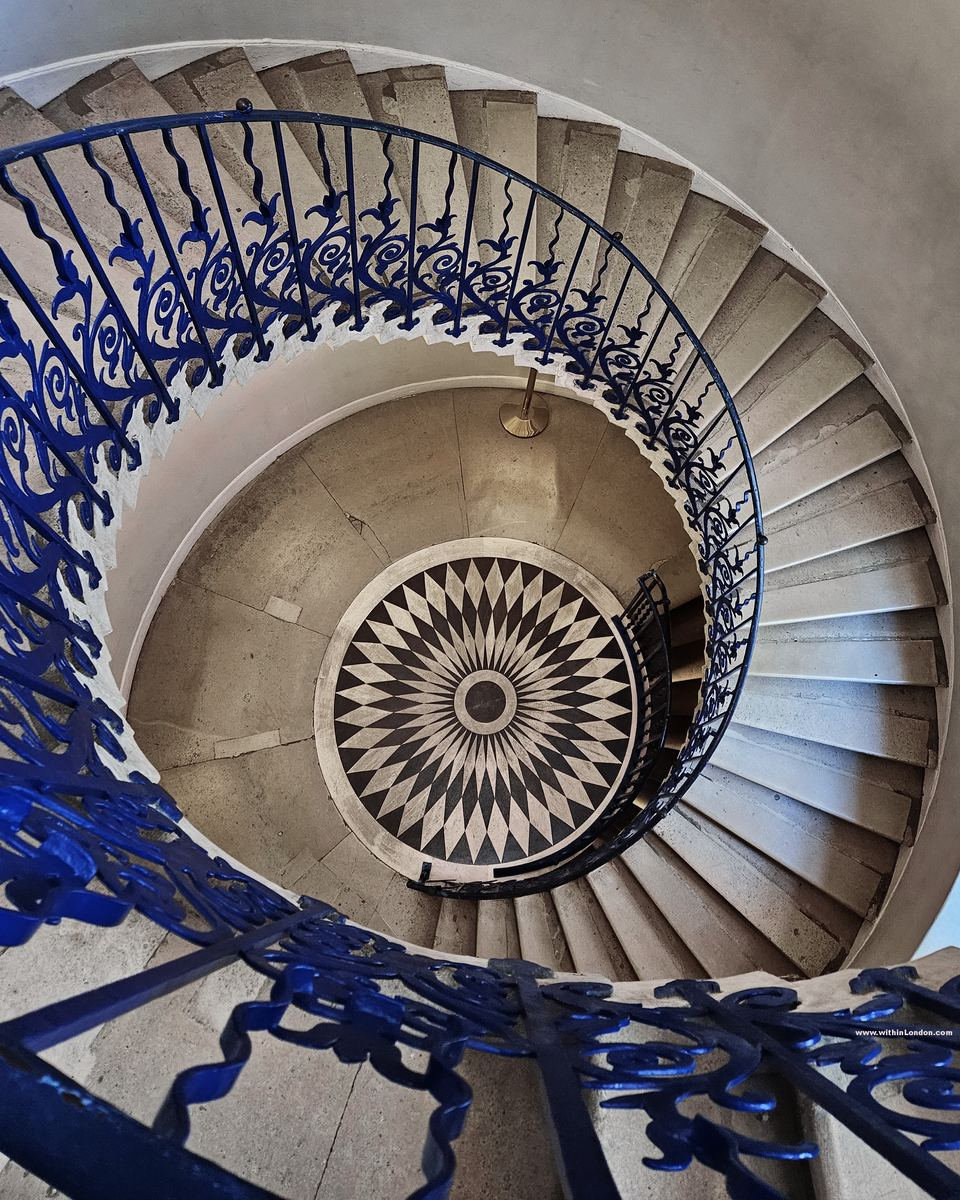
The Tulip Stairs are in the Queen's House in Greenwich, which Inigo Jones began in 1616. Royal Museums Greenwich calls them the first geometric self-supporting spiral stair in Britain. There is no central post: the stone steps curl up the wall, and a blue wrought-iron balustrade of stylised flowers follows them. It is best seen from above. In 1966 a visitor photographed the stairs and found what look like shrouded figures on the print. Entry to the Queen's House is free.

Somerset House was designed by Sir William Chambers, and the Royal Academy held its exhibitions there from 1780. Visitors reached its Great Room up this curving stone staircase, which leads to the Courtauld Gallery. Around 1800, Thomas Rowlandson drew them tumbling down it in a print called The Exhibition Stare-Case. Look down the spiral from near the top. I climbed it in late August for Barbara Hepworth in colour at the Courtauld.
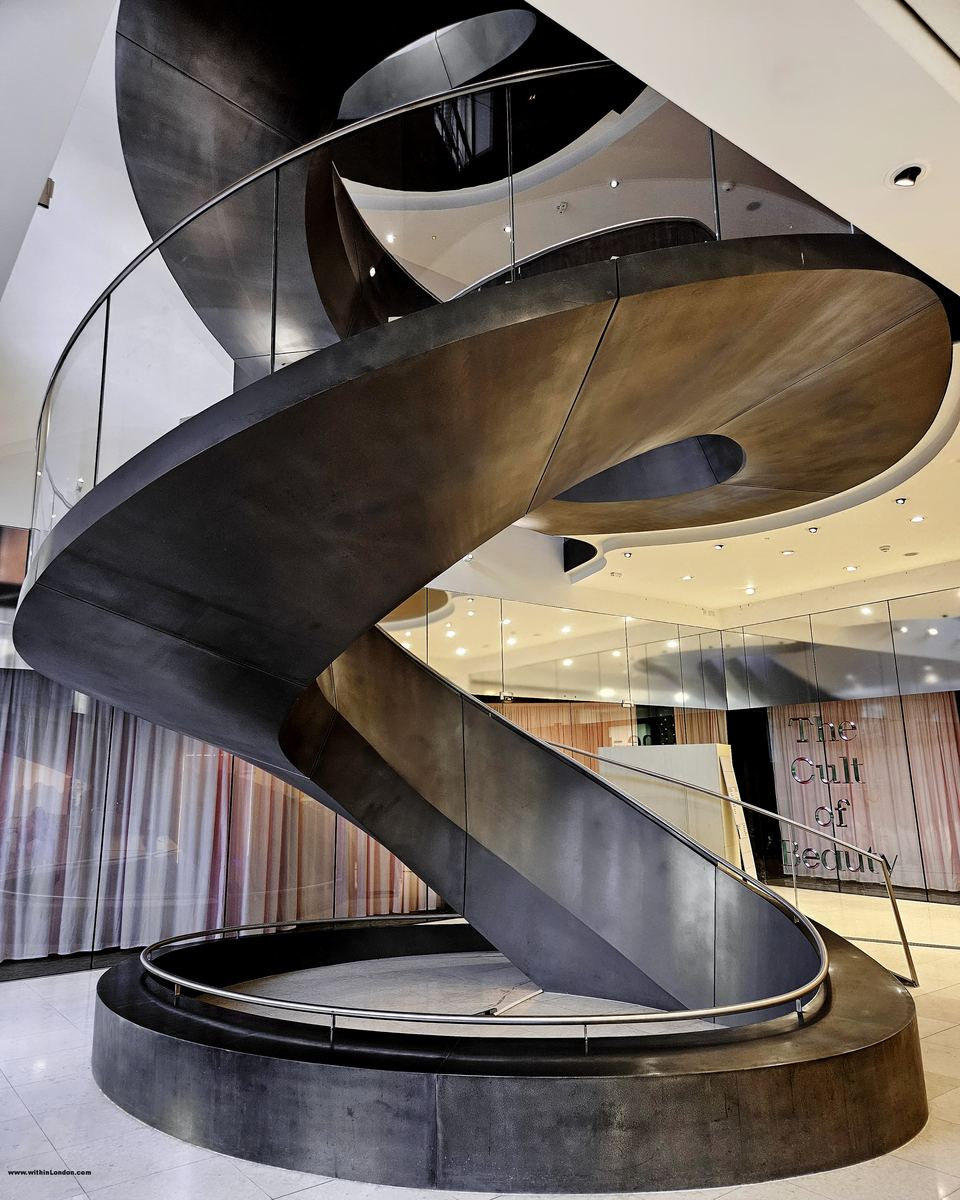
The spiral at Wellcome Collection on Euston Road is the youngest here. It was part of a £17.5 million development by the architects WilkinsonEyre, which opened in 2015. A dark steel ribbon curls up through the building, with pale limestone steps on its inside edge. It links the ground floor to the galleries and to the Reading Room on the second floor. I went on a Wednesday morning in January, when the stairwell was quiet. Entry is free.

Japan House London opened on Kensington High Street on 22 June 2018. Its black steel spiral staircase was made in Japan by the metalwork firm Kikukawa Kogyo, then shipped over and installed. The interior was designed by Masamichi Katayama of Wonderwall, and Ney & Partners worked on the engineering. The curving stringer is 40mm steel, and the balusters are thin round bars. The gallery and shop are free to visit. My post on what's on at Japan House London has more.
Staircases You Can See During Open House
The Open House Festival opens hundreds of buildings each September, most of them free. The 2026 festival ran from 12 to 20 September. These three staircases are easiest to see then, and my Open House 2026 guide lists more buildings worth booking.
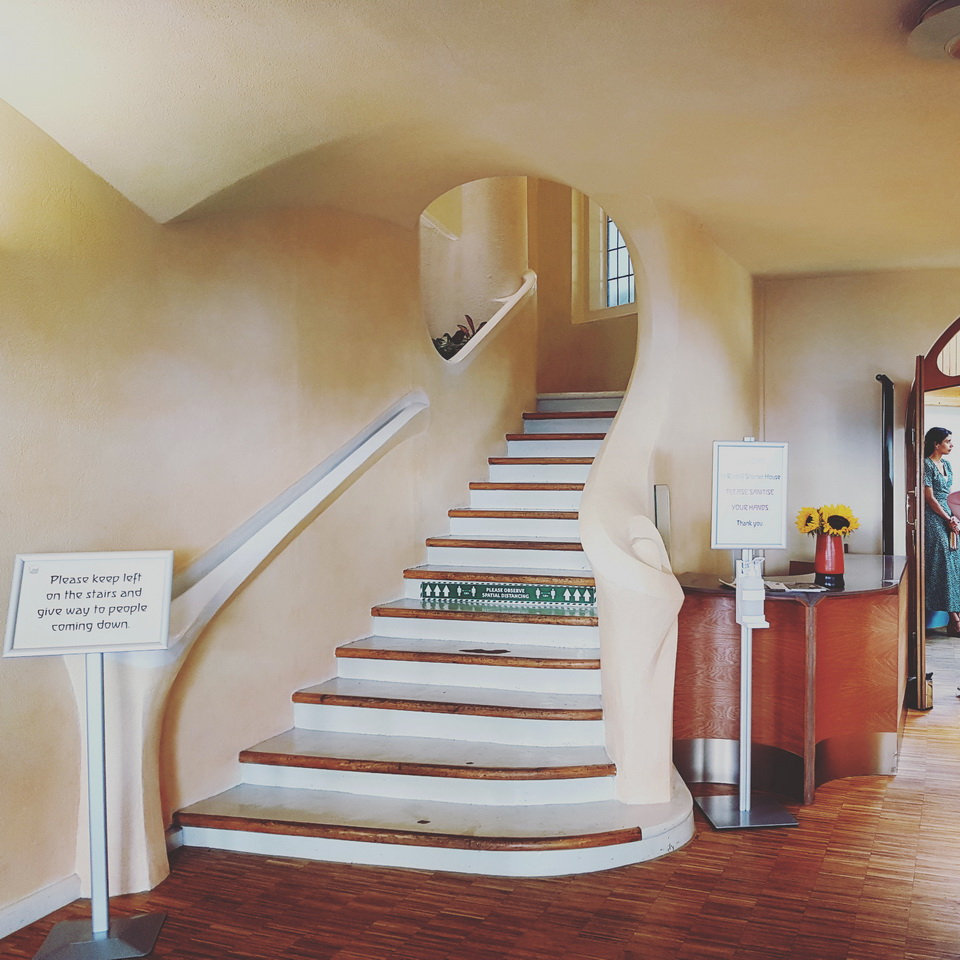
Rudolf Steiner House on Park Road was designed by Montague Wheeler and built in stages between 1926 and 1937. The Open House listing calls it the only example of Expressionist architecture in London. Its staircase is the showpiece, with flights that curve and swell like plant forms. The bookshop and café are open to the public, but Open House is the day to see the whole building. My Rudolf Steiner House post has more.
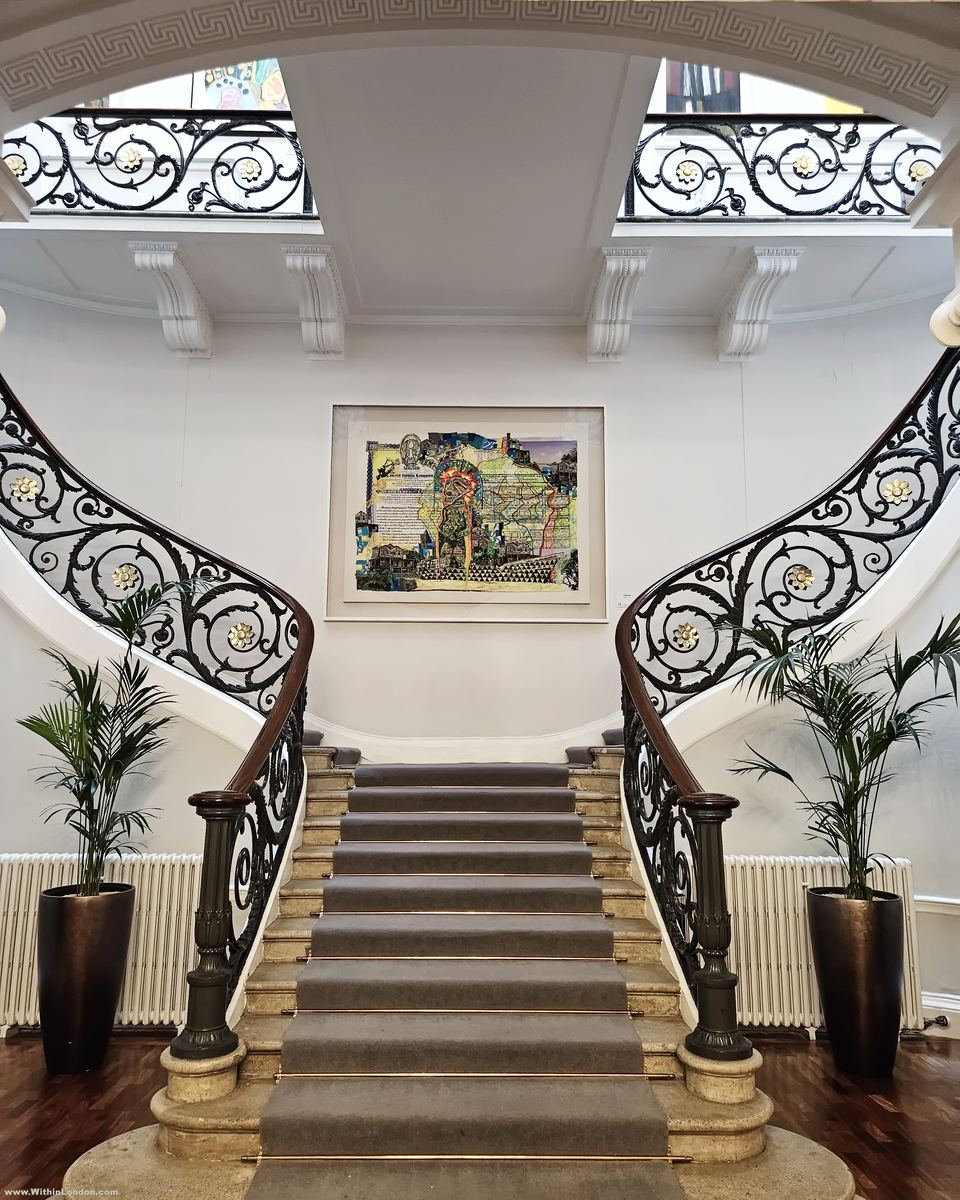
The British Academy occupies 10–11 Carlton House Terrace, part of John Nash's terrace above the Mall, built in 1831. Number 11 has a grand double staircase that splits into two flights. It was adapted by T. Roger Smith in 1875 and by Edwin Lutyens in 1924. Gladstone lived here from 1856. The Academy opened for Open House on 20 September 2026, and it runs public events through the year. See inside the British Academy.
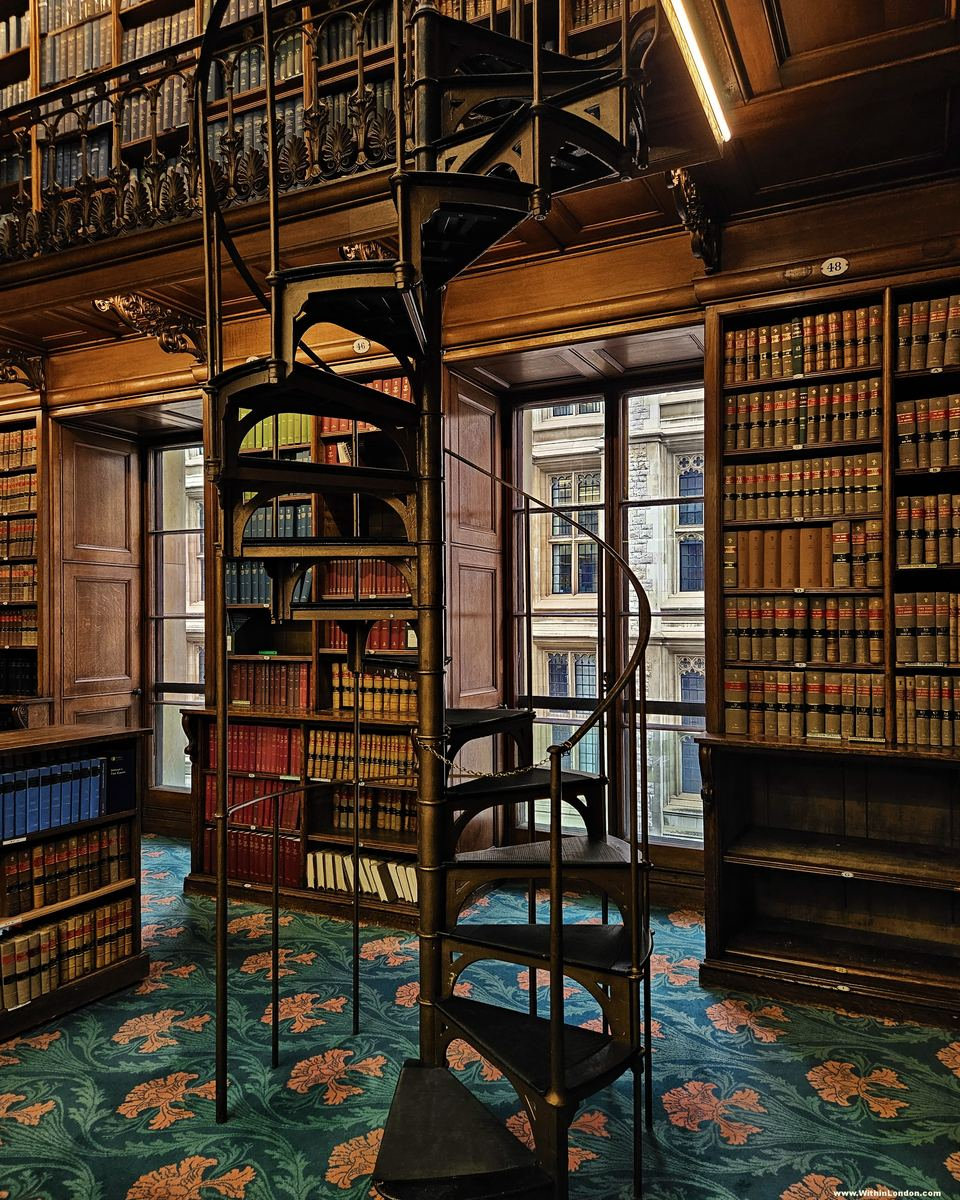
The Law Society's hall at 113 Chancery Lane first opened in 1832. In the corner of its double-height Old Library, a black cast-iron spiral stair climbs to the gallery. It is wide enough for one person at a time. The Law Society opened the building for Open House in 2025, for the first time in over a decade. I went on a rainy September afternoon. My diary is inside 113 Chancery Lane.
Shops and Theatres With Beautiful Staircases
You can walk into the first two during opening hours. The third needs a ticket for a show.

Fortnum & Mason was founded in 1707. Its Piccadilly store was rebuilt in 1926–27 in a Neo-Georgian style, by the architects Wimperis, Simpson and Guthrie. Inside, a red-carpeted staircase with a polished wooden handrail rises between pale green walls. It links the floors of the shop, so you can climb it on any visit. There is another wooden staircase, with statues, by the Duke Street entrance. My Fortnum & Mason post covers the rest.
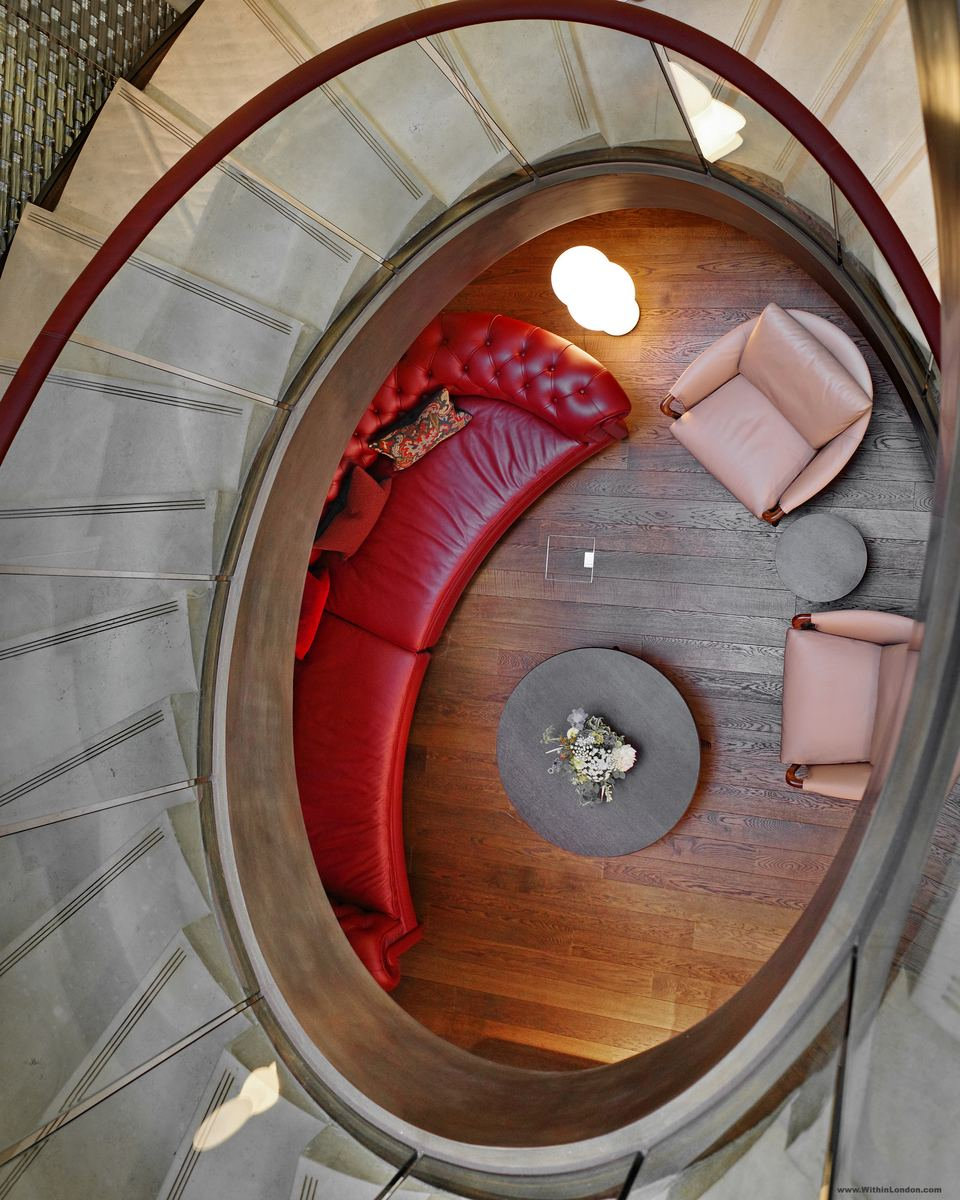
Hermès opened its Bond Street maison in June 2026, in six Grade II listed Georgian buildings that used to be the Asprey store. Wallpaper* counts five staircases for customers inside. Look down an oval spiral beside the atrium and you see a curved red leather sofa. I went in July, and I loved that staircase. My Hermès Bond Street post is more a building guide than a shopping one.
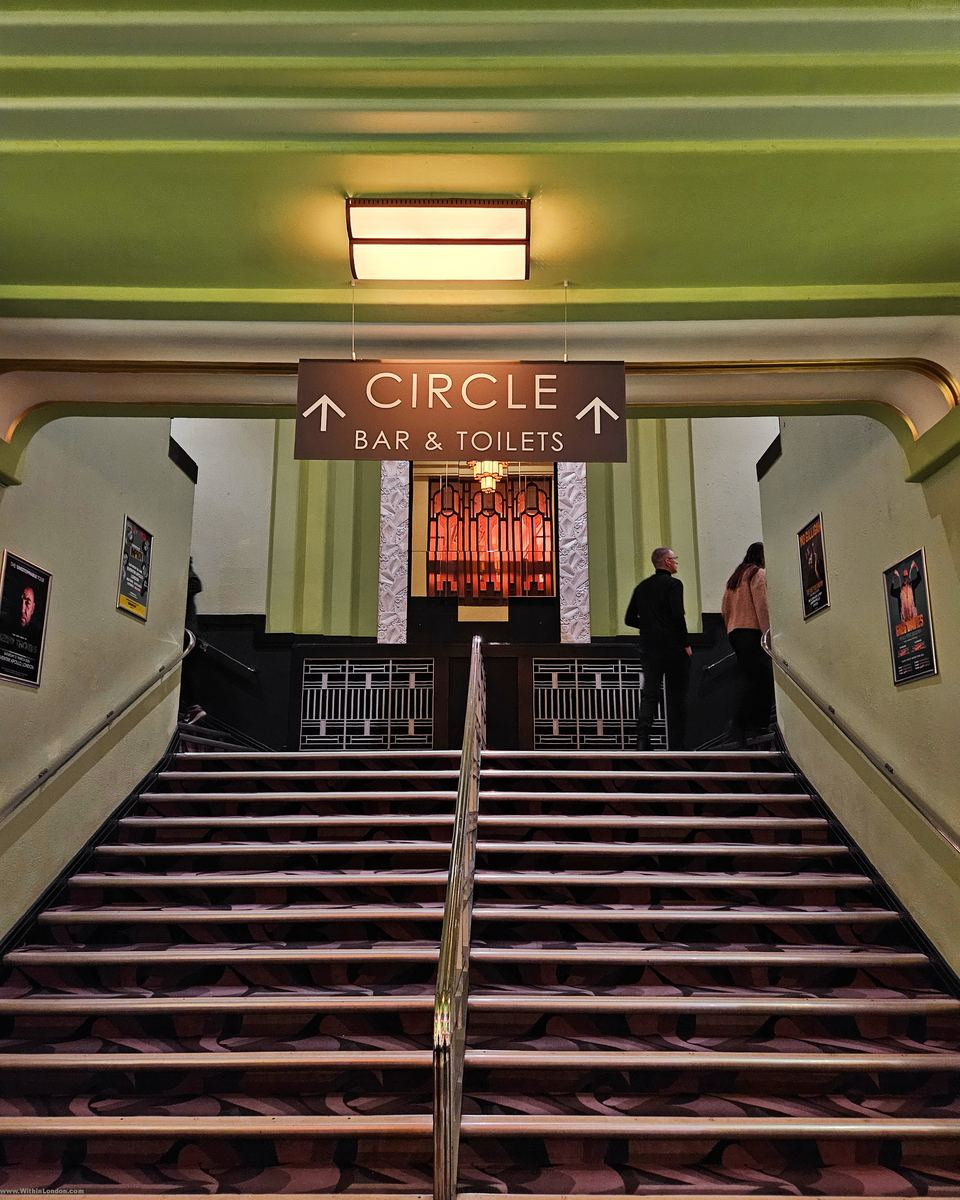
The Eventim Apollo in Hammersmith opened on 28 March 1932 as the Gaumont Palace, designed by Robert Cromie. A wide flight of stairs rises from the entrance hall under a lit sign for the Circle Bar. The stairwell is pale green and cream plasterwork with stepped geometric detail. I went on a January evening, early enough to look up at the ribbed, fan-shaped ceiling on the landing. More in inside the Eventim Apollo.
Visiting Staircases in London: Practical Notes
📍 Where: Spread across London, from Greenwich in the east to Brentford and Twickenham in the west. Most are in central London.
⏰ Opening: Most houses and museums open around 10am and close between 5pm and 6pm. Boston Manor House opens at midday. Hours change with the seasons, so check each official site before you go.
📅 Open days: Many historic houses close on Mondays and Tuesdays, including Sambourne House and Kensington Palace. Leighton House closes only on Tuesdays. The Queen's House and the Courtauld Gallery open every day. British Academy and Law Society visits depend on Open House each September.
🎫 Admission: Free: the Wallace Collection, the Queen's House, Wellcome Collection, Japan House, Marble Hill and Boston Manor. Paid: Kensington Palace, Ham House, Leighton House (£14), Sambourne House (£12) and the Courtauld (£16 with donation). Open House entry is free.
🚇 Getting there: Most are a short walk from a Tube station. For Boston Manor, use Boston Manor station on the Piccadilly line. For Marble Hill, St Margaret's station is closest, and Ham House is a bus ride from Richmond.
🚗 Parking: Central venues have no visitor parking, so use public transport. The riverside houses in Richmond and Twickenham have car parks nearby, but check before you drive.
☕ Food: Leighton House has the De Morgan Café, and Rudolf Steiner House, Ham House and Kensington Palace have cafés too. The St Pancras hotel bars welcome non-residents.
⏳ How long: Ten minutes for a single staircase, or one to two hours if you want to see the whole house.
📷 Best time: A weekday morning soon after opening, when stairwells are empty. Look up and down from every landing. The St. Pancras hotel asks for permission before any photoshoot on its public spaces.
🗺️ Nearby: Group them by area. Leighton House, Sambourne House and Japan House are all in Kensington. Marble Hill and Ham House face each other across the Thames. Fortnum & Mason, Hermès and the British Academy are a short walk apart.
♿ Access: Stairs are the point here, but most venues have lifts. Boston Manor has lifts to all floors, while Sambourne House has no step-free access. The Tulip Stairs have narrow treads.
Which staircase in London would you add to this list, and have you climbed any of these?
_______________________
Did you enjoy this article? If you'd like to contribute to the running costs of WithinLondon, click the button below:
All photos were taken by Ina/WithinLondon, unless stated otherwise.


Comments