Inside the British Academy: The Nash Terrace That Opens Once a Year

Updated: Sep 28
Once a year, one of the grandest buildings on The Mall throws its doors open to absolutely anyone who turns up, no invitation, no ticket, no connection to the institution inside required. I'd walked past 10-11 Carlton House Terrace dozens of times without a second glance – it's the kind of pale stucco facade that London has so many of that you stop really seeing them – until Open House London gave me a reason to actually go in.
What's behind that Nash frontage is one of the most beautiful interiors I've seen in this city, and almost nobody I know has ever set foot in it.
A Building Most Londoners Walk Past Without Knowing
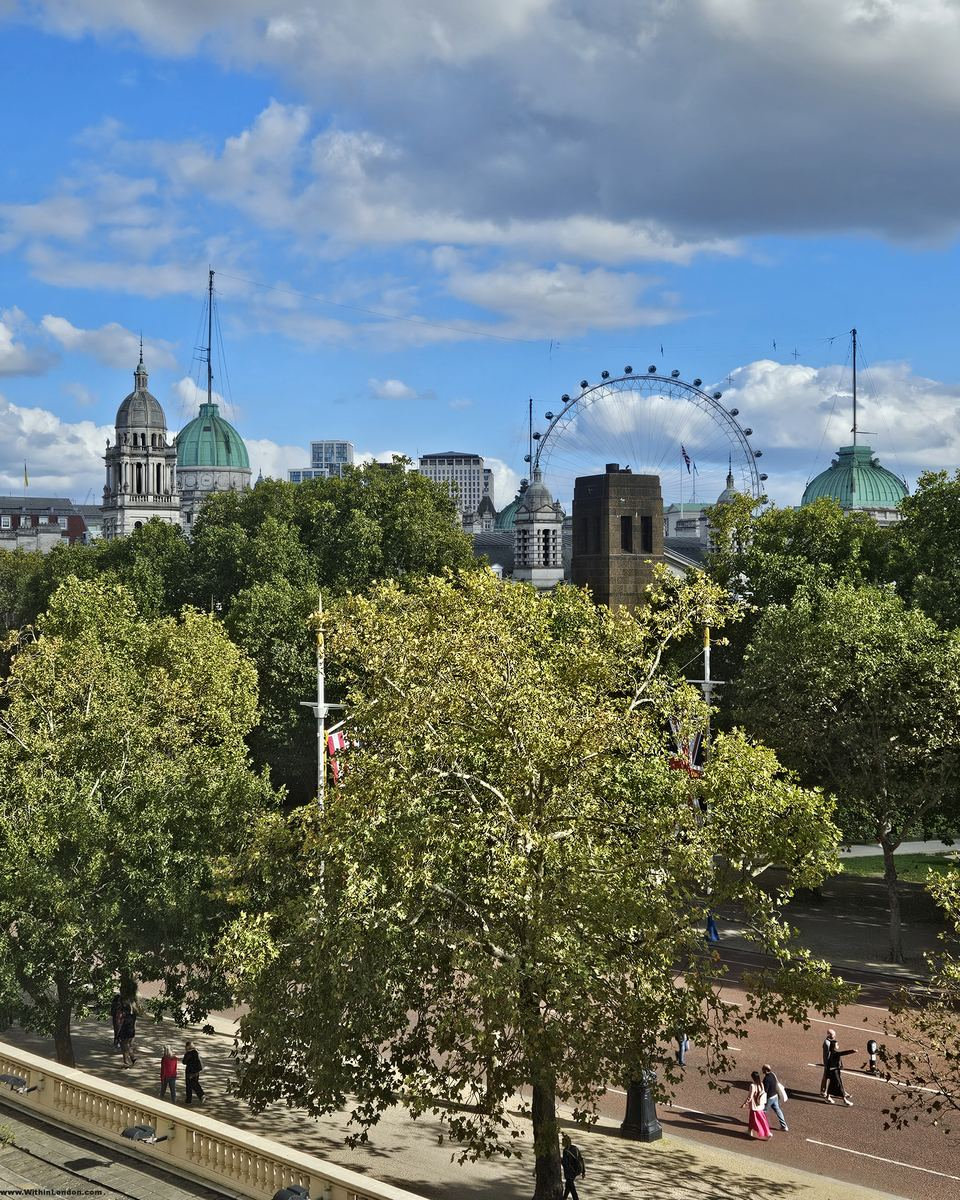
10-11 Carlton House Terrace sits on The Mall, overlooking St. James's Park, in the row of grand stuccoed terraces built as part of John Nash's vision for royal London. Since 1998, it's been the home of The British Academy – not to be confused with BAFTA, the film and television academy over in Piccadilly.
This British Academy is the UK's national academy for the humanities and social sciences, a fellowship of historians, economists, archaeologists, linguists and philosophers that funds research and public debate across those fields. It's a working institution, not a museum, which is exactly why you can't normally just wander in.
Most of the year the building is offices, meeting rooms, and a research funding operation; for one Sunday every September, as part of Open House London, it becomes one of the most rewarding free visits in the city.
I went on the day Open House ran here in 2025, arriving mid-afternoon without having booked anything, because nothing needed booking. That alone tells you something about how this weekend works: buildings that are normally locked to the public, some of them still working government or institutional offices, agree to fling their doors open and let anyone curious enough to show up. Wander through rooms that have hosted prime ministers, brewing dynasties, and, for a few years last century, wounded soldiers recovering from war.

Nash's Grand Design for a Terrace with a View
The terrace was built in 1831 under John Nash's overall design, part of his sweeping vision for the area between St James's Park and Regent Street. Nash saw these buildings as a scenic backdrop to the park itself, and reportedly wanted a fountain where the Duke of York Column now stands – a reminder that grand London planning has always involved somebody's ambitious idea getting slightly overruled.
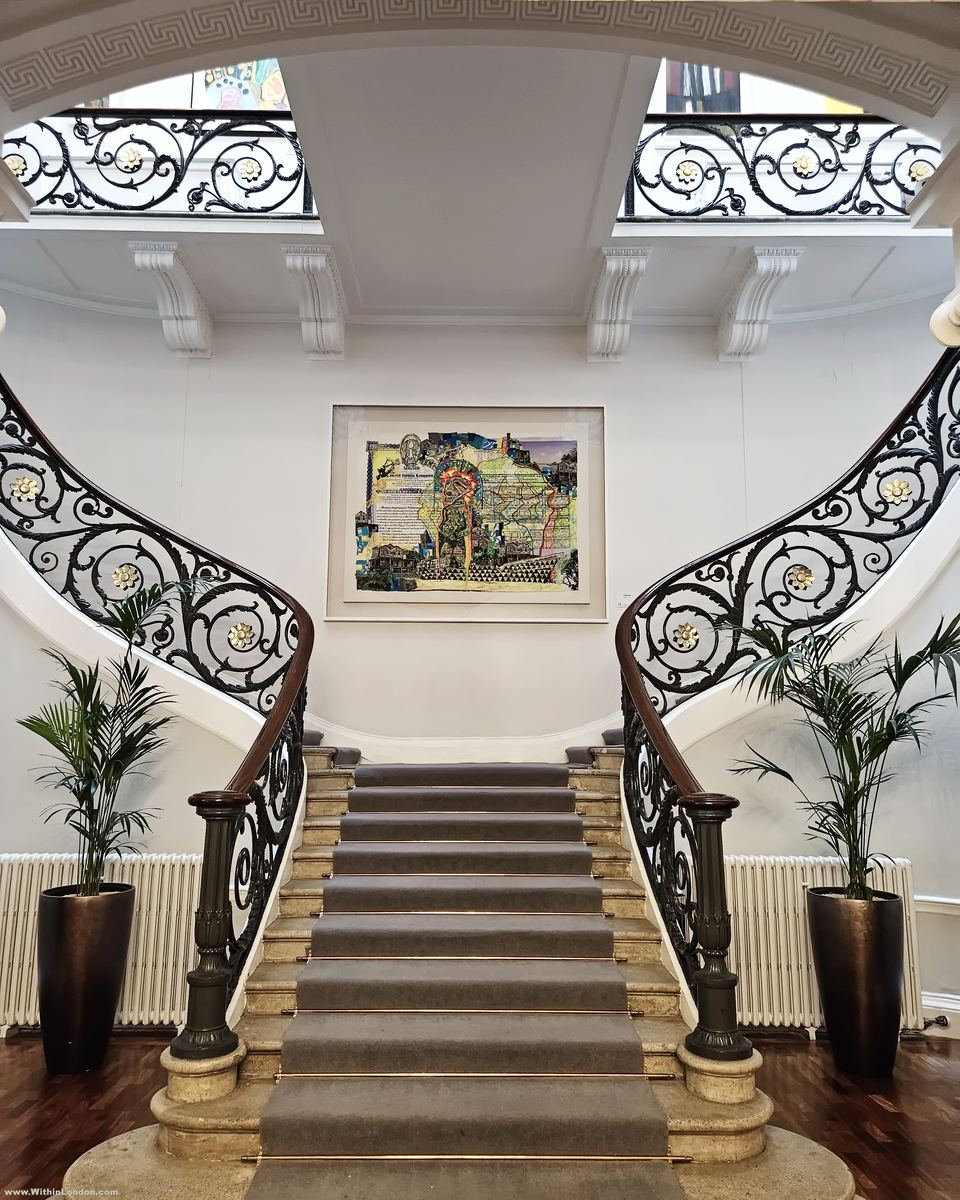
What was actually built is still spectacular: two linked houses, numbers 10 and 11, with the kind of soaring stuccoed ceilings, curved double staircases, and wrought-iron balustrades that only get commissioned when the client has both serious money and no need to justify the expense to anyone.
Walking through, the scale is what gets you first. Ceilings arch up into shallow domes with oval skylights; a pair of fluted Corinthian columns holds up an entrance hall that feels more like a small opera house than a front hall. Every room seems to have at least one chandelier doing more decorative work than any single room needs, which is, I suspect, rather the point of a Regency townhouse built to impress.
The Ridleys of Number 10
Number 10 belonged to the Ridley family of Northumberland from the 1830s right through to the 1920s. Sir Matthew White Ridley, 1st Viscount Ridley, was born in the house in 1842 and went on to serve as Home Secretary under Lord Salisbury – a career that started, quite literally, at this address. His son, the 2nd Viscount, added a grand French-style staircase to the house in 1908, presumably not content with the one Nash had already given him.
The house's most striking chapter, though, is its First World War role: Lady Ridley converted Number 10 into a hospital for wounded officers, with a Miss Buffard serving as matron. It's a strange thing to picture now, walking through rooms set up with function chairs for weddings and christenings, that a century ago the same rooms held hospital beds and men recovering from the trenches, cared for by a household that had turned its own drawing rooms over to the war effort.
Gladstone's Thursday Breakfasts at Number 11
Next door, Number 11 had an even more colourful cast of residents before the Ridleys' neighbours arrived: Lord Monson, the notorious gambling-club founder William Crockford, and the Earl of Arundel and Surrey all lived there at various points. But its best-known tenant was William Gladstone, who took the house in 1856 and lived there through his first term as Prime Minister, from 1868 to 1874.
Gladstone was famous for his "Thursday breakfasts" – political and literary gatherings held between February and July each year, for up to fifteen guests at a time, with invitations reportedly sought as much as a year in advance. Arthur Balfour, later a Prime Minister himself, and the violinist Wilma Neruda were both known to have attended.
Gladstone left the house in 1875 after an electoral defeat forced him to give up his ministerial salary, and by his own account it hit him hard. He wrote that leaving felt "like a little death," saying he had "grown to the house, having lived more time in it than any other since I was born." The Guinness family – yes, that Guinness – took over the lease immediately after and held it until 1946, which is a long stretch of Irish brewing money sitting in a townhouse on The Mall.

A Bomb in the Blitz and a Quiet Institutional Middle Age
The building didn't come through the twentieth century unscathed. During the Blitz, a conservatory Gladstone himself had built onto the Music Room balcony took a direct hit and was never rebuilt – one small, specific casualty among the thousands the war left across this stretch of London. After the Guinnesses moved out in 1946, the building settled into a long, less glamorous middle age: the Union Club leased it until the 1950s, followed by stretches as offices for the Commonwealth Secretariat and the Foreign Press Association.
It's worth pausing on that run of tenants, because it's such a London pattern – a house built for one aristocratic family's entertaining ends up, a century later, doing paperwork for a press association nobody today has heard of, before somebody finally decides the building deserves better than being carved up into anonymous office space.
The Academy Today
That someone was the British Academy, which took over the building in 1998. A £2.75 million renovation, completed in January 2011, reconnected the two houses into a single working academy, adding a 150-seat auditorium alongside the restored period rooms.
Wright & Wright Architects led a more recent transformation of the site as well, threading modern research and event space through a Grade I listed shell without losing what made the place remarkable in the first place. Walking through today, you get both halves of that story at once: the Ridleys' and Gladstone's rooms, largely intact, sitting a few doors down from a lecture theatre hosting a public talk on economic history.
The Academy itself funds and champions research across the humanities and social sciences – history, literature, economics, archaeology, area studies – the kind of scholarship that rarely gets the public profile of the sciences but shapes an enormous amount of how Britain understands itself. Its Fellows include some of the most significant historians, philosophers and social scientists working today, elected for the same kind of prestige that comes with membership of the Royal Society on the science side.

Visiting During Open House London
This is the crucial bit if you want to see any of this for yourself: the British Academy is not normally open to casual visitors, but it takes part in Open House London, the festival that happens across the capital every September and unlocks buildings – private homes, government departments, working offices, embassies – that are shut to the public the rest of the year. In 2025, the Academy's open day ran on Sunday 21 September, from 11 am to 4 pm with last entry at quarter to four, and it was free with no registration required.
On the day I went, there were two ways round the building: a self-guided route using a printed map or the Bloomberg Connects app, available all day with no booking, or a staff-led tour leaving every thirty minutes between quarter past eleven and quarter to three, capped at fifteen people and taken on a first-come, first-served basis. There was also a specialist architecture tour with Wright & Wright, the firm behind the recent restoration, though that one had sold out well before I arrived. Alongside the historic rooms, the Academy had two digital exhibitions running that day on climate themes – environmental activism and coastal sustainability – a reminder that the building is very much a live, working institution rather than a heritage set piece.
If you want to catch it, keep an eye on the Open House London programme each summer, when the full list of participating buildings and exact dates for that year are published, and check the British Academy's own events page closer to September, since exact hours and tour formats can shift slightly year to year.
The building is a short walk from Piccadilly Circus, Charing Cross or St James's Park underground stations, right on The Mall facing the park, which makes it an easy add-on to a day that also takes in St James's Park itself, the ICA next door, or a walk up to Piccadilly.
Whatever else is on the Open House London list that particular September, this is one I'd put near the top: a working institution, a genuinely important slice of political and architectural history, and a level of decorative plasterwork you'd otherwise need a National Trust membership and a much longer drive to see.
_______________________
Did you enjoy this article? If you'd like to contribute to the running costs of WithinLondon, click the button below:
All photos were taken by Ina/WithinLondon, unless stated otherwise.


Comments