Daunt Books Marylebone: London's Most Beautiful Bookshop

Updated: Sep 28
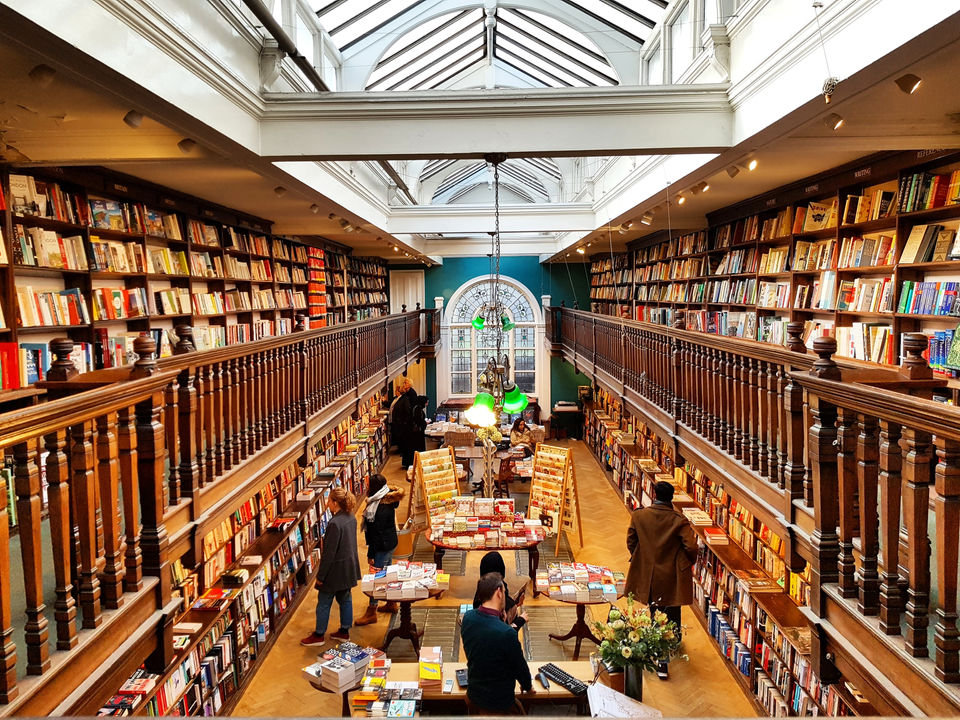
Daunt Books on Marylebone High Street is the one everybody photographs, and for once the reputation is deserved. The long back room has oak galleries running down both sides, and a skylight the length of the ceiling. And an arched stained-glass window at the far end that makes the whole thing look like a small chapel that happens to sell paperbacks. It was built in 1912 and it was built to be a bookshop, which is the reason it works.
The shop as it is now dates from 1990, when James Daunt opened a travel bookshop here and started shelving everything by country instead of by category. Both halves of that – the Edwardian room and the idea about geography – are why people come.
Why Is Daunt Books Marylebone So Beautiful?
Because nothing in it has been adapted from something else. Most beautiful shops are beautiful in spite of their buildings – a bank that became a restaurant, a chapel that became a gym. This room was drawn for books in 1912, for the antiquarian booksellers Francis Edwards, and every feature in it is doing the job it was designed for.
The galleries exist to get more shelf onto the walls. The skylight exists because you cannot read spines in the dark and electric light was expensive. The narrow stairs exist because floor space was for books.
The best thing in it is at the back: a wide arched window of leaded stained glass, green and amber, set into a white arch above a deep green wall. Chairs get set out in front of it for events, which is the only time most people sit down in a bookshop and look up. There is herringbone flooring underfoot and William Morris prints on the walls, and the whole room is about as far from a retail park as a shop can get.


Was It Really the World's First Purpose-Built Bookshop?
That is the claim you will see everywhere, and it is worth being precise about it. What is solid: the building went up in 1912 and it was designed as a bookshop rather than converted into one, which was genuinely unusual.
What is a claim rather than a fact: that no one anywhere had ever done it before. It is repeated confidently and sourced vaguely, so the honest version is that Daunt's Marylebone room is usually described as the world's first purpose-built bookshop. And it is certainly among the earliest that is still trading as one.
Why Are the Books Arranged by Country?
This is the bit that makes Daunt different from a pretty room full of books. Rather than separating travel guides from history from fiction, the shop puts everything about a place together: the guidebook, the phrasebook, the history, the travel writing and the novels, on the same run of shelf. Go looking for a guide to Japan and you come away with a Tanizaki as well.
It is a deliberately inefficient way to sell books and a very good way to make somebody buy three. There are antique and reproduction maps too, which is the other thing people leave with.

Who Owns Daunt Books, and Who Is James Daunt?
Daunt Books is still independent, and this is the most under-told story in London bookselling. James Daunt was a banker at JP Morgan in New York in the late 1980s. He left, came home, and opened this shop in 1990 in his twenties, on the theory that books should be sold by people who had read them.
In May 2011 he was brought in to run Waterstones, then widely expected to fold, and he is generally credited with saving it – largely by letting individual shops choose their own stock again. In 2019 he took on Barnes & Noble in the United States as well, and he has run both since. So the man who opened this one room on Marylebone High Street now runs the largest bookshop chains in Britain and America, using more or less the argument he started with here.
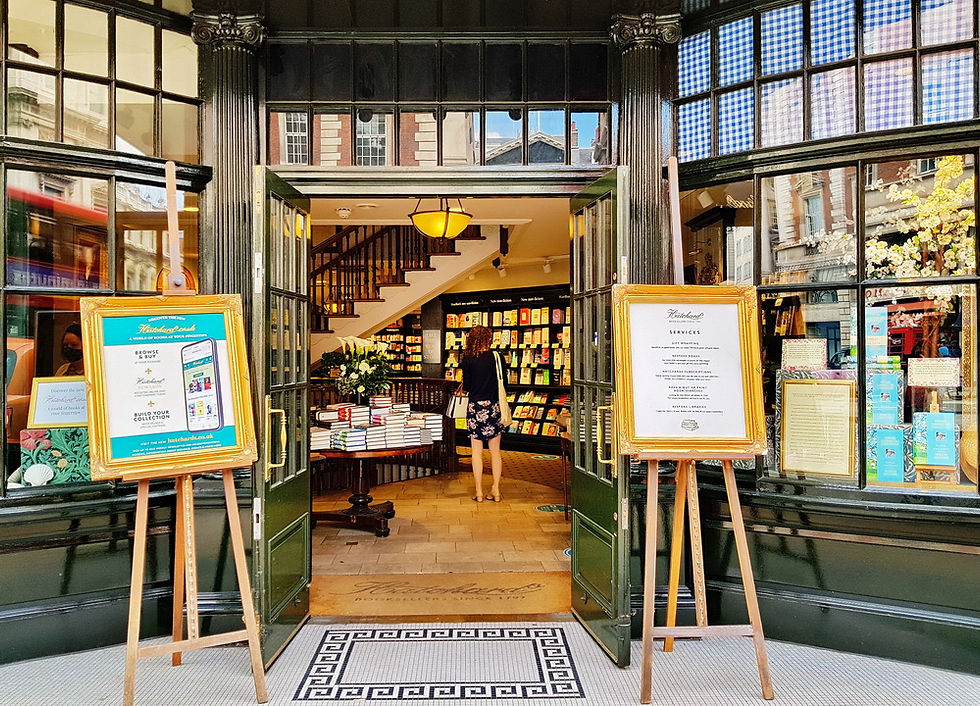
There is a neat footnote to that. Waterstones owns Hatchards on Piccadilly, the oldest bookshop in the country, and left it alone rather than rebranding it – the same instinct that built Daunt. The shop also has a publishing arm, Daunt Books Publishing, launched in 2010 and now putting out literary fiction, non-fiction and reissues of forgotten titles, plus the Daunt Books Festival each spring.
How Many Daunt Books Shops Are There?
About ten, and not all of them are called Daunt. In London there are branches in Marylebone, Holland Park, Hampstead, Belsize Park and Cheapside, plus the Owl Bookshop in Kentish Town, which kept its own name. Outside London there is one in Summertown in Oxford, the Marlow Bookshop, and Hart's Books in Saffron Walden, which is a good excuse to combine a bookshop with a day out in Essex.
Marylebone is the one to go to if you are only going to one. Holland Park is the prettiest of the others, and much quieter.

Visiting: Getting There, and When to Go
Baker Street is the nearest station and it is about five minutes on foot: leave by the Marylebone Road exit, head south, and turn onto Marylebone High Street. Five lines run through it – Bakerloo, Circle, Jubilee, Hammersmith & City and Metropolitan – which makes this one of the easiest bookshops in London to get to. Bond Street and Regent's Park are both about ten minutes' walk.
If you want the back room to yourself, go on a weekday morning shortly after opening. If you want the opposite, go in December: the shop puts up a Christmas tree that has become a minor event in itself. And the whole of Marylebone High Street is worth walking in the fortnight before Christmas.
📍 Where: Daunt Books, 83–84 Marylebone High Street, London W1U 4QW.
🚇 Getting there: Baker Street, five minutes' walk, on the Bakerloo, Circle, Jubilee, Hammersmith & City and Metropolitan lines.
⏰ Opening: Seven days a week, with shorter hours on Sunday. Check dauntbooks.co.uk before a special trip – hours change, and the shop closes for occasional evening events.
🎫 Admission: Free to walk in and browse, and nobody will hurry you.
🗺️ Nearby: the Wallace Collection (550 m), Regent's Park (700 m), Oxford Street (800 m), Madame Tussauds (500 m) and the Landmark Hotel (1 km).
And if you are making a day of bookshops: Hatchards on Piccadilly has been open since 1797, and Cecil Court is a whole Victorian alley of antiquarian dealers. All three are within half an hour of each other.
_______________________
Did you enjoy this article? Great! If you'd like to contribute to the running costs of WithinLondon, click the button below:
All photos were taken by Ina/WithinLondon, unless stated otherwise.


Comments