Hatchards: The Oldest Bookshop in London and the UK

Updated: Sep 30
John Hatchard opened a bookshop on Piccadilly in 1797, and there has been a Hatchards on Piccadilly ever since. Through the Napoleonic wars, the Blitz and the arrival of the internet, which was supposed to finish shops like this off and did not. It is a five-floor Georgian bookshop a few doors from Fortnum & Mason, across the road from the Royal Academy, and it still holds royal warrants. It is also, on any reasonable reading, the oldest bookshop in the country.
What I like about it is that none of this is done as a performance. The flowers on the tables are real and enormous, the carpet is genuinely a bit much. The booksellers will happily tell you that the thing you are holding is not as good as the one next to it. Here is the whole story, the bits that are commonly got wrong, and what is worth knowing before you go.

Is Hatchards Really the Oldest Bookshop in London?
In London, yes, and it is the claim Hatchards makes about the whole United Kingdom too. One detail usually gets garbled, though: the shop is not standing on the spot where it started.
Hatchard opened at 173 Piccadilly in 1797 and moved along the street in 1801, to the building that was renumbered 187 in 1820 and has been the shop ever since. The original premises were demolished in 1810 to make way for the Egyptian Hall. So the right way to put it is that Hatchards has been trading on Piccadilly continuously since 1797, and in this particular building since 1801.
There is also a rival worth knowing about, because the "oldest" title is less settled than it looks. Sotheran's was founded in 1761 – a full thirty-six years before Hatchard opened his door – and it is still selling books today. The catch is that Henry Sotheran founded it in York and only brought the business to London in 1815. Which is why Hatchards keeps London and Sotheran's describes itself instead as the oldest bookshop in Europe.
Both claims can stand up; they are just measuring different things. If you want to settle it for yourself, Sotheran's is at 8 Cecil Court, twenty minutes' walk away, and you can do both in an afternoon.
Is Hatchards the Oldest Bookshop in the World?
No, and it has never claimed to be. That title belongs to Livraria Bertrand in Lisbon, which has been selling books since 1732 – sixty-five years before Hatchard opened – and holds the Guinness World Record as the oldest operating bookshop. If you are ever in Lisbon it is on Rua Garrett in the Chiado, and it is worth the detour for the same reason this one is.
Which is the tidy way to hold all of this in your head. Bertrand for the world, Hatchards for London and the UK, and Sotheran's somewhere in between with a claim on Europe that Bertrand's dates make awkward. Old bookshops are competitive about this in a very polite, very bookish way, and none of them is lying – they are each measuring from a different starting line.
Who Was John Hatchard?
He was twenty-nine, he had come up through printing and bookselling, and he picked his spot shrewdly – Piccadilly was becoming the address the fashionable West End wanted. Queen Charlotte, George III's wife, was among his first customers, which is where the royal connection starts.
The more interesting part is what he published. Hatchard (1769–1849) was an evangelical Tory, and became the principal publisher for the Clapham Sect, the circle of reformers around William Wilberforce. He put out the Society for Bettering the Condition of the Poor and ran the Christian Observer from 1802 to 1845.
The shop became a meeting place as much as a business; Sydney Smith described the regulars as "a set of well-dressed, prosperous gentlemen". It was not a risk-free line of work either. In 1817 Hatchard was fined £100 over an African Institution report describing the treatment of enslaved people in Antigua, after the account in it turned out to be false.
The customer list since has been the sort that gets put on a plaque. Byron, Sir Walter Scott, Wilberforce, very probably Jane Austen, and Oscar Wilde, who signed books at the round table on the ground floor. It is still there, and it is still called Oscar's table.
Inside the Shop: Five Floors, Flowers and a Very Loud Carpet
It runs over five floors, and the layout is closer to a large private house than a shop. Rooms rather than aisles, a staircase you have to go looking for, and books stacked on round mahogany tables in the middle of each room rather than pushed to the walls.
The carpet is a patterned gold thing that no modern retailer would sign off, and the flower arrangements are the size of small shrubs. Both are the point. It is quiet in a way that Piccadilly, ten feet away through the glass, is not.

The rooms are divided by subject in a way that rewards wandering. The history room alone runs from German history to North America along black-painted shelves, with another flower arrangement in the middle of it and a portrait over the fireplace. If you have a specific book in mind you will find it faster online. If you do not, this is the better building to be in.


Does Hatchards Have a Royal Warrant?
It does – two of them, as booksellers to His Majesty The King and to Her Majesty The Queen. You can see the crests above the front door and behind the main till.
Worth knowing if you read this anywhere else: warrants are granted by a named member of the royal family, not by the institution, so they lapse and are regranted when the holder changes. Hatchards spent years listing three – from Queen Elizabeth II, the Duke of Edinburgh and the Prince of Wales. A great many guides are still quoting that set. Those warrants ended with their holders. That pair is the accurate answer, and it will change again in time.
Who Owns Hatchards – Is It Part of Waterstones?
Yes, Hatchards is owned by Waterstones, and it has changed hands more than most people assume. The financier Clarence Hatry bought the business in 1939 for £6,000 and revived it. William Collins took it on in 1956; the Pentos group acquired it in 1990; and when Waterstones bought Pentos, Hatchards came with it.
Waterstones rebranded almost everything it swallowed and left this one alone. Which is why Piccadilly still trades under its own 1797 name, with its own booksellers and its own character, rather than as a Waterstones branch. That decision is the reason there is anything here worth writing about.
The man behind that decision is worth a footnote. Waterstones is run by James Daunt, who founded Daunt Books in Marylebone in 1990 and has spent the years since arguing that bookshops do better when they are allowed to be themselves. Hatchards is the clearest piece of evidence for it.
What Hatchards Does That a Website Cannot
There is a gilt-framed board inside listing what the shop actually offers, and it is a more interesting document than it sounds. Hatchards will gift-wrap, produce yearly catalogues, send new, rare and antiquarian books anywhere in the world, put together wedding lists, and build bespoke libraries. Which means somebody comes and fills your shelves for you, properly, rather than by the metre.

The one I would actually recommend is the subscription. You have a conversation with a bookseller about what you like, and then a book chosen by a person who has read it arrives every month, wrapped. Fiction, non-fiction, a mix, or travel, art and children's books. It is the opposite of an algorithm, and it makes a much better present than a voucher. They can also track down out-of-print editions, which is the part the internet is genuinely bad at.
The Piccadilly shop also runs a steady programme of events – launches, panels, customer evenings. And it keeps a shelf of signed and special editions, which is worth a look before you buy the same book unsigned somewhere else.
Is Hatchards Expensive?
No more than any other bookshop, which surprises people who have clocked the royal warrants and the address. A new hardback costs what a new hardback costs – the publisher's price, the same as anywhere on the high street. There is no surcharge for the postcode and nobody will look at you strangely for buying a £9 paperback.
What you will not get is an online discount, because no physical bookshop can match those and stay open. The genuinely expensive things are the optional ones: first editions, antiquarian finds, and having somebody build you a library. Everything else is ordinary money for an extraordinary room, which is the best deal in central London.
Does Hatchards Have a Café?
Not at Piccadilly, no. All five floors are given over to books, which is arguably the correct decision and definitely an inconvenient one if you were planning a long afternoon. The good news is the location: Fortnum & Mason is a few doors along and does tea properly, and there is no shortage of anything else within two minutes.
The St Pancras branch is the exception – it is licensed to serve coffee and wine while you browse, which is a considerably more civilised way to wait for a train.
The Other Hatchards: St Pancras and Cheltenham
A second shop opened at St Pancras International in August 2014 and moved into a bigger space in the station in August 2019. A third opened in Cheltenham in September 2022.
The St Pancras one is the one to know about if you are catching a Eurostar. And there is a neat symmetry to it: it sits beside Fortnum & Mason there, exactly as it does on Piccadilly, where the two have been neighbours for more than two hundred years. Fortnum's said at the time that customers had been walking between the two shops on Piccadilly for generations and would now do the same under the train shed.

It is a different animal from Piccadilly and does not pretend otherwise – brick arches, spotlights hung from the Victorian roof, and that licence to serve coffee and wine to people browsing.


Make a Bookshop Afternoon of It
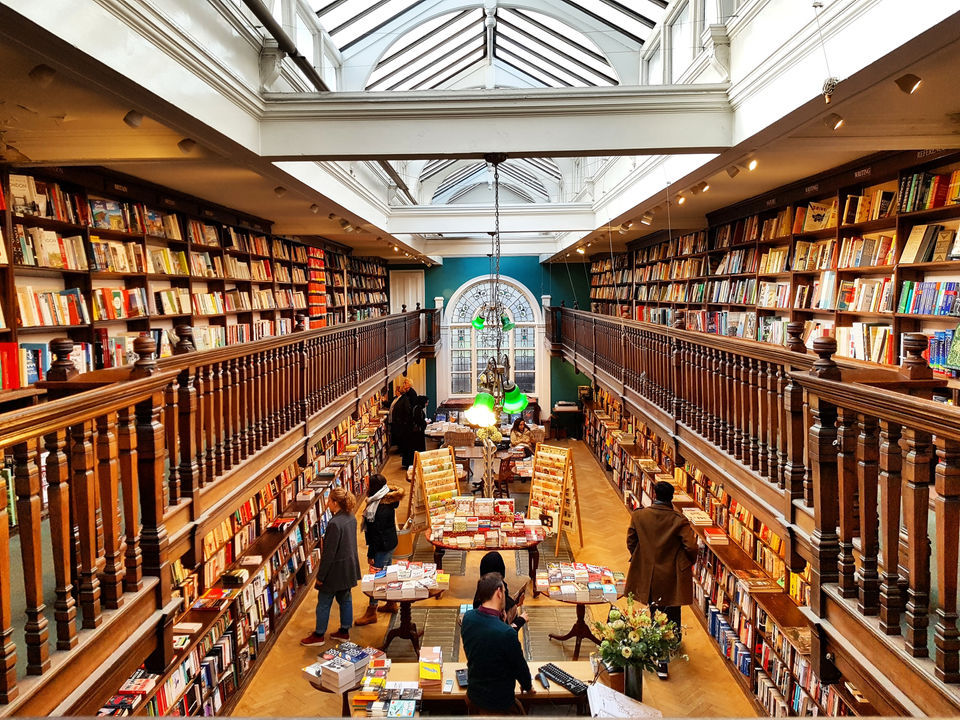
Hatchards is twenty minutes' walk from two of the best bookshop streets in London. Cecil Court is a Victorian alley of antiquarian dealers, Sotheran's among them; Daunt Books in Marylebone is the prettiest room of the three and shelves its books by country.
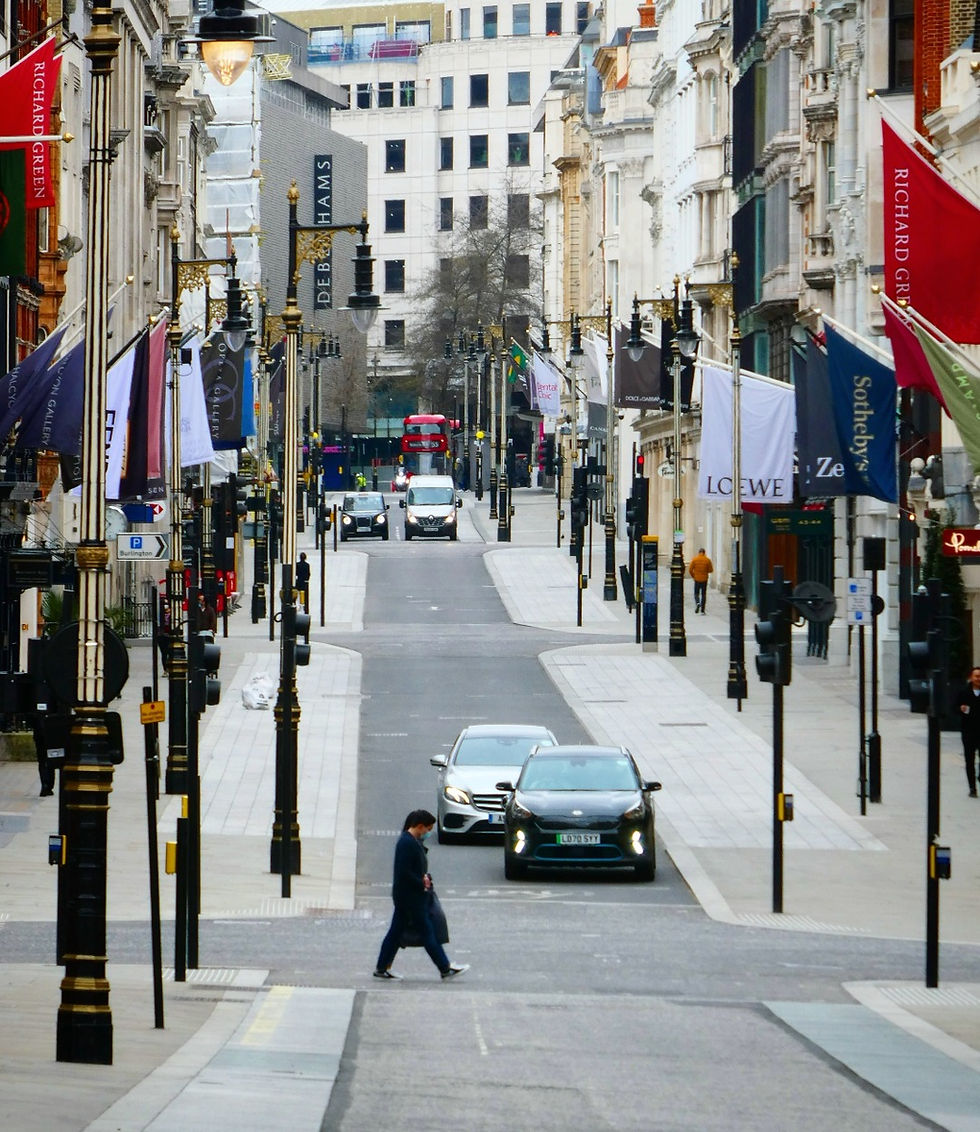
For the other kind of book room, the British Library's Treasures gallery is free and sits beside the St Pancras branch. Closer to hand, Fortnum & Mason is a few doors along, and Bond Street is five minutes north if you want to make an afternoon of the whole area. A few doors east, on the corner of St James's churchyard, is Maison Assouline, a bookshop and bar in a small brick bank by Lutyens.
Eight generations of booksellers have worked this building, and what strikes me is how little of it feels preserved. It is not a museum with a till. It is a shop that happens to have been open since 1797, which is a much harder thing to be.
📍 Where: Hatchards, 187 Piccadilly, St James's, London W1J 9LE.
🚇 Getting there: Green Park and Piccadilly Circus are both about five minutes' walk, on the Piccadilly line.
⏰ Opening: Seven days a week, later on weekdays than at the weekend. Hours move around, so check hatchards.co.uk before a special trip.
🎫 Admission: Free, obviously, and nobody minds if you only browse. Weekday mornings are the quietest. No café – Fortnum's is a few doors along.
_______________________
Did you enjoy this article? If you'd like to contribute to the running costs of WithinLondon, click the button below:
All photos were taken by Ina/WithinLondon, unless stated otherwise.

Comments