Richard Dadd Exhibition at the Royal Academy: What to See in Beyond Bedlam
Updated: 1 day ago
The rooms are dimmed. The Royal Academy has turned the Sackler Wing into something closer to a cabinet of curiosities than a gallery. I walked in expecting paintings and found myself leaning forward, nose almost to the wall, trying to work out what was happening in the corner of a canvas barely bigger than my hand.

The Richard Dadd exhibition is called Beyond Bedlam. It runs at Burlington House from 25 July to 25 October 2026. More than 100 works in it, and almost none of them are large. That is partly the point.
Most people arrive knowing two things about Dadd. He painted fairies, and he killed his father. The curator, Nicholas Tromans, wants you to leave knowing a third. Dadd was one of the most gifted painters of his generation, before the asylum and inside it.
Here is what hangs in the rooms, the story behind the pictures, and where in London to find Dadd once the show has closed.
Who Was Richard Dadd?
Richard Dadd was born in Chatham, Kent, on 1 August 1817. His father Robert was a chemist. His mother died when he was six. In 1834 the family moved to London, and Dadd taught himself to draw from the sculpture in the British Museum.
He entered the Royal Academy Schools in 1837. That matters for this exhibition. In 1837 the Academy shared the National Gallery's building on Trafalgar Square, around the corner from the Dadd family home. It moved to Burlington House in 1868. The student who won its medal for life drawing in 1840 has come back as the main event.
At the Schools he fell in with William Powell Frith, Augustus Egg and Henry O'Neil. They called themselves the Clique. They met to invent scenes from Shakespeare and Byron, and they painted each other in costume. Dadd put Egg in the uniform of a Civil War soldier. By general agreement, Dadd was the one to watch.
Then came the fairies. Titania Sleeping went on the Academy's walls in 1841 and made his name. It has travelled from the Louvre for this show. Look at the top corners. The arch that frames the sleeping queen is made of outstretched bat wings.

What Happened to Richard Dadd in Egypt and at Cobham?
In July 1842 Sir Thomas Phillips, a Welsh lawyer and former mayor of Newport, hired Dadd as his travelling draughtsman. The route ran through Europe to Greece, Turkey, Syria and Egypt. Dadd filled sketchbooks with harbours, ruins and costumes. He wrote home that he walked the streets with his eyes and mouth wide open.
In December, on a boat going up the Nile, something broke. Dadd became convinced he was under the influence of the Egyptian god Osiris. His companions put it down to sunstroke. He was back in England by May 1843, and his family took him to Cobham in Kent to rest.
On 28 August 1843 he killed his father with a knife at Cobham. He believed the man was the Devil in disguise. He fled to France and attacked a fellow passenger with a razor on the road to Paris. He was arrested, and he confessed.
He was 26. In August 1844 he was admitted to the criminal department of Bethlem Hospital, the original Bedlam. He never lived outside an institution again. Doctors since have suggested schizophrenia, and two of his siblings had similar illnesses. The exhibition says all this plainly and moves on to the pictures. That is the right call.
What Is in the Richard Dadd Exhibition?
The hang is chronological. It opens with the student. Small watercolours of his family, a white-faced self-portrait from about 1841, and the Portrait of Augustus Egg in Character. Find the single dot of white on the edge of Egg's iris.
Then the fairy pictures that launched him, Titania Sleeping and Puck among them. The Victorian poet John Lucas Tupper said their goblin borders were like "sleep-jumbled memories of things". I can't improve on that.
The middle rooms follow his trip east. Give them time. The Artist's Halt in the Desert shows his party camped by the Dead Sea under a moon, with Dadd himself at the far right. He painted it from memory in Bethlem. It vanished for over a century and resurfaced on the Antiques Roadshow in 1987. The British Museum bought it for £100,000.
Bethlem is the heart of the show. Dr William Charles Hood, the reforming superintendent, encouraged him to paint and collected the results. Portrait of a Young Man, from 1853, is thought to be Hood. For him Dadd made the Sketches to Illustrate the Passions. There are more than thirty of these watercolours, with titles like Jealousy, Treachery and Melancholy.
Look for Robin Hood from 1852, which has two Robins in it. Then Contradiction: Oberon and Titania, an oval canvas he worked on from 1854 to 1858. The king and queen glare at each other in the middle. Around the edge, fairy-sized centaurs and soldiers get on with their own business.
The last room is Broadmoor, where he was moved in 1864. Ships remembered from a Chatham childhood. A still life with cucumber and spring onions from the hospital garden. Two frames he probably built himself after taking up carpentry. He painted a curtain for the hospital stage and designed good-conduct certificates for the attendants.
A note before you go. The Academy warns that some works carry historical language and imagery about mental health and race. The pictures from the trip east are of their time.

Why Is The Fairy Feller’s Master-Stroke So Famous?
It measures 54 by 39.4 centimetres. The steward at Bethlem had admired Contradiction and asked for a fairy picture of his own. Dadd started in 1855. He was still working on it nine years later, when he was transferred to Broadmoor.
The scene is a clearing seen through a screen of grass stems. A fairy woodsman raises his axe over a hazelnut. A crowd of tiny figures waits for the blow. Nobody in the picture is looking at you, and nothing tells you what happens next.
Get close and look at the surface. The paint is built up so densely that it took years, not months. Then look at the logic. The sky at top left is night-dark, yet the daisies are wide open. Time does not work properly in here, and neither does scale.
What struck me, standing in the dimmed room in front of it, was the question of what kind of mind produces something like this. The detail is so small and so densely organised that it is almost frightening. How do you hold all of that in your head at once? How do you decide where the next tiny figure goes? It feels like walking into a deranged but mystical mind. Creepy and wonderful at the same time.
At Broadmoor, without the painting in front of him, he made a watercolour copy from memory. He also wrote a long poem naming every character in the crowd.
The fame came late. Siegfried Sassoon gave the painting to the Tate in 1963. He gave it in memory of his fellow officer Julian Dadd, a great-nephew of the painter, and of Julian's two brothers killed in the First World War.
Freddie Mercury saw it at the Tate and wrote a song with the same title for the album Queen II in 1974. Terry Pratchett sent a character into it in The Wee Free Men. Angela Carter wrote a radio play about Dadd in 1979. A picture made for a hospital steward had become a piece of pop culture.
Five Things Worth Knowing Before You Go
The fairies are not sweet. Victorian fairy painting was a popular genre, but Dadd's version has a quality the others lack. His creatures are not sweet. They have the faces of people you might not want to meet alone.
He was taught alongside Turner. JMW Turner was one of the visiting tutors at the Royal Academy Schools during Dadd's student years. Turner's influence runs through the luminous skies and shimmering surfaces of the early work.
The Passions series may have been clinical. Dr Hood, the Bethlem superintendent who collected Dadd's work, was interested in the pathology of the emotions. He may have commissioned the pictures as a kind of visual taxonomy of madness. Dadd gave each watercolour a title naming a human passion. Agony – Raving Madness is one. Love is another.
He made his own picture frames. At Broadmoor he took up carpentry. Two of the frames in this exhibition were almost certainly built by Dadd himself. They are worth looking at as objects in their own right.
The poem is real. After leaving the Fairy Feller unfinished, Dadd wrote a long explanatory poem called Elimination of a Picture and Its Subject. It names and describes each figure in the crowd. It is strange, specific and worth reading slowly. The exhibition quotes from it.
Is the Richard Dadd Exhibition Worth the £15 Ticket?
Yes. Go for the fairies if you must have a reason. But the real thing is the intimacy of the whole show. The rooms are kept dim. The works are small. You lean in, and the longer you look, the more you find. It is the opposite of an exhibition that overwhelms you.
What I kept thinking is that only a certain kind of mind produces this. A mind that can hold a thousand tiny decisions in place while adding one more. Whether that is genius or something else is a question the show leaves open, and I think that is its best quality.
The national critics agreed it was worth the trip. The Standard gave it five stars. The Telegraph, the Guardian and the Independent gave four. The Independent's caveat is fair: nothing else in the show quite matches the great fairy pictures.
Go for the fairies and you get your money's worth from two canvases. Stay for the Passions watercolours and the Broadmoor seascapes and you get something rarer. A working life of forty-two years, painted for an audience of doctors and attendants.
The Academy has form with difficult painters. Francis Bacon: Man and Beast filled the main galleries in 2022. Dadd is the opposite. Quiet, close-up and slow.
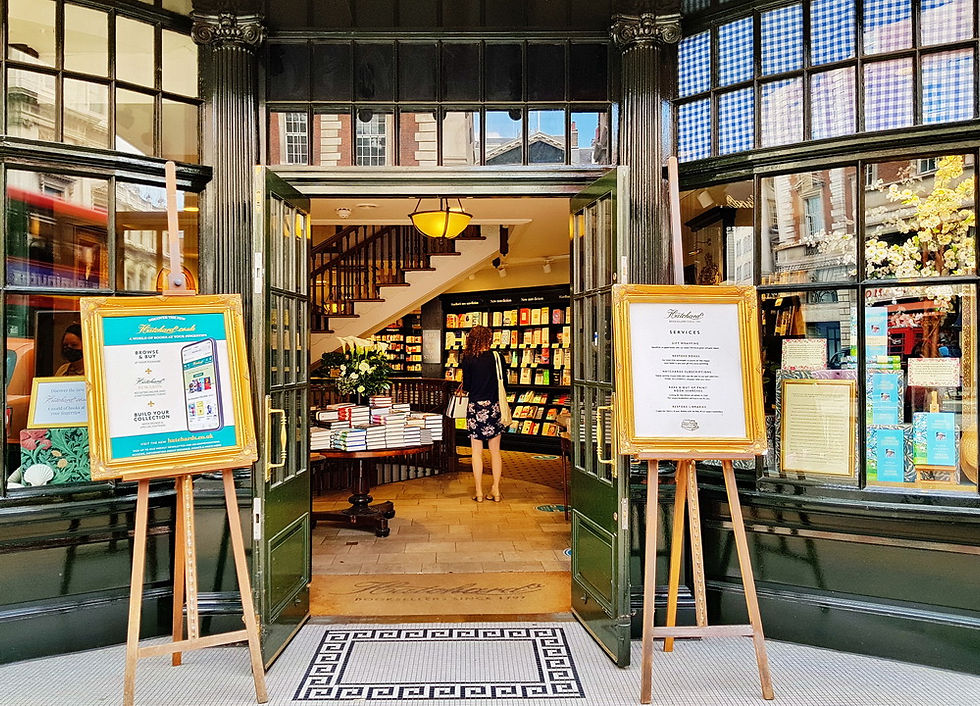
A practical thought. The works are small and the labels sit close to them, so a crowd matters more here than in most shows. Friday, when the galleries stay open until 9pm, should be the calmer slot. Afterwards, Fortnum & Mason is directly across Piccadilly, and Hatchards is a few doors along from it.

Where Can You See Richard Dadd in London After 25 October?
The show closes on 25 October 2026. The loans go home to Paris, to the Yale Center for British Art and to private walls. London keeps a good deal.
The Fairy Feller's Master-Stroke belongs to Tate, along with Portrait of a Young Man. Check Tate Britain's website before a special trip, because pictures rotate on and off display.
The Bethlem Museum of the Mind is the real pilgrimage. It sits in the grounds of Bethlem Royal Hospital on Monks Orchard Road in Beckenham, BR3 3BX. Entry is free. It holds Passions watercolours and Henry Hering's photograph of Dadd at his easel. Opening days are limited, so check before you travel. Eden Park station is about a fifteen-minute walk.
The V&A lent to the show and has Dadd works of its own. The Artist's Halt in the Desert lives in the British Museum's prints and drawings collection. Works on paper are rarely on the wall, so ask first.
One more, and it costs nothing. The Bethlem that Dadd knew stood in St George's Fields in Southwark from 1815. The hospital left in 1930. The central block with the dome survives as the Imperial War Museum. He spent twenty years behind that façade.
And if small, brightly coloured, obsessively finished pictures turn out to be your thing, the Wallace Collection has rooms of them, free, a twenty-minute walk north of Piccadilly.
Visiting the Richard Dadd Exhibition: Practical Notes
📍 Where: The Jillian and Arthur M. Sackler Wing of Galleries, Royal Academy of Arts, Burlington House, Piccadilly, London W1J 0BD.
📅 Open days: 25 July to 25 October 2026. Tuesday to Sunday. The exhibition is closed on Mondays.
⏰ Opening: 10am to 6pm. Fridays 10am to 9pm.
🎫 Admission: £15. Friends of the RA go free. Book a timed ticket on the Royal Academy website.
🚇 Getting there: Green Park on the Jubilee, Piccadilly and Victoria lines, or Piccadilly Circus on the Bakerloo and Piccadilly lines. Both are about five minutes on foot.
☕ Food: There are cafés inside Burlington House. Fortnum & Mason is across the road.
⏳ How long to allow: Ninety minutes. The works are small and reward slow looking. Allow longer if you read every label.
📷 Best time to visit: Friday evening, or a weekday at 10am. The closing fortnight in October is likely to be the busiest.
🗺️ Nearby: Burlington Arcade runs along the west side of Burlington House. The Academy's own free collection displays are in Burlington House itself.
♿ Access: The Sackler Wing is on an upper floor and is reached by lift. A large print guide can be downloaded from the exhibition page.
Have you been? I'd love to know which picture stopped you longest.
_______________________
Did you enjoy this article? If you'd like to contribute to the running costs of WithinLondon, click the button below:
All photos were taken by Ina/WithinLondon, unless stated otherwise.


Comments