Wimbledon Tour and Museum: The Grounds Without the Crowds

Updated: 6 days ago
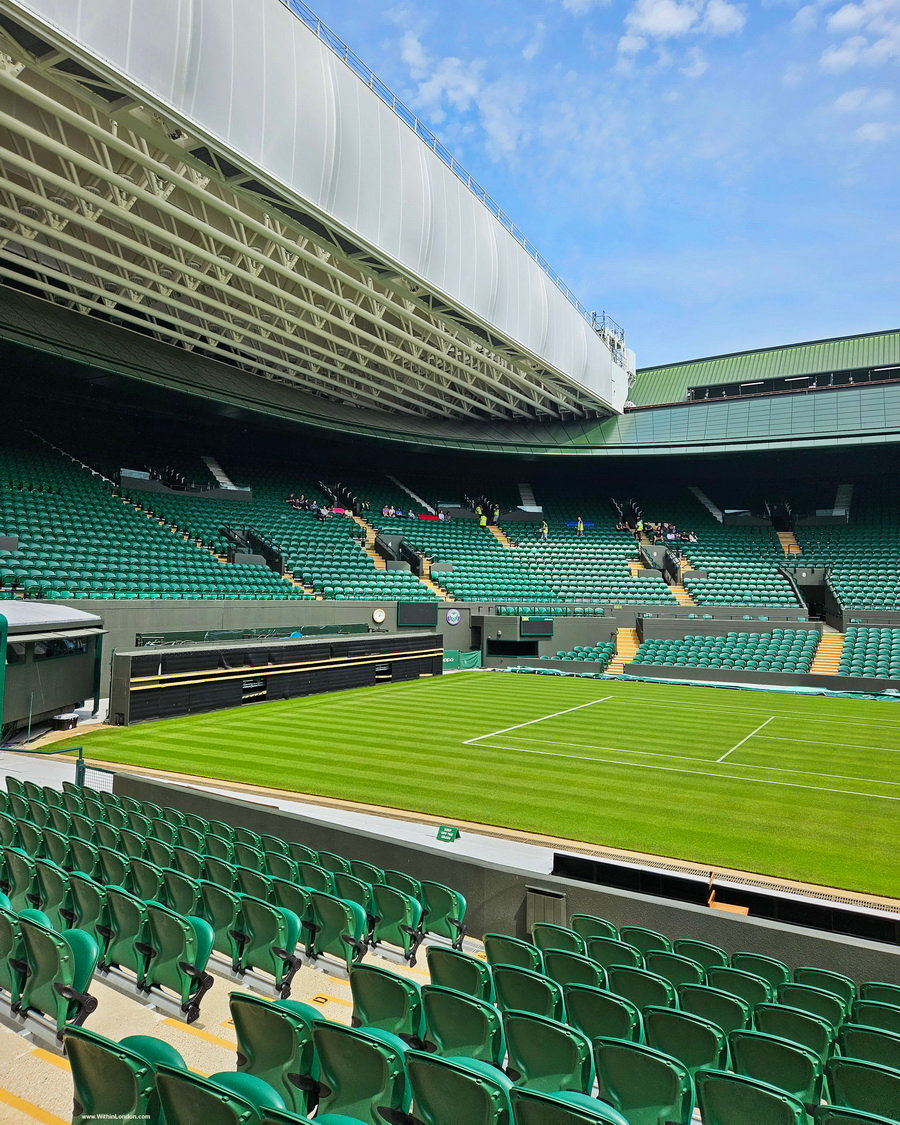
Green seats in neat curved rows. Grass clipped short and perfectly still. Not a single person in the stands. This is how I saw the All England Club, on a guided walk round the grounds on a bright blue-sky day.
So here are a few pics of the Championships' world-famous grounds as you've never seen them before – bereft of people. For two weeks each summer this place holds tens of thousands of fans a day. The rest of the year, a small group with a guide can walk almost the same paths in near silence.
You can visit Wimbledon outside the Championships. The museum and the tour come first, then the history and numbers behind the tournament, and last how the Championships themselves work for anyone hoping to get in.
What Can You See on the Wimbledon Tour?
The Wimbledon tour is a 90-minute guided walk round the grounds of the All England Lawn Tennis and Croquet Club. It is led by a Blue Badge Guide, in English, and the ticket also includes entry to the Wimbledon Lawn Tennis Museum.
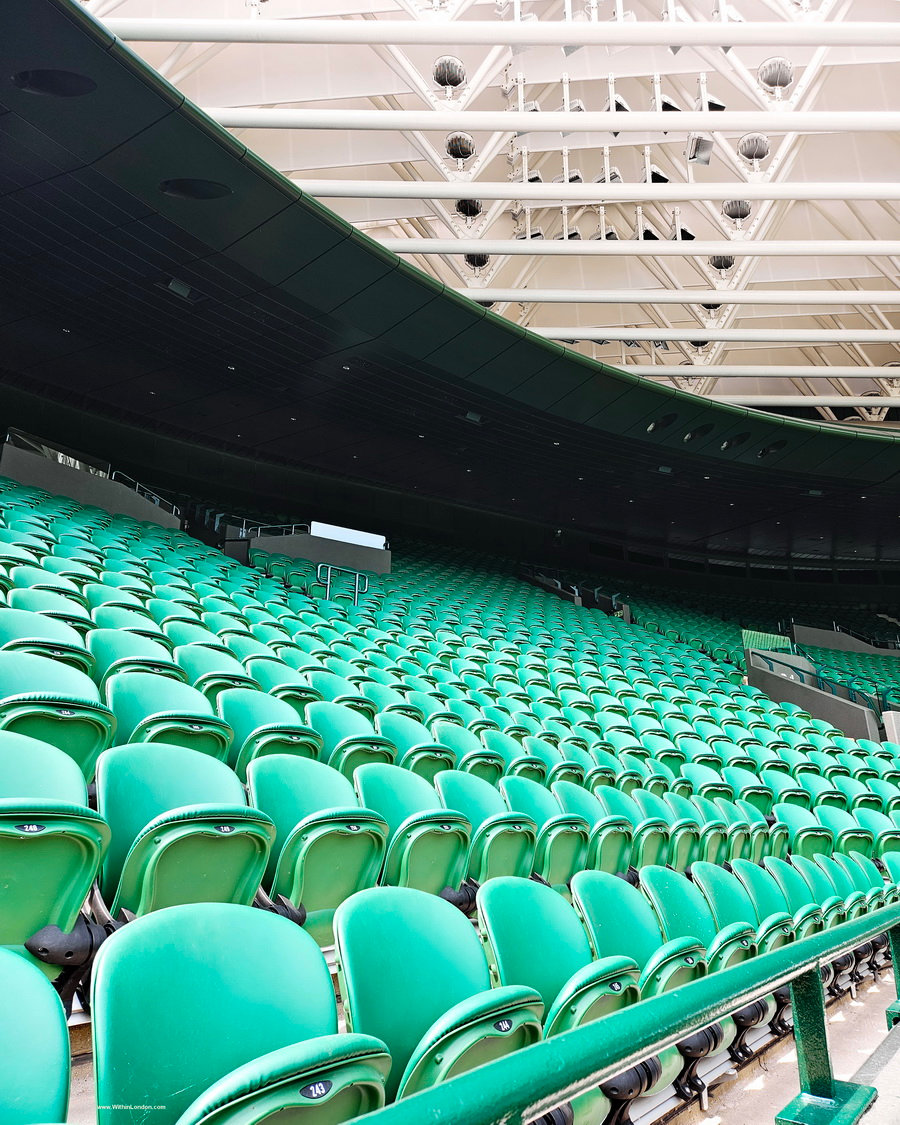
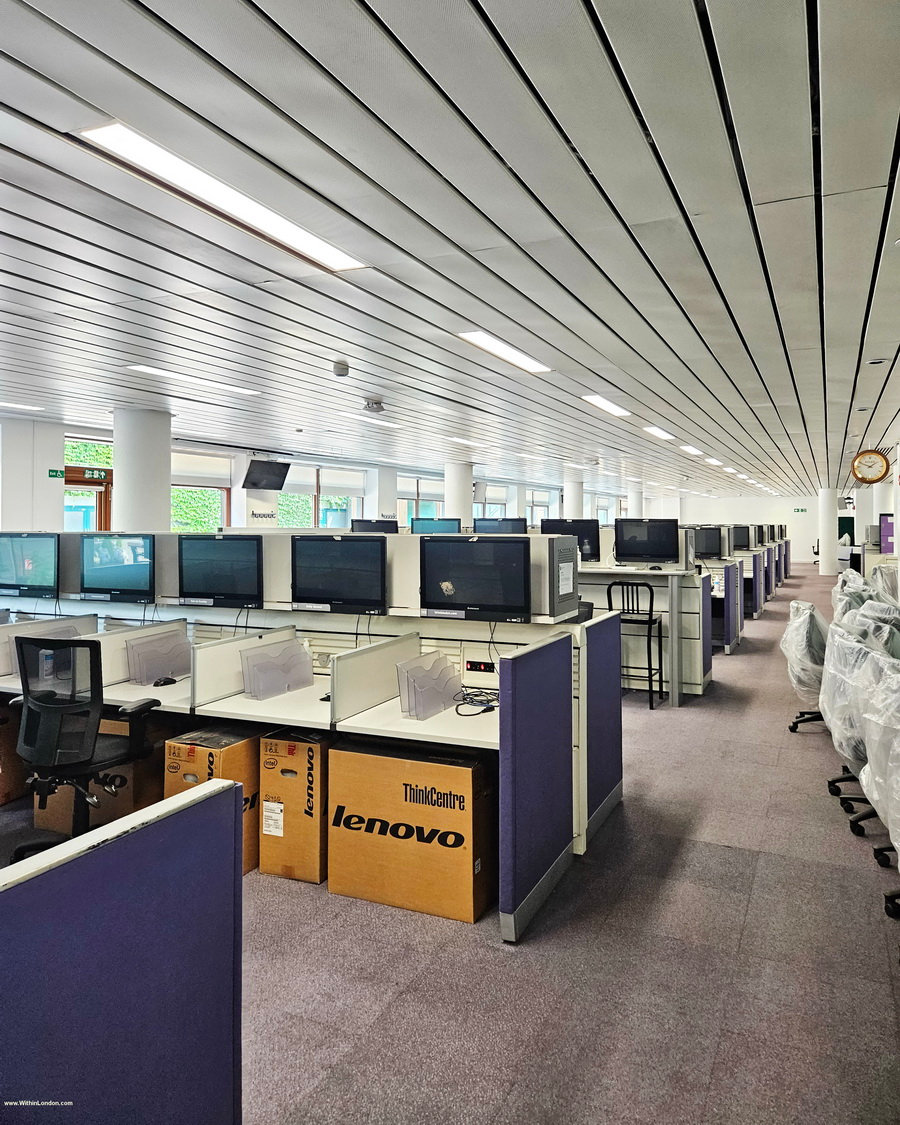
My photos show what the route gave me. I stood high in the stands of Centre Court, looking down at the grass. I sat among the empty seats of No. 1 Court, under the curved rim of its roof. I also walked through the media centre, where rows of desks and screens wait for the journalists who fill them every July.
The Club is private, and the booking page is clear that there are some areas the tour is not allowed to enter. The exact route can change with building work and the time of year. What stays the same is the chance to see the show courts without a crowd, which is impossible during the fortnight itself.
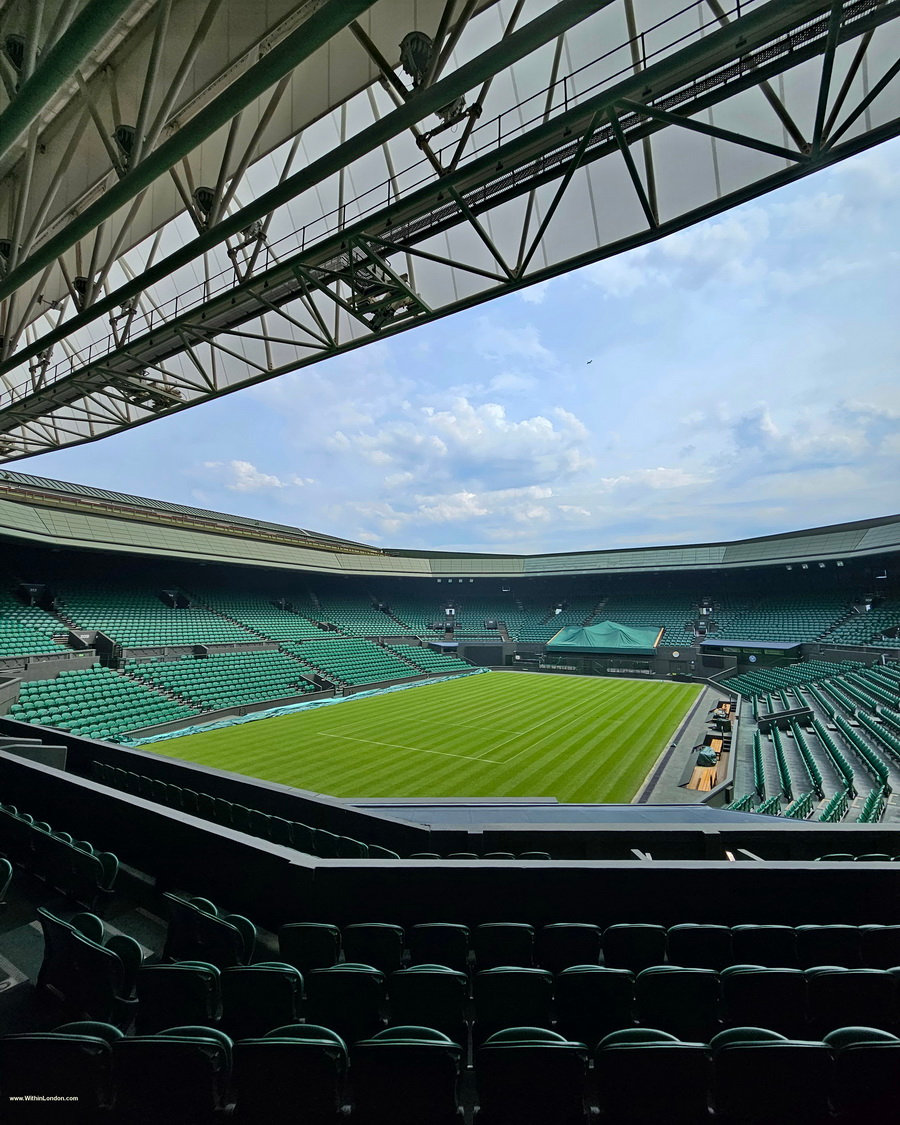
If you wish to visit the grounds and take in these historic views without the buzzing crowds, I highly recommend the official Wimbledon tour. Book ahead, because each slot has limited places.
How Much Does the Wimbledon Tour Cost and When Does It Run?
The official booking page lists the tour and museum ticket at £32 for adults and £22 for children. Concessions, students and disabled visitors pay £28. Infants and carers go free.
Visit London lists a museum-only ticket at £15 for adults, £10 for children and £13 for concessions. Prices change from season to season, so check the official site before you go.
The museum opens every day. From April to September the hours are 10am to 5.30pm, with last entry at 4.30pm. From October to March it closes at 5pm, with last entry at 4pm.
The big exception is the Championships. Public tours do not run during the tournament, and the museum is open only to people holding tickets for that day's play. Tour availability also varies in the weeks around the tournament, so check the official calendar before planning a visit in late June or July.
What Is Inside the Wimbledon Lawn Tennis Museum?
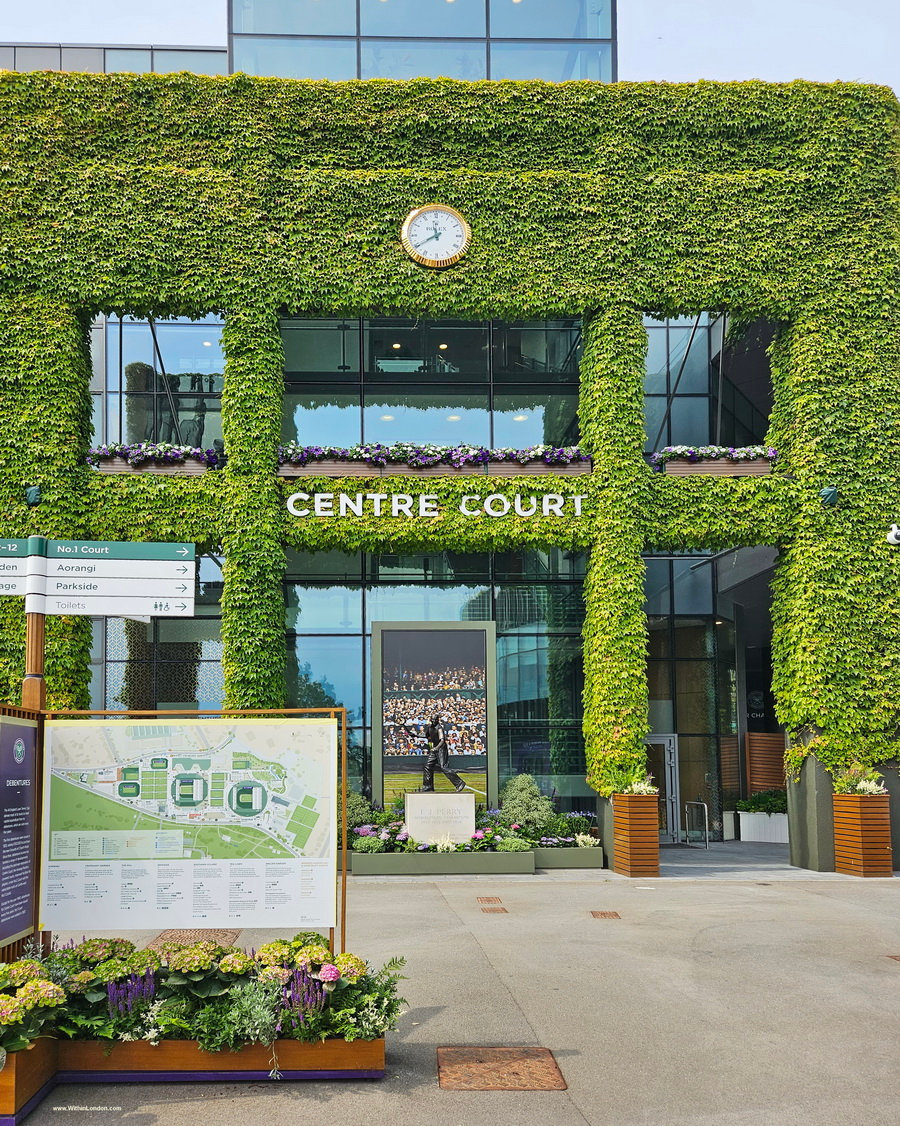
The museum opened in 1977, the year of the Championships' centenary. It tells the story of lawn tennis from its Victorian beginnings to the present. The displays include the Championships trophies, old rackets and equipment, and a collection on the famous white clothing.
A free audio guide comes with the ticket. The booking page says it is available in six languages and in British Sign Language.
The Club also keeps the Kenneth Ritchie Wimbledon Library, which it describes as the largest tennis library in the world. Serious fans can look it up before a visit.
Wimbledon is not the only private club in south-west London that lets the public in. The Hurlingham Club open day is another rare chance to walk inside the gates.
How Old Is Wimbledon and Why Is It Played on Grass?
The Club was founded on 23 July 1868 as the All England Croquet Club. Lawn tennis arrived a few years later, and the first Championships were held in 1877 at the Club's old ground off Worple Road.
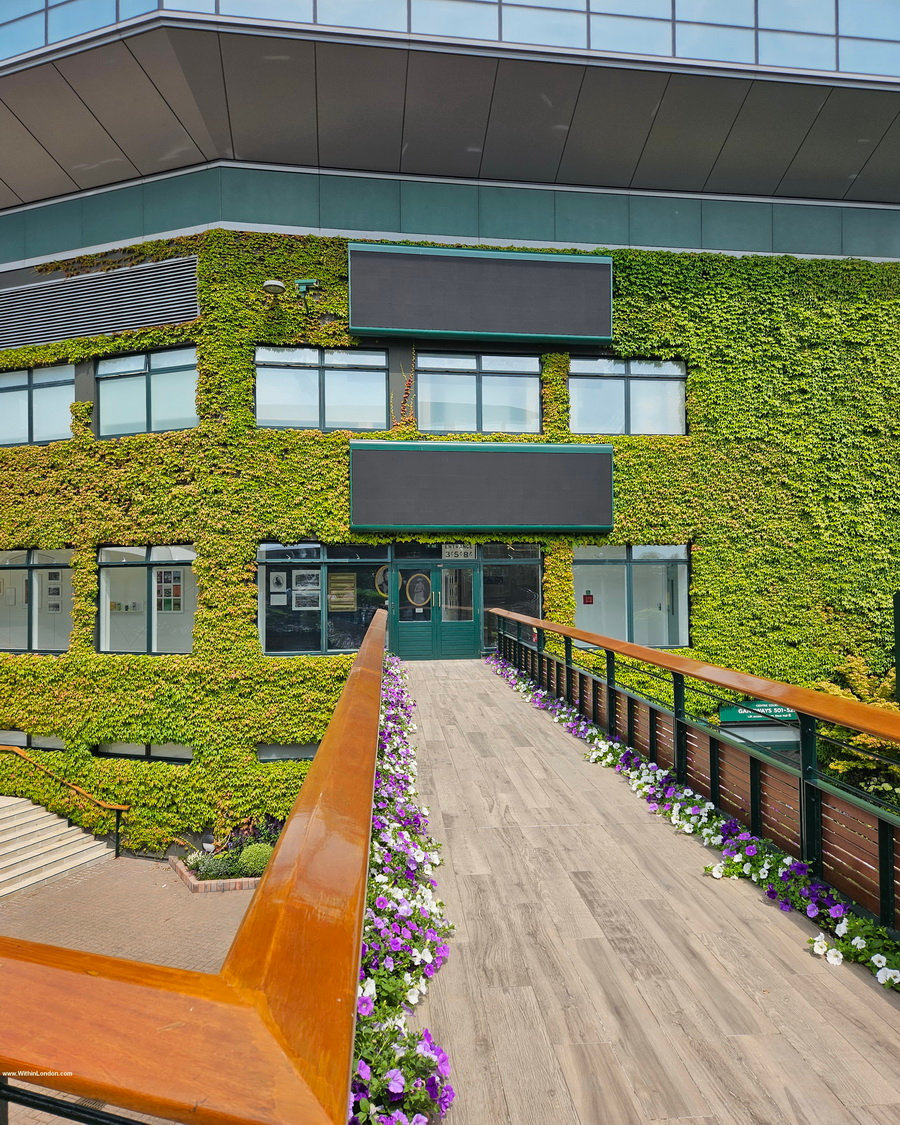
The Club moved to its current site on Church Road in 1922, when crowds had outgrown the old ground. French star Suzanne Lenglen's popularity is usually credited with forcing the move.
Wimbledon is the only one of tennis's four Grand Slams still played on grass. Since 2001 the courts have been sown with 100% perennial ryegrass. During the Championships the grass is cut to 8mm.
The grounds have 18 grass Championship courts. Across the road, Aorangi Park holds 22 more grass courts used for practice. There are also clay, acrylic and indoor courts for members.
One more record belongs to the tennis balls. Slazenger has supplied them since 1902, which is often called the longest-running sponsorship in sport.
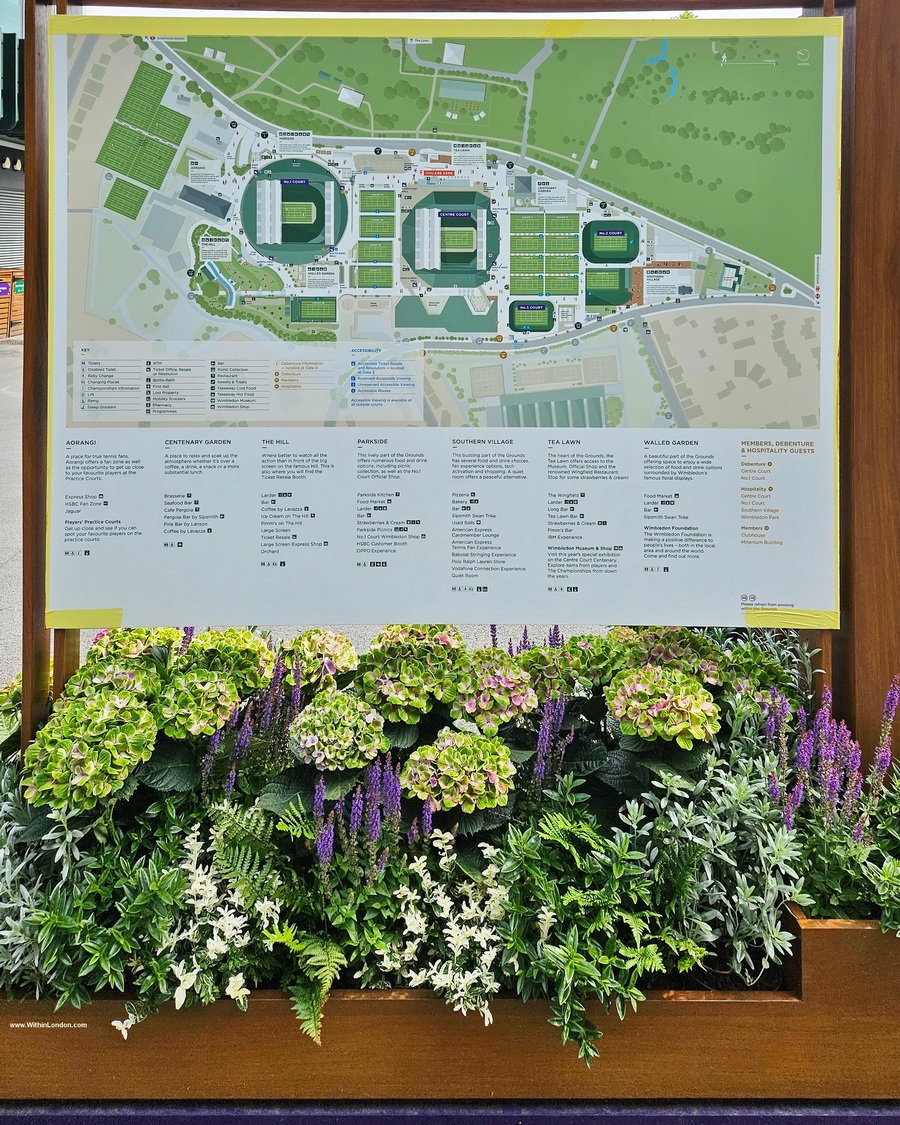
How Many People Fit Into Centre Court and No. 1 Court?
Centre Court opened with the Church Road ground in 1922. It seats 14,979 people. Its name comes from the old Worple Road ground, where the main court sat in the middle of the others.
Its retractable roof was completed in 2009. It was first closed during a Championships match on 29 June 2009, for Amélie Mauresmo against Dinara Safina. The roof can close in about ten minutes, although the air inside may need longer to settle before play restarts.
Above the players' entrance to Centre Court are two lines from Rudyard Kipling's poem If. They speak of meeting triumph and disaster, and treating those two impostors just the same.
No. 1 Court has a longer story than its modern look suggests. The first No. 1 Court was built in 1924 beside Centre Court. It was replaced by the current stadium, which opened in Aorangi Park on 23 June 1997.
The newer No. 1 Court got its own retractable roof for the 2019 Championships, and its capacity grew to 12,345. The first match played there with the roof shut was Coco Gauff against Magdaléna Rybáriková on 3 July 2019.
The longest match in tennis history was not on either show court, though. John Isner beat Nicolas Mahut on Court 18 in 2010, after 11 hours and 5 minutes spread over three days. The final set ended 70–68, and a plaque on the court records the score.
Why Do Wimbledon Players Have to Wear White?
White has been the colour of Wimbledon since Victorian times. A common explanation is that white hid sweat better than coloured cloth, which suited the manners of the day.
The Club's first formal dress code was enforced in 1963. Today's rules ask for almost entirely white clothing, and they cover shoes, caps and even visible underlayers.
The rule was relaxed in November 2022. From the 2023 Championships, women and girls have been allowed to wear dark-coloured undershorts. The Club said the change would remove a source of anxiety for players.
The tennis has changed in other ways too. Hawk-Eye was first used at Wimbledon in 2007, on Centre Court and No. 1 Court. In 2025, electronic line calling replaced line judges on every court for the first time in the tournament's history.
For 2026, video review was added for singles matches on Centre Court, No. 1 Court and four other show courts. The chair umpire still sits in the high chair.
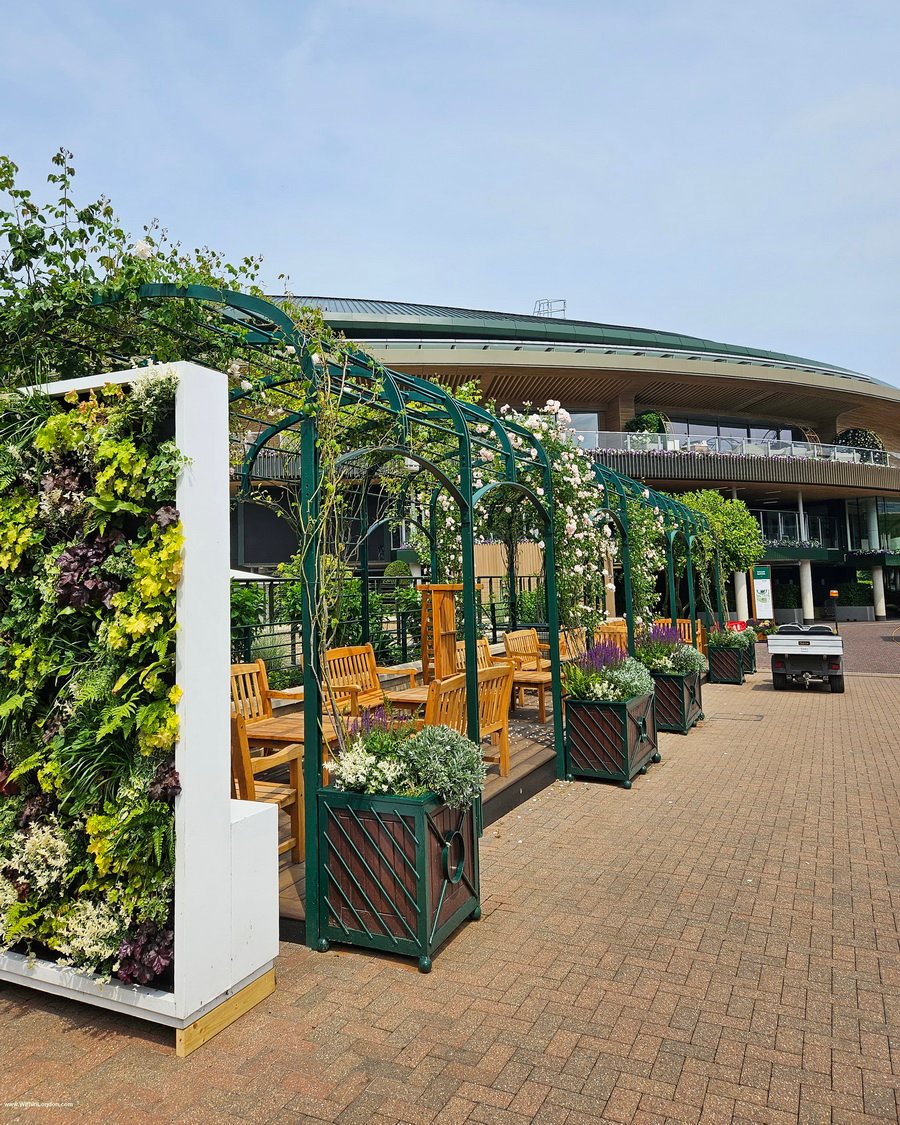
How Many Strawberries Are Eaten at Wimbledon?
Strawberries and cream have been part of Wimbledon for as long as anyone remembers. The simple reason is timing. English strawberries are in season in late June and early July, just as the Championships begin.
According to figures reported by Forbes, the 2024 Championships served about 2.5 million strawberries. That added up to 251,405 portions, with 13,241 litres of cream.
The berries come from Hugh Lowe Farms in Mereworth, Kent, which has supplied the Club for over 30 years. They are picked early each morning and delivered to the grounds the same day.
If a day out in summer is what you are after, I have also written about a summer's day in Richmond, which is an easy trip from Wimbledon.
How Do You Get Tickets for the Wimbledon Championships?
There are two main routes for ordinary fans. The first is the public ballot. You register a free myWimbledon account and apply for up to two tickets. Winners are drawn at random, and you cannot pick the day or the court.
The ballot for 2027 opened on 1 September 2026 and closed on 14 September 2026. Winners are due to be contacted by email from October 2026. Ballot tickets cannot be transferred to anyone else.
The second route is The Queue. It forms in Wimbledon Park, a short walk from Southfields station. Each person is given a dated, numbered Queue Card when they arrive.
Around 500 tickets a day are held back for The Queue on each of Centre Court, No. 1 Court and No. 2 Court. The exception is the last four days, when Centre Court tickets are sold only in advance. Several thousand Grounds Passes are also sold each day.
A Grounds Pass lets you watch play on the outside courts and on the big screen from the grassy slope often called Henman Hill. For 2026, reported prices ran from £33 on the first day to £21 on the final Sunday.
Once inside, returned show court seats go on resale during the afternoon for a small extra charge. Keen campers can also queue overnight in small two-person tents, under a long list of rules.
When Are the Wimbledon Championships in 2026 and 2027?
The 2026 Championships ran from 29 June to 12 July 2026. It was the 139th edition of the tournament, and the total prize money reached £64.2 million.
The 2027 Championships are set for 28 June to 11 July 2027, according to the official tickets page. That summer marks 150 years since the first Championships in 1877, so demand for tickets is expected to be high.
If you cannot get a ticket, the museum and tour are the best way to stand inside the stadiums. Just plan around those two summer weeks, when tours stop.
For more places that are usually closed to the public, the Open House London guide is worth reading before September each year. And if you want a quieter green space nearby, the Isabella Plantation in Richmond Park is a short bus ride away.
Visiting the Wimbledon Museum and Tour: Practical Notes
📍 Where: Wimbledon Lawn Tennis Museum, All England Lawn Tennis and Croquet Club, Church Road, London SW19 5AE.
⏰ Opening: April to September 10am to 5.30pm (last entry 4.30pm). October to March 10am to 5pm (last entry 4pm).
📅 Open days: Every day, except that tours do not run during the Championships and the museum opens only to that day's ticket holders. Check the official site for dates around late June and July.
🎫 Admission: Tour and museum £32 adults, £22 children, £28 concessions. Infants and carers free. Museum-only tickets are sold separately. Prices checked September 2026.
🚇 Getting there: Southfields station (District line) is about a 15 to 20 minute walk. Wimbledon station is further, about 20 to 25 minutes on foot. Bus 493 links both stations with the grounds.
☕ Food: The museum has a café on site. Check its hours on the official site before you rely on it.
⏳ How long: The guided tour takes 90 minutes. Allow about two and a half hours with the museum.
📷 Best time: A clear, dry day, when the courts and flower beds look their best in photos. Avoid the Championships fortnight, when tours stop.
🗺️ Nearby: Wimbledon Village, Wimbledon Common and Richmond Park.
♿ Access: Carers go free. The tour route includes stairs, so contact the museum in advance to ask about step-free options.
Tours are booked through the official museum and tours page. Would you rather see Wimbledon empty on a tour, or brave The Queue for a seat at the Championships?
_______________________
Did you enjoy this article? If you'd like to contribute to the running costs of WithinLondon, click the button below:
All photos were taken by Ina/WithinLondon, unless stated otherwise.


Comments