The London Eye: History, Facts and Tips for Your Ride

Updated: Oct 6
White blossom overhead, a clean blue sky, and the white rim of the wheel slicing straight through the branches. That is the view from Jubilee Gardens in spring, standing right underneath it.
The London Eye has been part of the South Bank since the turn of the millennium. It was meant to stay for five years. It is still turning, and in May 2024 Lambeth Council agreed it can stay for good.

People ask the same questions about the London Eye: how tall it is, how it was built, what the capsules are like, what tickets cost, and when to go. I have ridden it and taken these photos over several visits, in different seasons.
What Is the London Eye and Who Designed It?
The London Eye is a giant observation wheel on the south bank of the Thames, opposite the Houses of Parliament. It stands beside County Hall and Jubilee Gardens, a short walk from Waterloo.
It was designed by the husband-and-wife architects David Marks and Julia Barfield of Marks Barfield Architects. The idea started life as an entry to a 1993 competition for a millennium landmark. The competition was run by the Sunday Times and the Architecture Foundation.
British Airways backed the project early, putting in seed funding in December 1994. The official history says around 100 design variations were considered before the final one was chosen.

The wheel cost about £75 million to build. Construction began in 1998. For its first years it was known as the British Airways London Eye, and many Londoners still call it the Millennium Wheel.
How Was the London Eye Built?
Not upright, as you might expect. The rim and hub arrived in sections, floated up the Thames on barges. They were then assembled lying flat on temporary piled platforms in the river.
Once complete, the whole wheel had to be raised. The Dutch heavy-lift firm Mammoet used a temporary A-frame and strand jacks to pull it up from the water. The first attempt in September 1999 was stopped when two temporary cables came loose.
The team redesigned the cable anchorages and tried again in October 1999. The wheel was lifted slowly, about two degrees an hour, up to 65 degrees. It then paused for about a week before the final lift to vertical.
Prime Minister Tony Blair opened it ceremonially on 31 December 1999. Paying passengers had to wait. A problem with a capsule clutch delayed things, and the London Eye finally opened to the public on 9 March 2000.
How Tall Is the London Eye, and Is It Still a Record Holder?
The London Eye is 135 metres tall, about 443 feet. The wheel itself has a diameter of 120 metres. For a sense of scale, that is roughly 39 metres taller than the Elizabeth Tower across the river.
When it opened, it was the tallest Ferris wheel in the world. It lost that title in 2006 to the 160-metre Star of Nanchang in China. The 165-metre Singapore Flyer followed in 2008, and bigger wheels have been built since.
What it still holds is a more specific title. It is described as the world's tallest cantilevered observation wheel. The whole wheel is supported from one side only, by a single A-frame, so it seems to lean out over the river.
The London Eye also collected a lot of recognition along the way. The official site says it has won more than 86 awards for tourism, architecture and engineering. Merlin puts its visitor numbers at around 3.5 million a year.
What Are the Capsules Like Inside?
There are 32 capsules, each weighing about 10 tonnes and carrying up to 25 people. They are fully enclosed, glass all round, with a bench in the middle. You can walk around freely, which is the whole point.

The capsules are numbered 1 to 33. There is no number 13, a small nod to superstition. The London Eye's own history page links the 32 capsules to London's 32 boroughs.
One capsule has a name. On 2 June 2013, the 60th anniversary of Queen Elizabeth II's coronation, one capsule was renamed the Coronation Capsule.
The capsules are also being rebuilt. On 23 October 2025 the first one was lifted off and floated down the Thames to a workshop. The programme is due to finish by early 2029, with each capsule swapped for an empty cage while it is away.
The wheel stays open during the work. The last big capsule upgrade ran from 2009 to 2012, when more than £12 million was spent ahead of the London Olympics.
The wheel does not stop for boarding. It turns at about 26 centimetres a second, roughly 0.9 km/h. That is slower than a walking pace, so you simply step on and off the moving capsule.
One full rotation takes about 30 minutes. Staff can slow the wheel for anyone who needs more time to board. It is a very gentle ride, closer to a slow lift than a fairground attraction.
What Can You See from the Top of the London Eye?
From the top you look straight down on Westminster and the river. Big Ben and the Houses of Parliament sit right across the water, and the view east runs towards the City.

Turn the other way and you get the grey roofs of Waterloo Station spread out below. Beyond it the Shard rises over Southwark.
If you want a high view without a ticket, the Sky Garden in the City is free to book. The Eye gives you Westminster up close, the Sky Garden gives you the river and Tower Bridge from above.
Why Does the London Eye Light Up in Different Colours?
In December 2006 the wheel was fitted with LED lighting by Color Kinetics. The LEDs can change colour, so the London Eye is often lit for events, anniversaries and national moments.

Some examples from the official news pages: pink for the Barbie premiere in July 2023, blue for Doctor Who in December 2023, and red and gold for Chinese New Year in February 2024.
On the evenings it was lit magenta, reflected in the Thames, with County Hall glowing beside it. It is also the centrepiece of the New Year's Eve fireworks every year.

Who Owns the London Eye and Why Has Its Name Changed?
The wheel was first owned by Marks Barfield, the Tussauds Group and British Airways. Tussauds bought out British Airways in 2005 and the architects in 2006. Tussauds then became part of Merlin Entertainments, which runs it today.
The name follows the headline sponsor. British Airways had it from 2000 to 2008. EDF Energy took over in 2011, then Coca-Cola from 2015. The travel company lastminute.com became the sponsor in January 2020.
The land has its own story too. Part of the site belongs to the Southbank Centre, and in 2005 the two sides fell out over rent. A new 25-year lease was agreed in February 2006.
Planning was the other question mark. The Eye was granted permanent status in July 2002. A 2003 planning condition still required a fresh decision on its future after 2028. Lambeth Council settled that in May 2024, and the wheel can now stay indefinitely.
How Much Are London Eye Tickets?
As of September 2026, the official tickets page lists a standard ticket at £29 per adult online and £39 at the desk. Booking ahead clearly pays.
A Flexi Fast Track ticket is £49 online and lets you skip the main queue without a fixed time. The Champagne Experience starts at £49 online. An afternoon tea experience is £75, and a private pod starts from £850.
There are also combination tickets with Madame Tussauds, SEA LIFE and a river cruise, starting at £49. Free carer tickets are available with a full-price ticket and proof of eligibility. The youngest children go free but still need to be booked in.
Prices change often, especially in school holidays, so check the official site before you book.
When Is the Best Time to Ride the London Eye?
My favourite time would be April–May. It's cherry blossom season, and you'll be greeted by an explosion of white cherry tree petals right next to the Jubilee Gardens. You can see it in my reel from Jubilee Gardens.
For shorter queues, the official site suggests the first slots of the morning or the last ones before closing. Peak waits can reach 45 minutes. Your ticket time is when you join the queue, not when you board.
An evening ride has its own appeal. The wheel is lit, and in winter you can watch the city lights come on from the capsule.

Autumn is lovely on the South Bank too. The Japanese maple on the Hayward Gallery terrace turns deep red, and the wheel sits right behind it. It makes the South Bank one of the best places to see autumn foliage in London.

Where Are the Best Places to See the London Eye From?
You do not need to ride it to enjoy it. The Victoria Embankment across the river gives the classic side-on view, with County Hall to the right and branches hanging over the water.
Westminster Bridge gives you the wheel and the river together. The Queen's Walk, by the Southbank Centre, puts you almost underneath it.
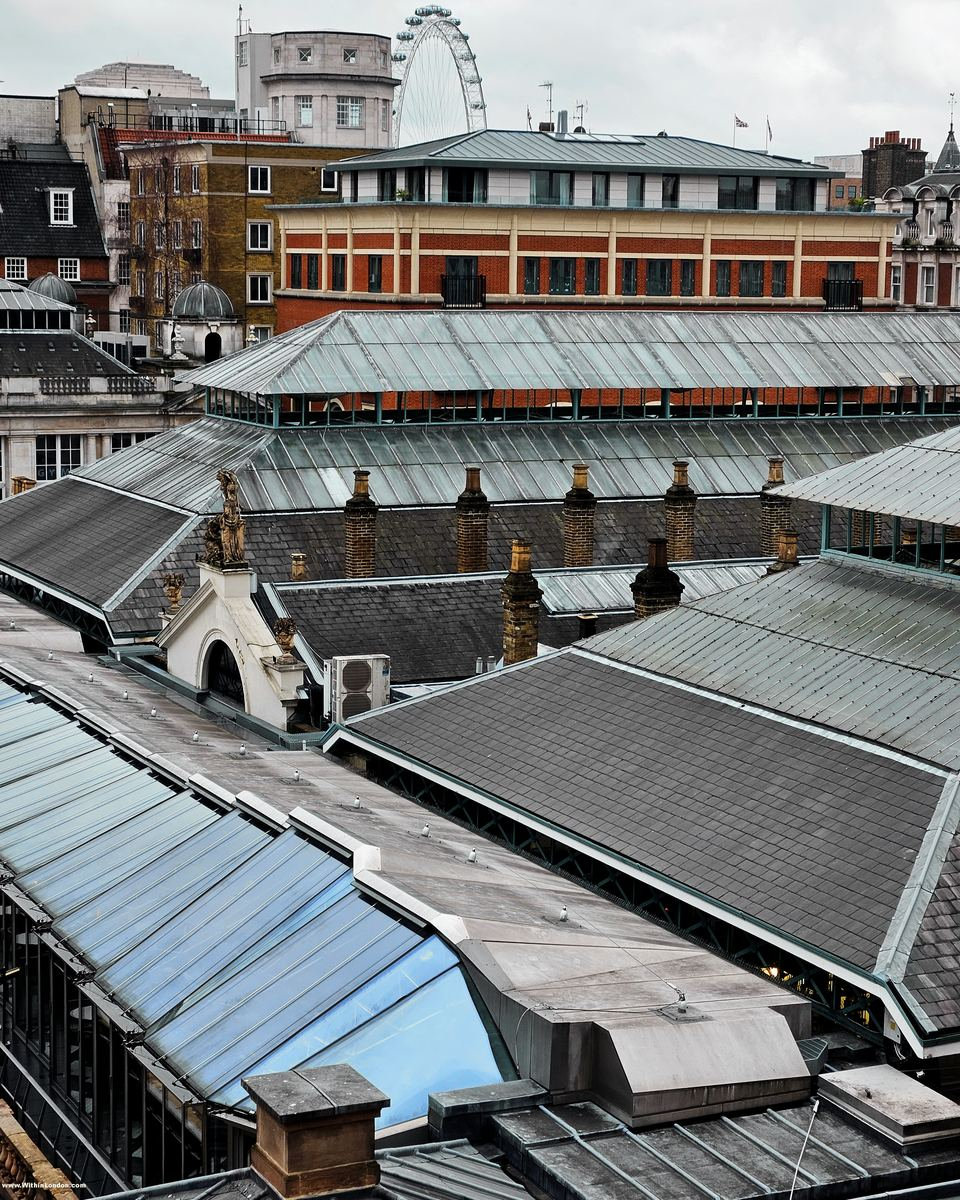
There is also a view from much further away. The free terrace at the Royal Opera House in Covent Garden looks out over the rooftops, and the wheel appears small on the skyline.
Btw, custom lapel pins are a great choice if you are traveling to London and want to pick up a souvenir. Pins are a great souvenir. You can have custom pins made in the style of the London Eye, Big Ben, and so on. You can preserve your good vacation memories by doing this.
You can also customize pins with London characteristics as gifts for your family and friends. They will surely love the pins with London characteristics. Let's customize pins as travel souvenirs.

Visiting the London Eye: Practical Notes
📍 Where: The South Bank, beside County Hall and Jubilee Gardens, London SE1 7PB.
⏰ Opening: As of September 2026, 10am to 8:30pm. Closing varies by season, between 6pm and 8:30pm. Entry usually stops 30 to 45 minutes before closing.
📅 Open days: Daily, except Christmas Day. The official site notes annual maintenance in January, so check dates before a winter visit.
🎫 Admission: For 2026, standard tickets are £29 online or £39 at the desk. Flexi Fast Track is £49 online, and private pods start from £850.
🚇 Getting there: Waterloo station is about a five-minute walk. Westminster is just across Westminster Bridge, and Embankment is over the Golden Jubilee footbridges.
🚗 Parking: The Eye is inside the Congestion Charge zone. The official site suggests Q-Park Westminster or the National Theatre car park.
⏳ How long: The ride takes 30 minutes. Allow 20 to 30 minutes of queuing with a standard ticket, and 5 to 10 with Fast Track.
📷 Best time: April to May for the cherry blossom in Jubilee Gardens. Evenings for the lights.
🗺️ Nearby: The Southbank Centre, the Hayward Gallery, Westminster, Waterloo and a walk over the river to Covent Garden.
♿ Access: Step-free, with up to two wheelchair users per capsule. Free carer tickets, hearing loops in the ticket hall, and assistance dogs are welcome.
🧳 Left luggage: Large suitcases are not allowed on board. The ticket office stores bags for £5 per item, to be collected by 7pm.
Have you ridden the London Eye, and which season would you pick for it?
_______________________
Did you enjoy this article? If you'd like to contribute to the running costs of WithinLondon, click the button below:
All photos were taken by Ina/WithinLondon, unless stated otherwise.


Comments